 Retro Replay Retro Gaming History, Reviews & Emulation


Game Overview
Gameplay
Energy gets to its point quickly: Tokyo is in ruins, monsters are everywhere, and your young hero has to shoot, jump, and keep moving. That straightforward setup helps the opening land. You are not buried in complicated systems; you immediately understand that energy balls clear danger, jumps carry you through the side-scrolling stages, and enemies stand between you and the survivors.
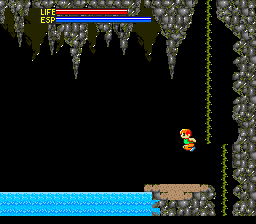
The ESP bar is where the action gains some bite. Your shots consume it, then it refills gradually, so you cannot mindlessly hold fire and expect to stay safe. That small restriction turns encounters into a rhythm of attacking, easing off, and choosing when a threat deserves more of your energy. It is a better fit for deliberate players than for anyone expecting a pure spray-and-pray shooter.
Health is less forgiving. The life bar relies on healing potions that enemies sometimes drop, which can make a rough stretch feel tense when you need recovery and it does not arrive. On the other hand, collectible items that alter the ESP attack or raise it to the next level give you a reason to stay engaged with the combat beyond simply surviving. The upgrade loop adds welcome momentum as you work through Tokyo’s streets and underground caverns.
Energy is a modified version of Ashe, retaining its basic play, major areas, and progression while changing parts of the story and some location layouts. That makes it a focused variation rather than a ground-up reinvention. If its resource-led shooting clicks with you, the changes offer a distinct route through familiar action-game foundations.
Graphics
The game uses a 2D side-view, scrolling format, placing the boy against monster-filled Tokyo streets and underground caverns. Its anime/manga styling suits the premise: a young psychic hero, ruined urban spaces, and creatures blocking the route forward.

Story
This is a clean, pulpy post-apocalyptic hook rather than a tangled drama. Monsters destroy Tokyo; a scientist who knows ESP grants a young boy psychic power; the boy heads out to rescue whoever remains and discover where the invasion began. It is direct enough to give every stage a purpose without slowing the action down.
The survivor-rescue angle gives the journey more human stakes than a simple march toward a final threat. You are not only fighting through wreckage for a high score; you are searching a devastated city for people who might still be alive. That is a useful motivation for an action game built around forward motion.
Since Energy alters some story segments from Ashe, it has its own version of the premise even while sharing the broader structure. The narrative’s strength is clarity, not complexity. Come for a brisk monster-invaded-Tokyo adventure, and let the mystery of the invasion carry you between fights.
Overall Experience
Energy is at its best when you accept its compact, old-school priorities. You move through a destroyed city, handle enemies with a limited but renewable psychic attack, and hope your health holds long enough to reach the next useful pickup. The friction in its resource management gives it more personality than a shooter where firing has no cost.
Frustration can set in when healing is scarce, because potion drops determine when you can restore the life bar. That is the sort of pressure some players will find exciting and others will find irritating. If you enjoy games that make recovery feel earned, the tension is part of the point; if random relief bothers you, it may wear on you.
The payoff is a concise action experience with a memorable premise and a sensible combat hook. Energy will not convert someone who dislikes demanding side-scrolling shooters, but it is an easy recommendation for fans of retro-styled action who want their power attacks to require a little restraint. Its altered take on Ashe also gives it extra interest for anyone curious about different versions of the same core adventure.


Reviews
There are no reviews yet.