 Retro Replay Retro Replay gaming reviews, news, emulation, geek stuff and more!


Retro Replay Review
Gameplay
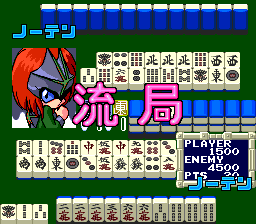
The first hour makes its priorities clear. You watch Divan and Marie face another threat from Dora’s forces, then sit down for mahjong, where the real contest happens. Divan’s transformations are not a separate action sequence; they are powerful moves tied to play at the table. That makes every round carry the series’ central absurdity rather than merely pausing the plot for a detached minigame.
The rules, point distribution, and transformation moves carry over from Jantei Monogatari 2: Uchū Tantei Divan – Shutsudō-hen. If you already learned that game’s rhythm, this continuation lets you get straight back to reading hands and choosing when to use its stronger abilities. If you did not enjoy the predecessor’s mahjong, this final chapter has little reason to win you over: the core play is intentionally unchanged.
What improves matters is the option to challenge story opponents whenever you want. It gives the game a useful escape hatch from the campaign and makes it easier to treat the title as a repeatable mahjong game rather than a one-way narrative. The strategic hook is strongest when you want another round for its own sake, not just because a cutscene has put another enemy in Divan’s path.

Graphics
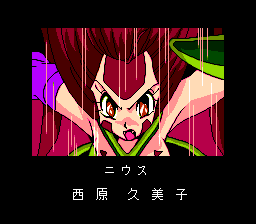
The game leans into anime science fiction: Divan, Marie, Dora, and Dora’s female demonic minions carry the conflict between mahjong matches. Long cutscenes put those characters front and center, while the table play remains the necessary stage for Divan’s robot transformations.
Story
This is a direct continuation, not a friendly reset. Dora is closing in on Earth and sends subordinates after Divan and Marie, so the story works best when you arrive already invested in the prior chapter’s strange cosmic stakes. Starting here means accepting that its larger plot is already in motion.
The decision to remove the earlier adventure-style interludes makes the pacing cleaner but narrower. Scenes run long and are non-interactive, then the game returns you to mahjong. That structure can be pleasantly focused if you want an anime serial broken up by tiles; it can also test your patience if you expected to investigate, explore, or influence the story between matches.
There is at least a clear through-line to the finale: Divan and Marie are pursued, Earth is threatened, and each opponent exists to block their progress. The story’s charm comes from committing to its ridiculous premise, not from pretending the mahjong-and-robot-transformation setup is normal.
Overall Experience
Kanketsu-hen is a tighter, more specialized sequel. It knows the adventure detours are no longer the point and concentrates on mahjong, cutscenes, and the escalating confrontation with Dora’s side. For fans, that is a sensible trade. For newcomers, it is a steeply specific invitation.
The frustration is obvious: long, non-interactive scenes can feel like a barrier when all you want is another hand, and unchanged mahjong systems leave no room for someone hoping the sequel will radically rework the formula. Fortunately, free play means you are not always locked into the campaign’s rhythm.
Give it a chance if the earlier Divan game clicked with you and you want a more direct conclusion with quick access to its opponents. Everyone else should only come aboard for the unusual collision of anime alien melodrama, robot powers, and mahjong; it is memorable precisely because it is so committed to that combination.


Reviews
There are no reviews yet.