 Retro Replay Retro Gaming History, Reviews & Emulation
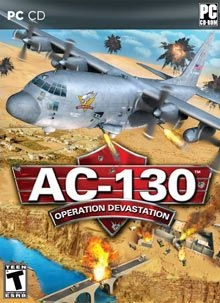
Retro Replay Review
Gameplay
The first few minutes make the central tradeoff plain. You get the destructive viewpoint of an AC-130 gunner, not the responsibility of flying the aircraft. The plane stays on a predetermined route while the action plays out below, leaving you to scan the ground, line up shots, and decide how aggressively to fire. That makes AC-130: Operation Devastation closer to a rail shooter than a flight game, and it is at its best when you accept that restriction instead of waiting for cockpit control that never arrives.
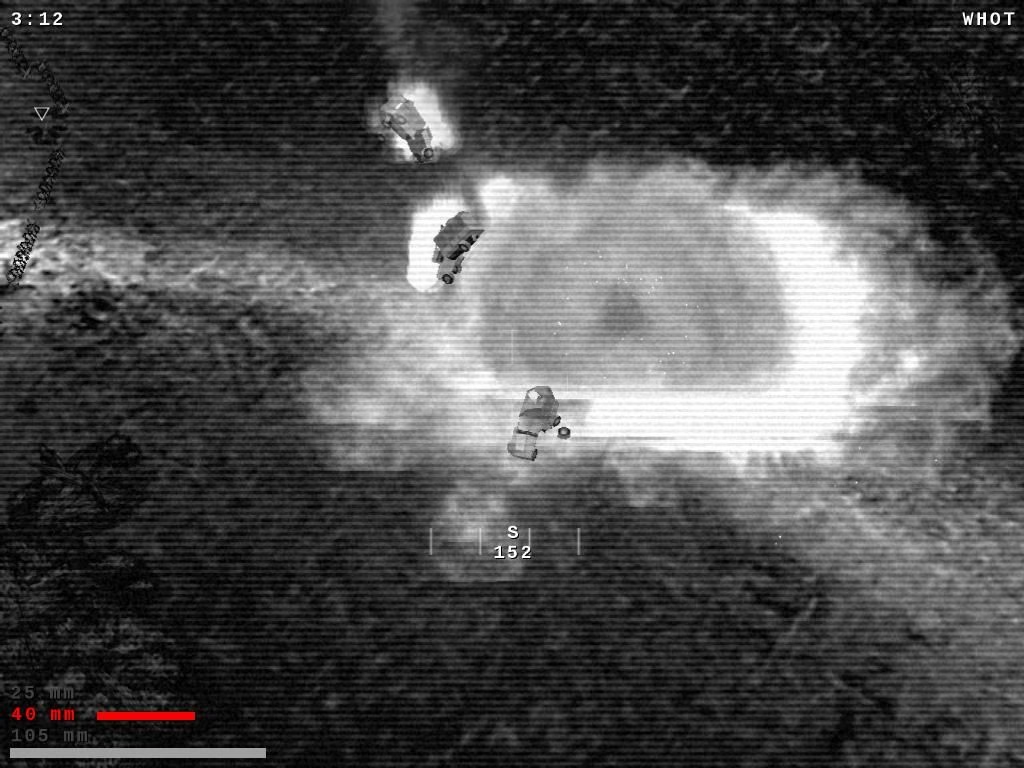
Weapon choice adds the game’s main bit of judgment. The 25 mm cannon fires quickly and suits groups of targets, while the 105 mm delivers major explosive damage at the cost of a long pause between shots. The 40 mm sits between them. Swapping among those three guns gives each encounter a useful rhythm: use fast fire when the ground is busy, then make a deliberate heavy shot when a tougher target needs to disappear. Flares provide another tool during the action, though the fixed zoom attached to each weapon means you must work within the view you are given.
Objectives keep the pressure pointed in a sensible direction. You are destroying enemy vehicles and buildings, supporting friendly forces, and trying not to damage civilian structures in the process. That last requirement is where frustration can set in, because the game asks for destructive force and restraint at the same time. Still, that tension is more interesting than simple target practice. If you want actual control of an aircraft, try Gunship on Amiga instead, since it puts you in the pilot’s seat rather than locking you to a gunner’s route.
Graphics
The action is seen through a grainy black-and-white thermal-style camera, with horizontal scan-line noise running across the landscape. Small, boxy trucks sit at angles against dark ground, while firing produces intense white blast halos and pale smoke that can wash over the targets. Dim fence lines or trees occasionally break up the terrain, but fine detail is hard to make out. The stark contrast fits the airborne view, even if it makes identifying exactly what sits on the ground harder than it should be.
Story
AC-130: Operation Devastation frames its twelve missions around conflicts including the Vietnam War, the Gulf War, and the War in Afghanistan. The result is a campaign built around changing war-zone contexts rather than a character-driven story. You move from assignment to assignment as the gunner tasked with clearing threats and backing up forces below.
That framing works well enough for a game this focused on shooting, because the changing conflicts give the missions a broader sense of movement. At the same time, the game’s strongest drama comes from what is happening in the moment: friendlies need cover, hostile targets need to be removed, and civilian structures are a risk if you fire carelessly.
Do not come here for a deeply personal military narrative. The campaign uses historical conflict as a backdrop for its airborne firing scenarios, and the missions carry the experience more than any individual character or plot thread. It is functional context, but it gives the action a little more weight than a string of disconnected shooting galleries.
Overall Experience
This is a focused, somewhat limited shooter that understands its own strongest idea: being the person behind a gunship’s cannons, watching a battlefield slide underneath and choosing when to unleash overwhelming firepower. Once the weapon roles click, the simple loop has a satisfying snap. The 105 mm’s long reload makes a well-timed shot feel consequential, while the 25 mm keeps the pace moving when several targets demand attention.
The fixed route is both the game’s identity and its ceiling. It keeps every mission easy to understand, but it also removes the freedom and layered challenge that make great aviation games so replayable. The locked weapon zooms add to that constrained feeling. You are learning firing priorities, not plotting an approach or managing a gunship in the air.
Give it a chance if an accessible aerial rail shooter sounds more appealing than a demanding simulator, and especially if you enjoy switching between fast suppression and slower, high-impact shots. The thermal view and civilian-damage concern keep the mission flow from becoming completely mindless. It does not offer the breadth of a true flight game, but its narrow lane can be satisfying when you want a few missions of concentrated gunner action.


Reviews
There are no reviews yet.