 Retro Replay Retro Gaming History, Reviews & Emulation


Retro Replay Review
Gameplay
The opening minutes of Cannon Smash are all about learning where your attention belongs. Your avatar is viewed from behind, while two big red reticles sit in front of you to aim the racket and meet the ball. At first, that separation can be awkward: you are positioning a character, watching an incoming shot, and trying to place a swing with a mouse button. Stick with it through a few rallies, though, and the layout begins to make sense.
The projected future path of the ball is the game’s smartest kindness. It reduces the blind guesswork that can make mouse-controlled sports games feel slippery, giving you a chance to move into place and prepare a return rather than merely react at the last instant. That makes points feel more like small positioning problems. When you miss, it is often because you misread the timing or put the reticle in the wrong spot, not because the ball was impossible to track.
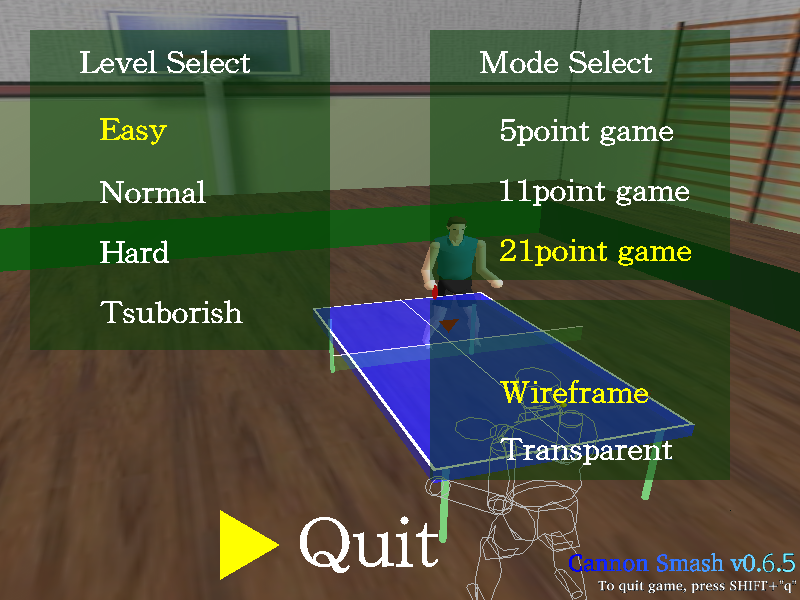
Four computer difficulty levels are a welcome fit for a game built around precision. Start low if the controls feel foreign, then move up once you can reliably set yourself up for a shot. Match lengths of five, eleven, or twenty-one points also matter more than they might sound: five-point games are ideal while you are learning, while twenty-one gives the back-and-forth enough room to become a real contest.
Multiplayer over LAN or internet is the reason to keep coming back after you understand the basics. Table tennis lives on pressure—the knowledge that the next return has to be placed well—and a human opponent should make that aiming system far more interesting than repeating computer matches. If you enjoy older, focused sports games that ask you to learn one peculiar control scheme, this is worth the adjustment period.
Graphics
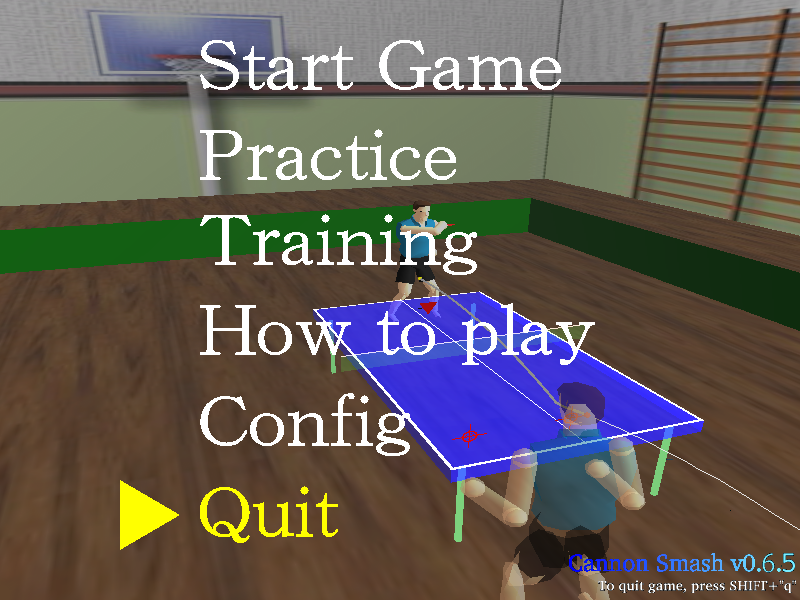
The 3D court is framed from directly behind your player, with the avatar deliberately translucent so it does not completely block the table. The two red aiming circles are impossible to miss, and the drawn ball trajectory keeps the action easy to parse during a rally.
You can also switch the avatar to a wireframe rendering style. It is a small option, but it suits a game whose clearest visual priority is seeing the ball, table, and target area without your own character getting in the way.
Story
Cannon Smash finds its drama one point at a time. A rally begins as a simple incoming ball, then becomes a quick decision about movement, aim, and which side of the paddle to swing. That tiny escalation is enough to create stakes when scores are close.
Against the computer, the four difficulty settings give that competitive arc a useful shape. You can begin with manageable exchanges, learn how the reticles relate to the table, and raise the challenge when straightforward returns stop feeling like an accomplishment.
Human matches offer the stronger version of that sports-story rhythm. Each successful return is a chance to push the other person out of a comfortable response, while every missed ball immediately changes the score. It is a lean form of tension, but a natural one for table tennis.
Overall Experience
Cannon Smash is not trying to bury table tennis under complicated inputs. Instead, it asks you to accept a slightly strange mouse-driven viewpoint and rewards you with a clear, learnable rally system. The trajectory guide and oversized reticles keep the central challenge understandable even when your own execution is not there yet.
Its main frustration is also its defining feature: controlling a character and aiming the racket are intertwined, so the game can feel clumsy before the controls click. Do not judge it after two rushed points. Give yourself a short five-point match on a lower AI setting and let the relationship between movement, reticles, and swing buttons settle in.
The payoff is a neat, specialized sports game for anyone who likes mastering an odd interface rather than relying on familiar controller shortcuts. It is especially easy to recommend if you can make use of its network multiplayer, but the configurable AI and match lengths give solo practice real value too.



Reviews
There are no reviews yet.