 Retro Replay Retro Gaming History, Reviews & Emulation
Retro Replay Review
Gameplay
Castle of Elite builds its puzzle-platforming around two complementary inputs. The main character is controlled with the keyboard, while the mouse is used to affect the level layout, making movement and environmental planning part of the same challenge.
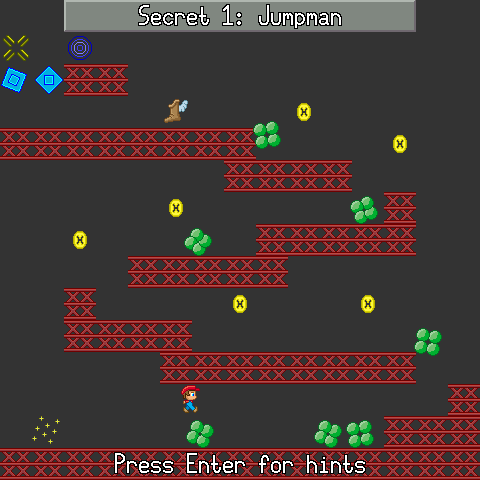
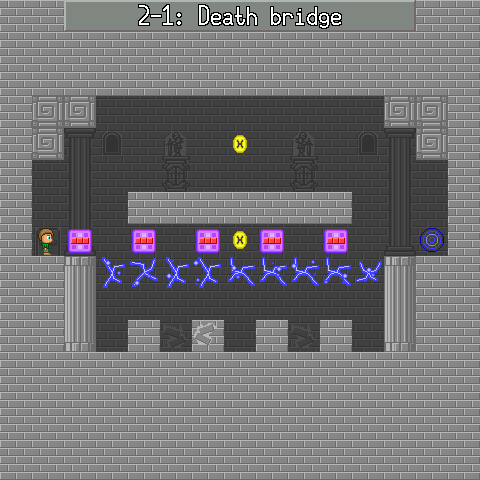
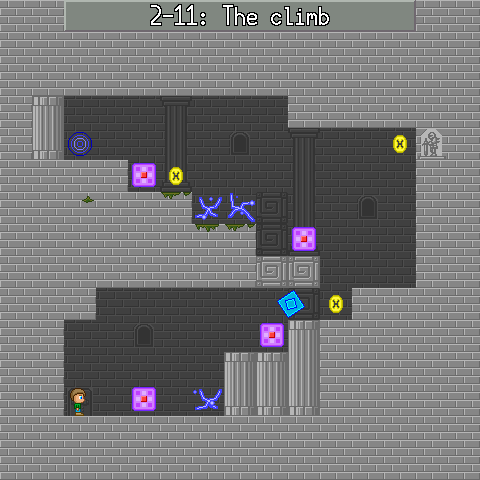
The central task in each self-contained stage is to collect every coin. Doing so opens the portal onward, giving the levels a clearly defined completion condition and focusing attention on routes to otherwise inaccessible collectibles.
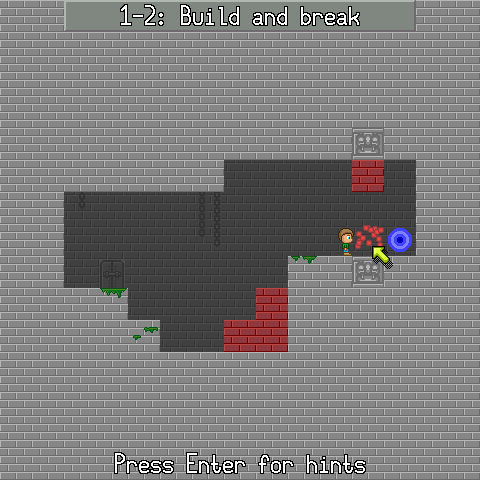
Tetromino-shaped brick platforms can be placed over available space to create paths, and brick sections can also be destroyed to clear blocked passages. Collectible platform icons add further building resources, while later stages introduce enemies, switches, hazards, and more involved puzzles.
Graphics
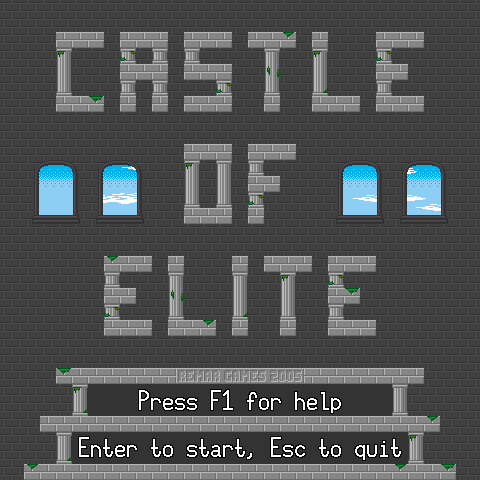
The supplied details identify a side-view presentation suited to platforming and to reading the available space within each puzzle. The game’s scenery is not merely a backdrop, since its brick sections and open areas are directly involved in construction and destruction.
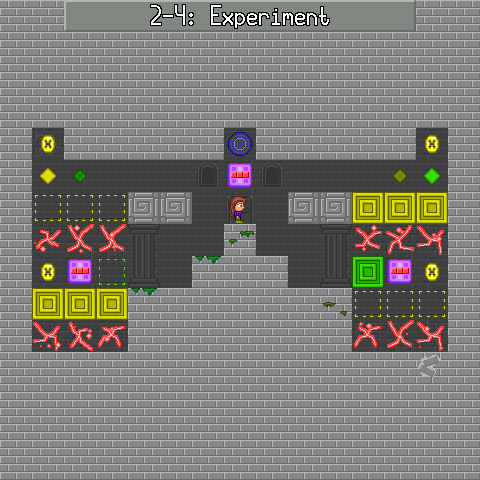
Its visual language must communicate several functional elements: coins to collect, portals that become available after the objective is met, brick platforms, collectible platform icons, and later-stage threats or switches. This arrangement supports a design where the player considers the stage as a manipulable playfield.
No further information is provided about the game’s art style, animation, resolution, or technical presentation. What is established is that the side-view layout carries practical importance, presenting the spatial problems that platform placement and passage-clearing are meant to solve.
Story
No narrative premise, named characters, setting details, or story events are specified in the available material. The identified protagonist is simply the player-controlled main character.
Progress is framed through a sequence of puzzle stages: gather all coins, open the portal, and advance. This provides a functional progression structure without establishing a broader plot.
Accordingly, the game is best described through its puzzle objective rather than through narrative development. The available information does not support claims about motivation, conflict, or an ending beyond stage-to-stage advancement.
Overall Experience
Castle of Elite combines platform movement with mouse-based level manipulation in a focused puzzle format. Its use of tetromino-shaped construction pieces distinguishes the basic coin-collection goal by making path creation a central concern.
The increasing presence of roaming enemies, switches, hazardous environments, and more complex puzzles suggests a structure that expands the demands placed on planning. The level editor also provides a way to create custom puzzles rather than limiting the game to its included stages.
As freeware on Windows, the game presents a compact puzzle-platform concept centered on navigating and reshaping individual levels. Its strongest documented appeal is the interaction between direct character control and deliberate changes to the surrounding brick layout. A contemporaneous independent Castle of Elite review offers another perspective on its mixed-control design.



Reviews
There are no reviews yet.