 Retro Replay Retro Gaming History, Reviews & Emulation


Retro Replay Review
Gameplay
The first few minutes of Dinner Date ask you to accept an unusual bargain: you are not here to solve Julian Luxemburg’s problem. You are here to sit with it. He waits at a dinner table for the woman he invited, and you look through his eyes while his thoughts begin circling the same painful question: is she merely late, or is she not coming at all?
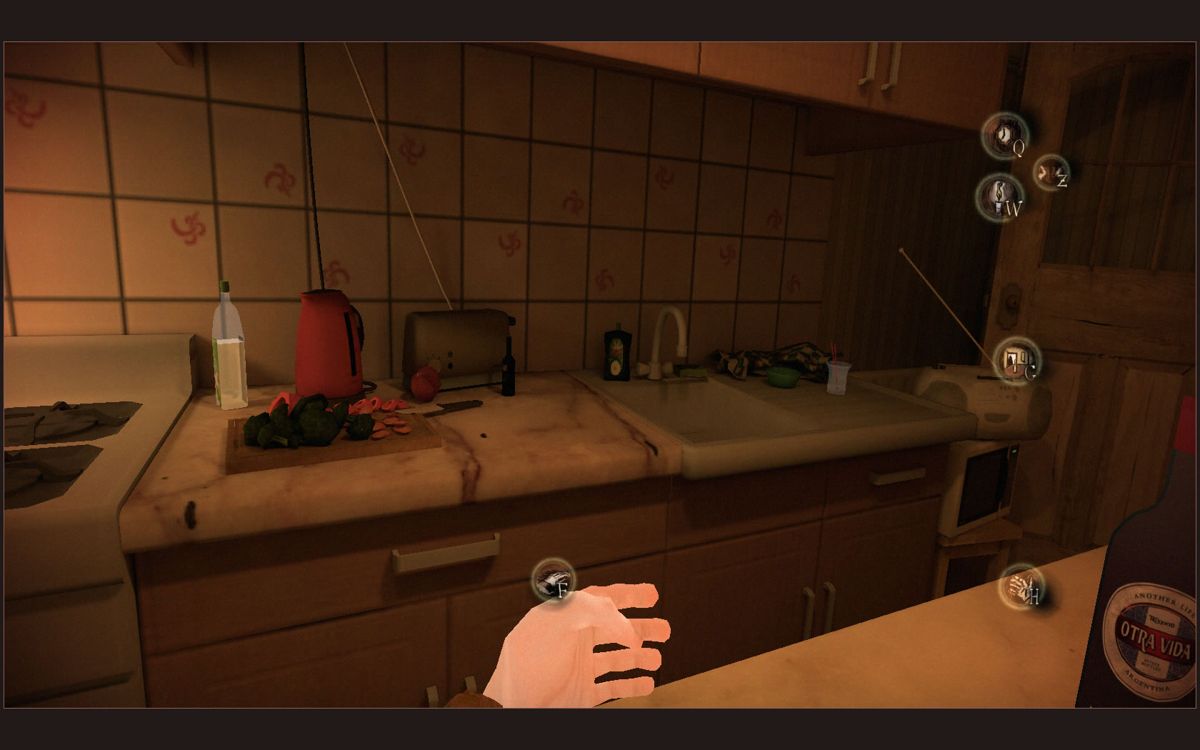
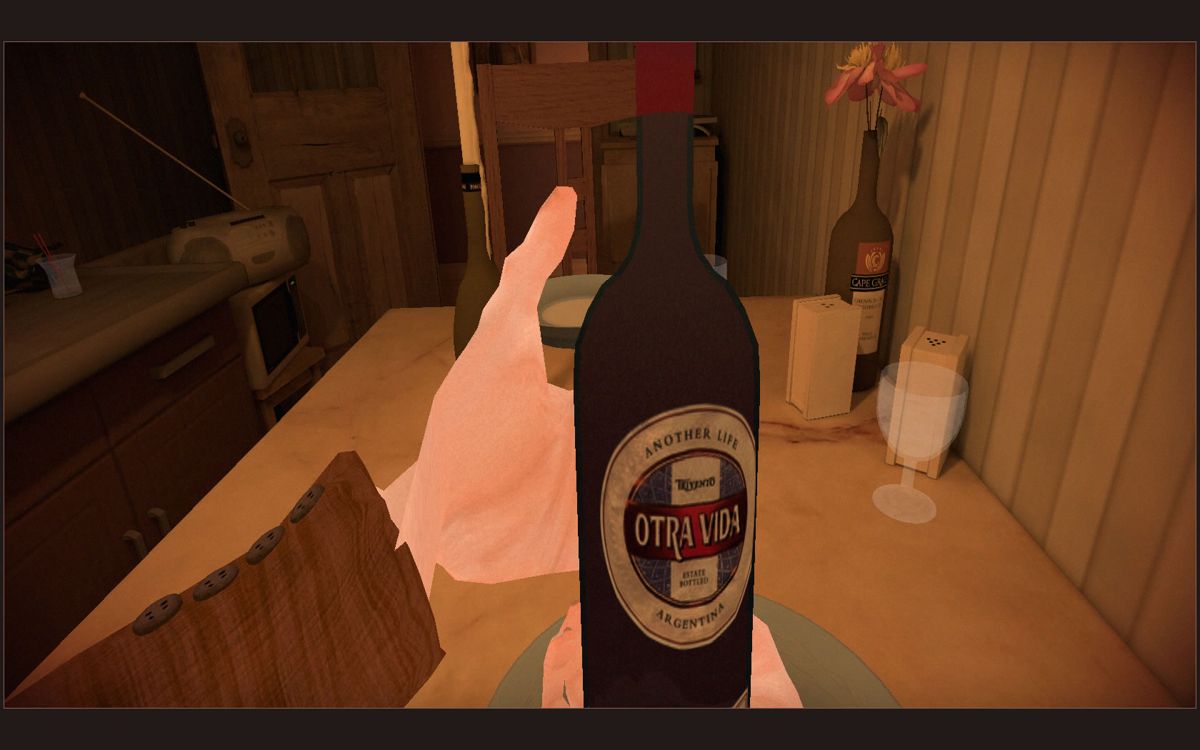
Interaction is intentionally slight. You cannot move Julian around or steer the story off its fixed path; instead, you look toward things and select floating thought bubbles that plant hints in his mind. Watching the clock, tapping fingers, eating bread, and beginning the wine are small choices, yet they give you a hand in shaping Julian’s state of mind. That is enough to make you feel complicit in his spiraling, even though you cannot rescue him from it.
The five-chapter structure gradually opens new subconscious options, which helps the half-hour hold its shape. Still, this is not a game for anyone needing systems to master or branches to chase. Frustration can arrive quickly if you keep expecting your choices to alter events. Once you stop fighting the linear design, the interaction becomes a form of close listening: you are choosing which anxieties and observations Julian dwells on.
Graphics
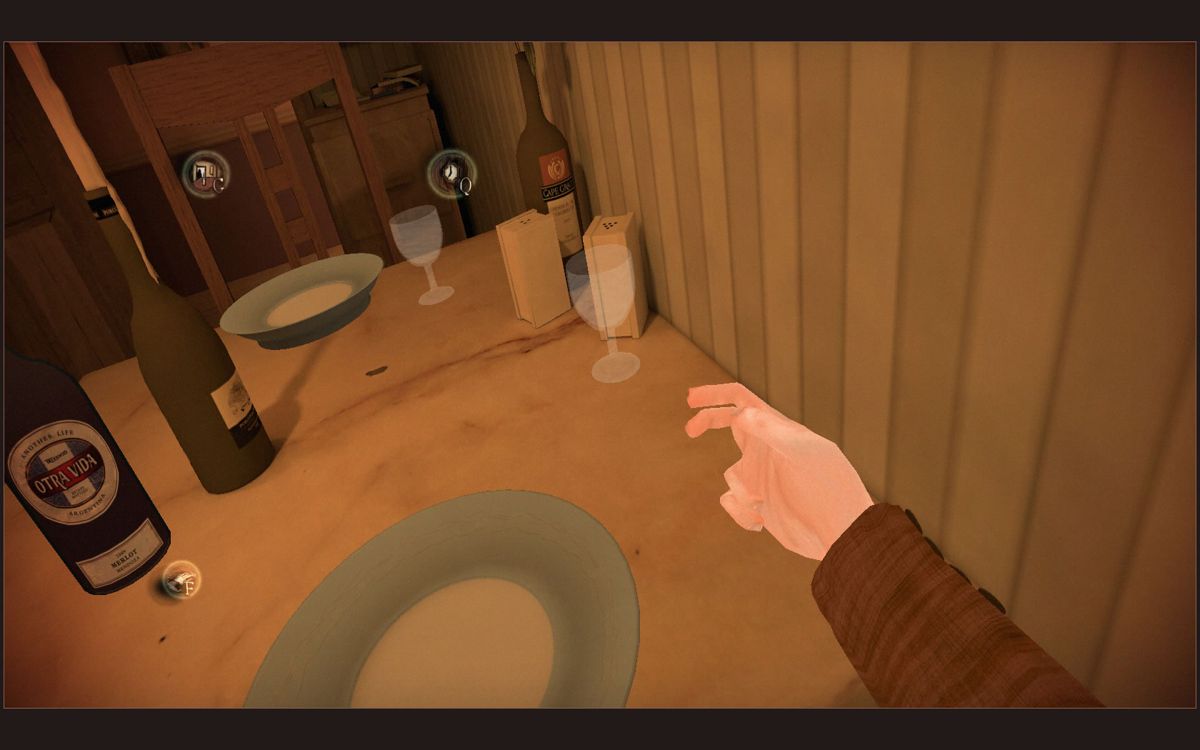
The first-person view keeps you seated in Julian’s place at the table, making the clock and the immediate room part of the tension rather than distant set dressing. Floating bubbles give his possible thoughts a clear on-screen form, so you always know where your limited input lies.
Story
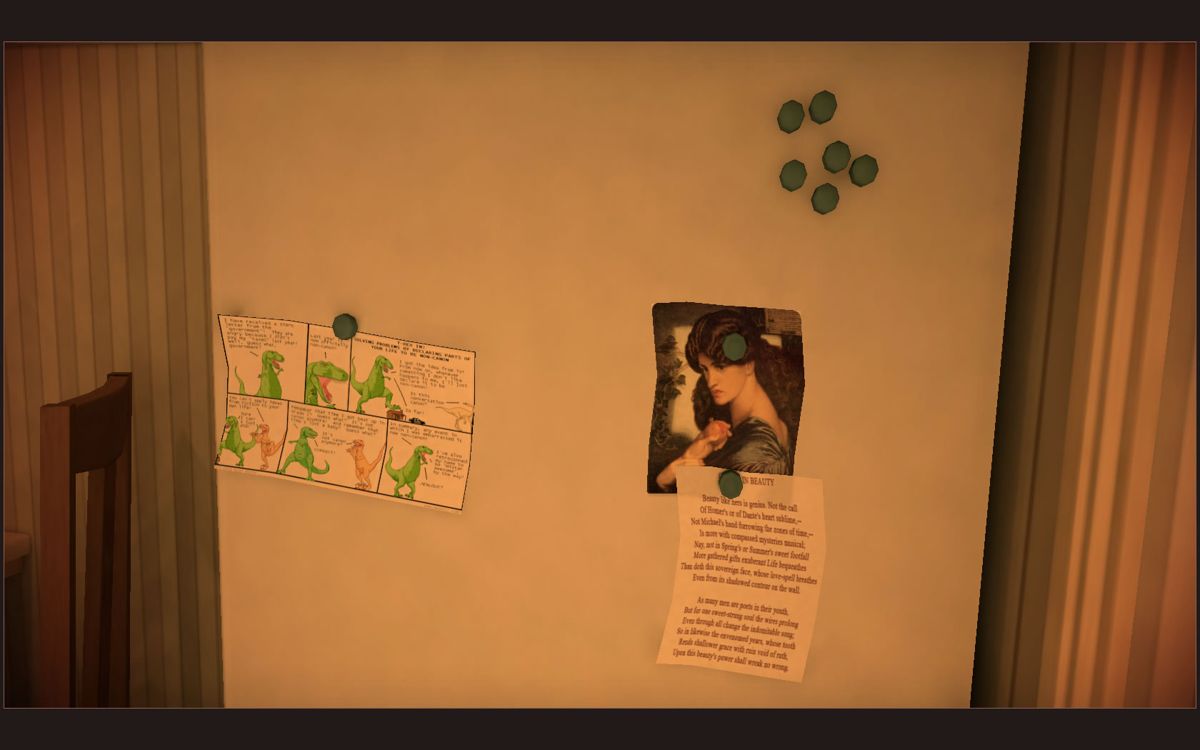
This is a compact character piece about the ugly quiet of being stood up. The premise works because it refuses to skip over the waiting. Each passing minute adds pressure, and Julian’s thoughts steadily reveal both who he is and the circumstances that led him to arrange the date.
Its strongest idea is putting you inside the mind of someone whose interpretation of the evening is changing in real time. A late arrival can still be innocent; after enough waiting, every mundane detail starts to invite a worse explanation. Dinner Date lets you inhabit that uncertainty rather than simply observe it from outside.
The story is entirely linear, so the outcome is not yours to author. What changes is your reading of Julian: the bubbles you entertain and the directions you choose to look encourage different emphases in the same anxious experience. That makes the game more intimate than interactive, and it is better judged as a short piece of performed interior monologue than a choice-driven drama.
Overall Experience
Dinner Date is an unusually focused experiment, and its half-hour running time is a strength. It does not pad Julian’s wait with busywork or pretend that every game needs freedom of movement. You sit down, absorb the discomfort, and leave with a sharper sense of how quickly expectation turns into self-doubt.
That focus also explains its limits. The sparse interaction and fixed story will feel restrictive if you want to influence a relationship, uncover multiple outcomes, or simply do more than sit at a table. The game asks for patience, empathy, and a willingness to engage with someone who may not always be easy to sit beside.
Give it a chance if you enjoy brief, linear games that use a constrained viewpoint to get under a character’s skin. It is not a broad simulation of dating or a conventional adventure, but it commits to one awkward emotional moment and follows it through. The payoff is modest but sincere: you come away feeling that waiting with Julian was the whole story, not dead time before one.



Reviews
There are no reviews yet.