 Retro Replay Retro Gaming History, Reviews & Emulation


Retro Replay Review
Gameplay
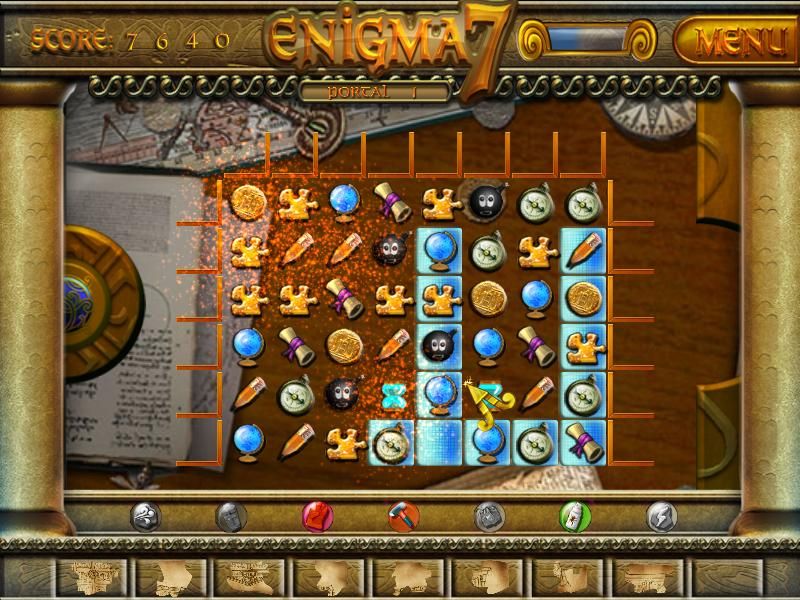
Enigma 7 starts on solid, familiar ground. In Swap mode, you exchange adjacent pieces to make lines of three while trying to highlight the tiles beneath them before the door closes. That extra tile-clearing target is a useful wrinkle: you are not merely making any match you see, but thinking about which parts of the board still need attention.
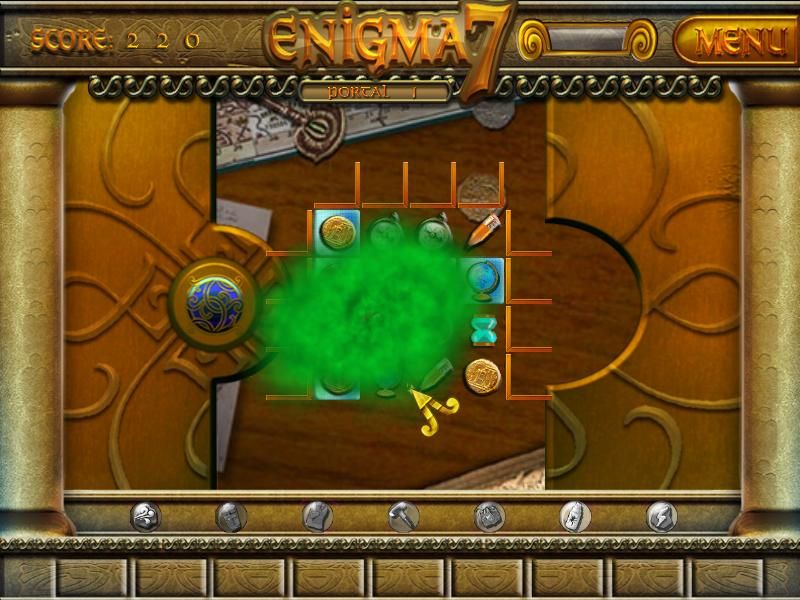
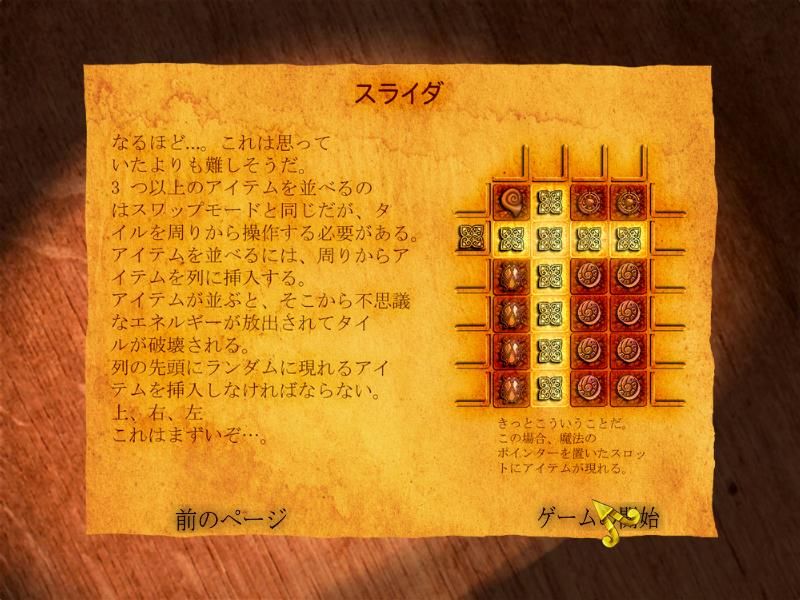
Slider mode is where the game earns more of your concentration. Rather than swapping two neighboring pieces, you slide a piece in from one of three sides into an adjacent space to create matches. It is a more deliberate puzzle, because a move changes the board while also limiting where your next piece can come from. If you enjoy match-three games most when they ask for planning rather than quick pattern recognition, this is the mode with the stronger pull.
Mix mode is the sensible choice once both rule sets have clicked. Alternating Swap and Slider levels prevents either format from wearing out its welcome, though Slider’s greater demands can make it the point where frustration sets in. Combos of four or more fill the Powerup Meter, giving you a reason to look beyond the nearest three-piece match, while the hammer is a welcome recovery tool when the board has no moves left.
Progress also has a tangible rhythm. Collect nine map pieces, complete a jigsaw puzzle, and you earn a key for one of the seven portals. It is a simple loop, but it breaks up the run of boards and makes individual clears feel connected to the larger trek.
Graphics
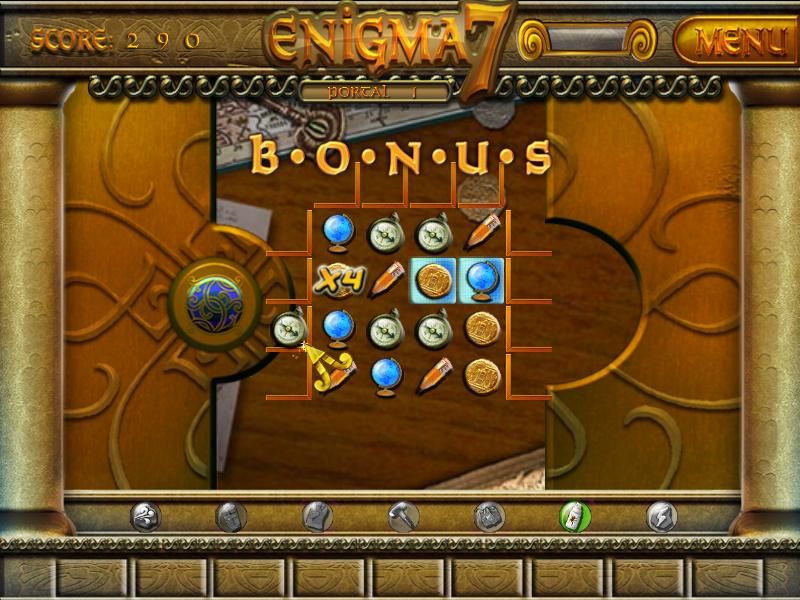
The game is built around fixed, top-down puzzle boards, with tiles that need to be highlighted as you make matches. The clearest visual focus is functional: you need to see the pieces, the board spaces, and the routes available for a Swap or Slider move at a glance.
Story
The story is knowingly melodramatic in the way many puzzle adventures are: Jane vanishes, and Joe heads into the Lands of Enigma to open seven magical portals and bring her back. Archaeology, map fragments, keys, and mysterious gateways give the matching a little more flavor than an otherwise disconnected sequence of levels.
Don’t go in expecting the relationship plot to carry the whole experience. Its main strength is momentum. Each map piece and portal key points Joe toward the next stage of his rescue, so the game has a clear destination rather than asking you to grind through boards for their own sake.
The seven-portal structure also suits the game’s puzzle format. It turns the journey into a series of attainable milestones, with the jigsaw step acting as a small pause between stretches of match-three play. The story is light, but it gives the campaign enough shape to make finishing another objective feel worthwhile.
Overall Experience
Enigma 7 is a modest but smart variation on the classic match-three formula. Swap mode makes it easy to settle in, and Slider mode provides the strategic lift that stops the game from feeling like a pure repeat of countless adjacent-swap puzzlers. The alternating structure in Mix mode is the best argument for the whole package.
Its limits are also clear: the core activity remains matching tiles under time pressure, and the rescue story is a framing device rather than the main attraction. If that basic loop already leaves you cold, magical portals and map puzzles are unlikely to change your mind. But if you like clearing objective-based boards and welcome a second ruleset that makes you slow down, there is more here than the usual quick distraction.
Give it a chance for Slider mode in particular. The payoff is not a radical reinvention, but a pleasant puzzle campaign that understands how one change in movement rules can make familiar matching feel newly demanding. It is an easy recommendation for genre regulars who want a little strategy mixed into their tile clearing.


Reviews
There are no reviews yet.