 Retro Replay Retro Gaming History, Reviews & Emulation


Retro Replay Review
Gameplay
The first hour asks you to get comfortable with a simple loop: examine a fixed first-person scene, locate the items listed below it, and use the resulting finds to push deeper into Emma Willow’s house and its mysteries. That loop has a satisfying little pulse when a cluttered room finally gives up the one object you have been staring past. If you like slowing down, sweeping the screen carefully, and clearing a list one stubborn entry at a time, Looking-glass Lane knows exactly why you are here.
The blue entries are the important wrinkle. They tell you an item is not merely hidden in plain sight; you need to open, move, or otherwise interact with something else to uncover it. That adds a welcome bit of cause and effect to the searches. Instead of treating every scene as a pure eyesight test, you are encouraged to poke at the environment and consider what may be concealing the next object.
Finishing a list often feeds into a small puzzle, and these puzzles in turn open doors or expose further problems to solve. It is a sensible structure because each search has a purpose beyond checking off inventory names. Still, the game’s pleasures are deliberate rather than dramatic. Frustration can set in when you know an object must be hidden behind an interaction but have not yet found the thing that exposes it. Patience is the price of admission, and it is worth paying if the steady chain of discovery is what you want from a hidden-object adventure.
Graphics
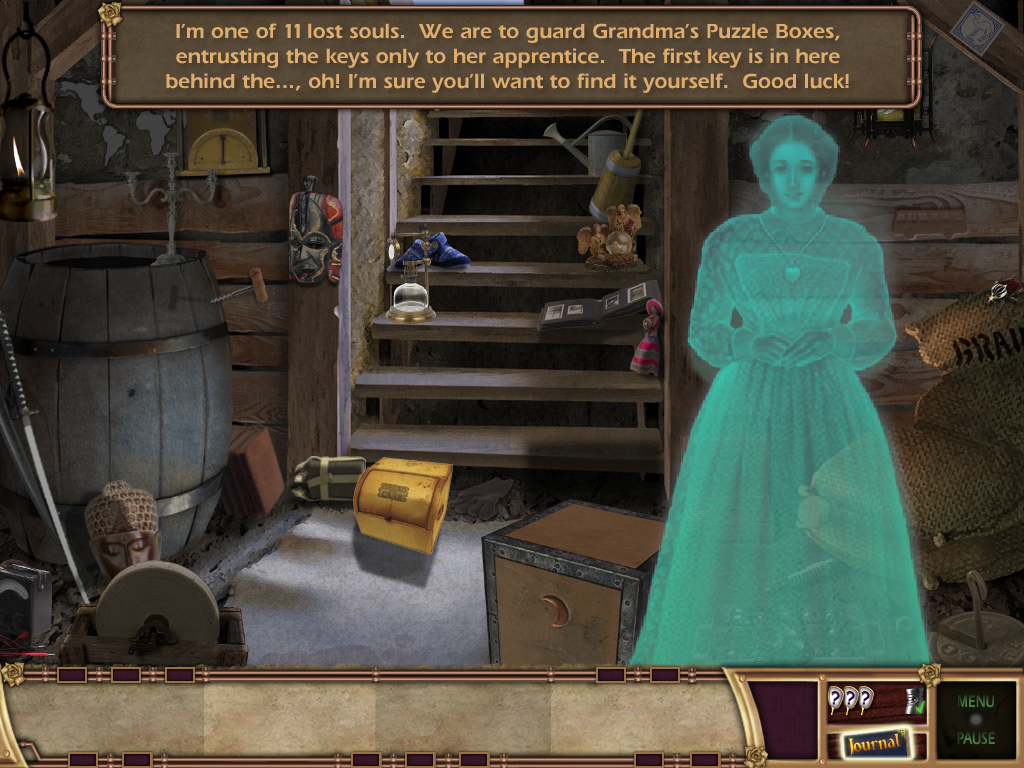
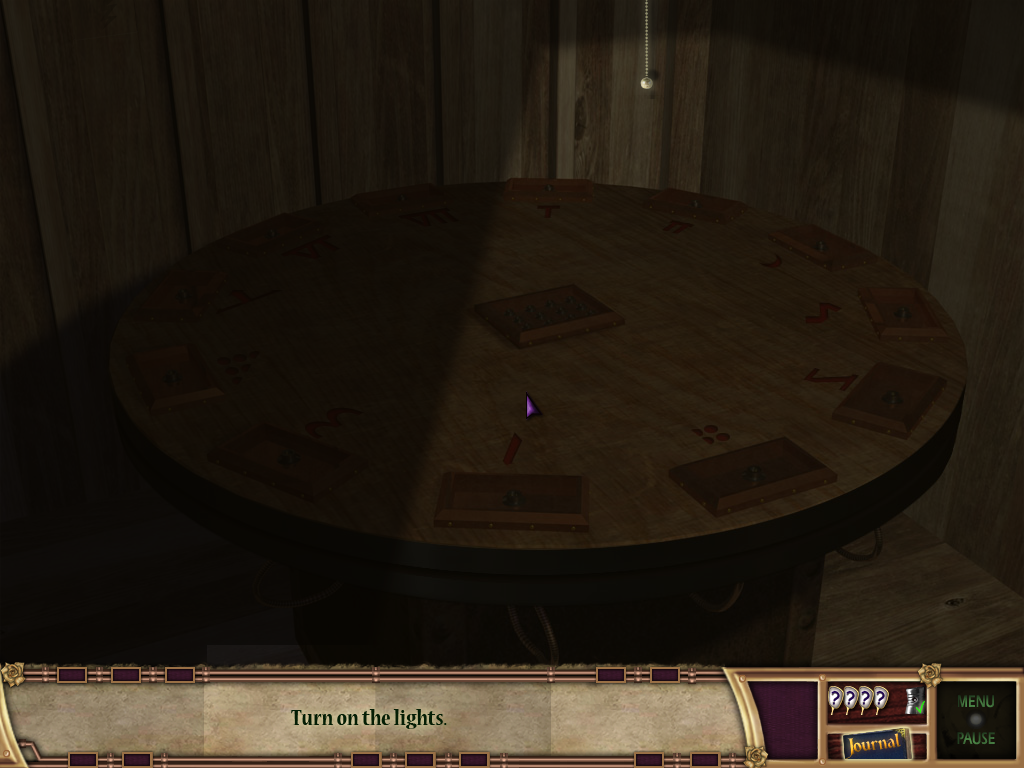
The game is viewed through fixed, first-person screens, putting the focus on individual rooms and the objects tucked within them. The item list along the bottom is central to each scene, and blue text clearly marks the objects that require another action before you can collect them.

Story
The time-travel hook does enough to make the object searches feel like part of an adventure rather than a string of unrelated scenes. After exploring Castle Fairwich with the Ancestor’s Mirror in the earlier game, you arrive at the home of your great-great-grandmother, Emma Willow. A lightning strike then strands you in the era when her invention caused a train to vanish into the past.
That is a clean setup with immediate stakes: save the people aboard the missing train and find your way home. Emma’s puzzles and the twelve machines connected to her time machine turn the investigation into a gradual reconstruction of what went wrong. The story does not need to overpower the puzzles; it gives them a clear destination.
Newcomers can follow the central crisis, but the connection to Mirror Mirror gives the premise a little extra continuity through the Ancestor’s Mirror and the prior trip to Castle Fairwich. More importantly, the narrative keeps pointing you forward. Each opened door, revealed clue, and recovered machine component feels like another small step toward undoing the disappearance.
Overall Experience
Hidden in Time: Looking-glass Lane is a focused hidden-object sequel for anyone who finds satisfaction in searching carefully, unlocking a new obstacle, then repeating the process with a little more context. It does not chase complexity for its own sake. Its strengths are the clear objective, the pleasant cadence between scavenger hunts and small puzzles, and a time-travel mystery that gives the work a reason to matter.
You should give it a chance if you enjoy point-and-select puzzlers that reward observation more than quick reactions. The blue-item rule is especially helpful because it creates small moments of deduction amid the visual searching. On the other hand, anyone already tired of item lists or easily irritated by a single elusive object will find the same loop wearing thin.
For its intended audience, the payoff is the accumulation of progress: a room understood, a puzzle solved, a path opened, and another piece of Emma’s strange machinery brought into view. It is not an ambitious reinvention of the genre, but it is a coherent, story-led scavenger hunt with enough structure to keep its searches from feeling entirely mechanical.


Reviews
There are no reviews yet.