 Retro Replay Retro Gaming History, Reviews & Emulation
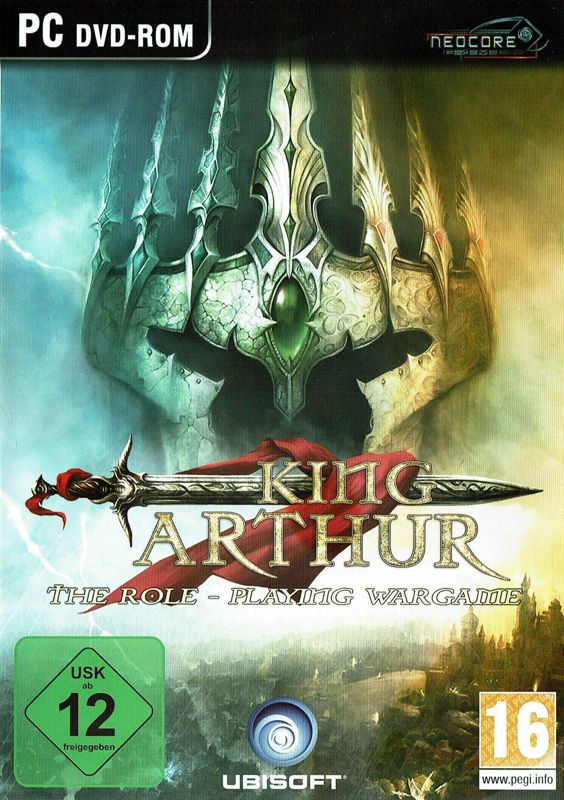
Retro Replay Review
Gameplay
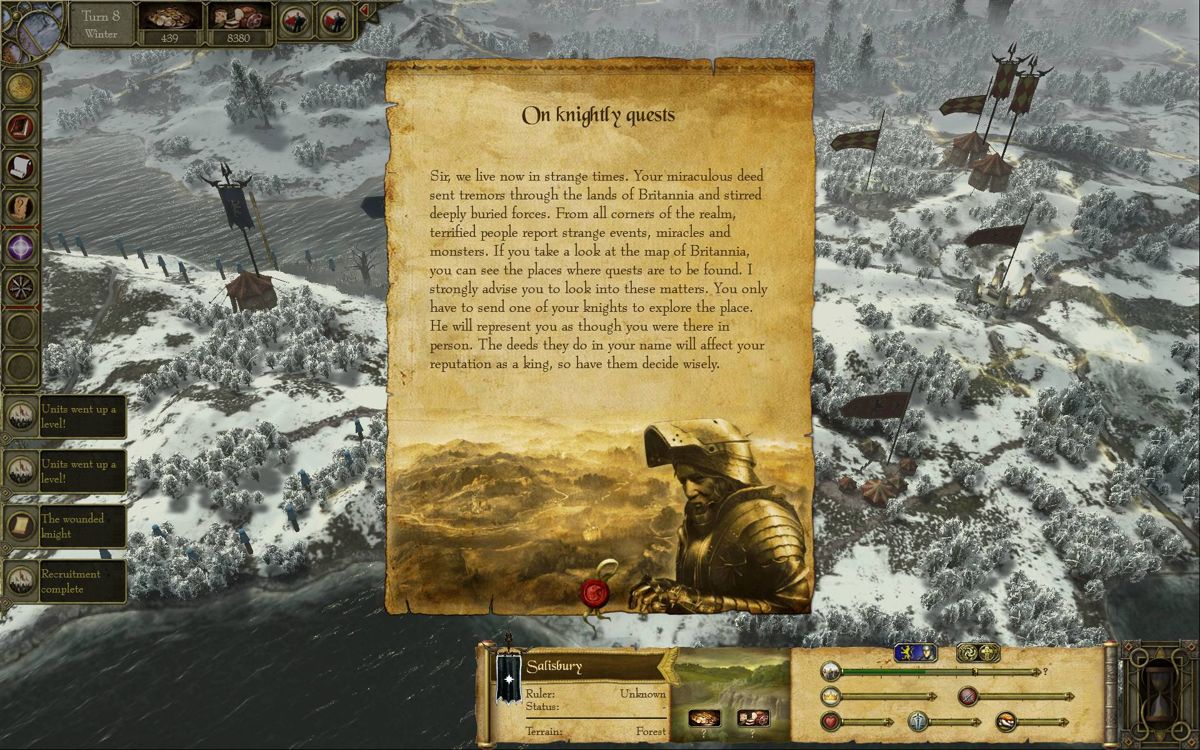
King Arthur starts by making you feel like a ruler rather than merely a battlefield commander. On the campaign map, you move armies by season, seize strategic points to claim provinces, trade, pass laws, and research. That mix gives each turn a useful tension: money and food are limited, expansion needs armies, and a decision that looks safe now can leave a border exposed later. Summer grants the greatest army range, while winter stops movement entirely, so planning around the calendar is not just flavor.
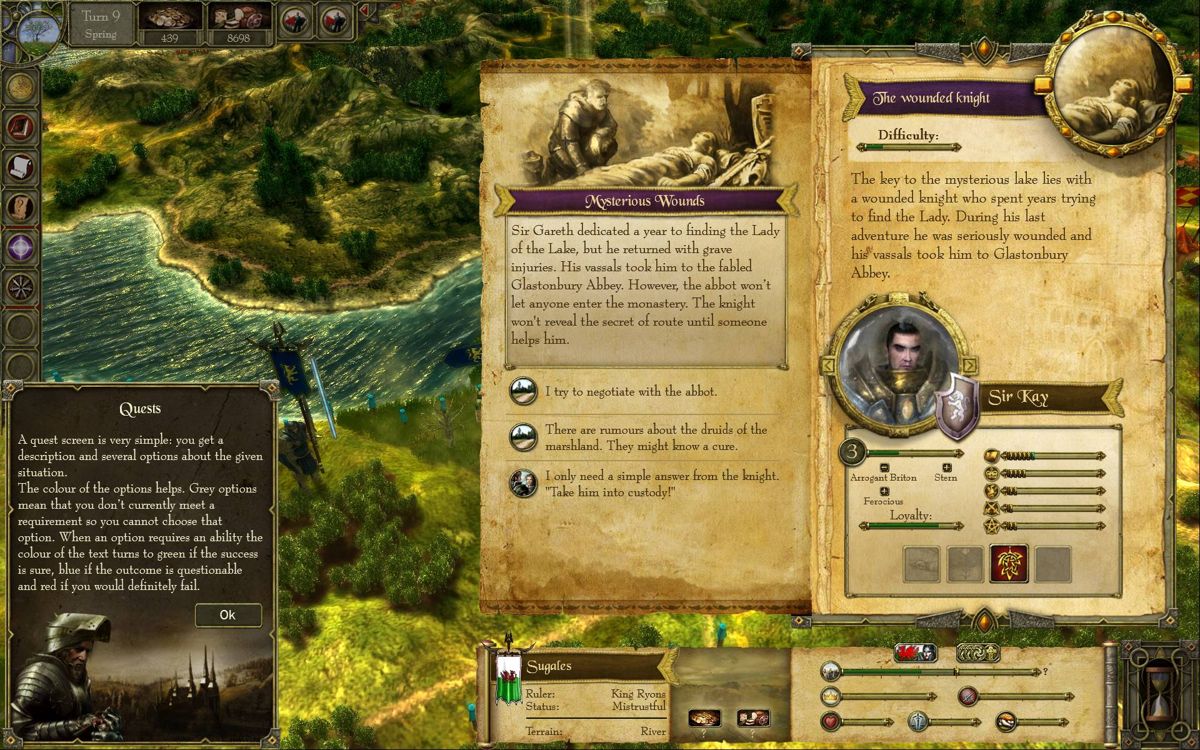
The role-playing layer is where the campaign gets its personality. Knights gain experience, improve their abilities, and equip artifacts, but they also handle many quests. Sending the right knight matters because text-led decisions depend on character statistics rather than on blindly guessing a correct response. Short jobs can turn into a chain of choices and possibly a battle, while longer undertakings sit alongside your larger plans. It gives the quieter turns a welcome sense of risk and makes your Round Table feel tied to the fate of the kingdom.
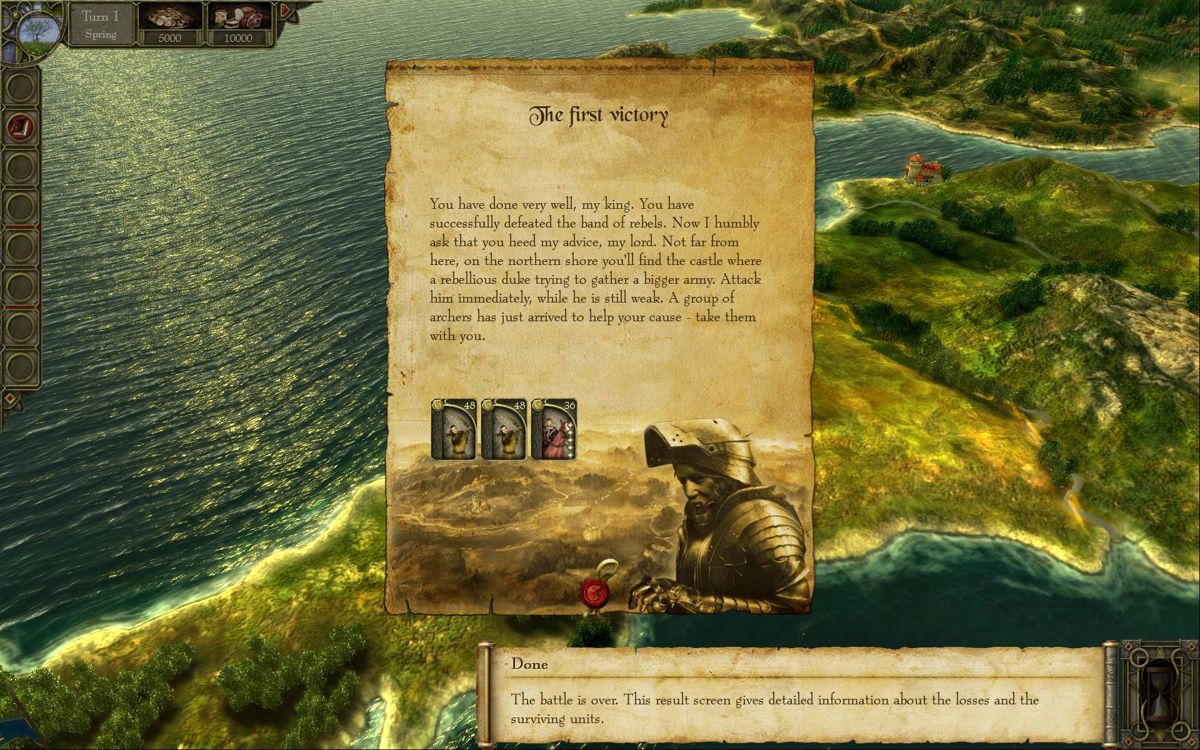
Manual battles shift into real time and ask you to think in broader army terms. Unit matchups matter, knights affect the troops they lead, and capturing flag points swings morale in your favor while hurting the enemy’s. Kidnapping an opposing leader can have a similar effect, adding another target beyond simply grinding through every hostile unit. You can auto-resolve fights, which is useful when a clash feels routine, but manual control is where the game’s tactical intentions come through most clearly.
The friction comes from how much King Arthur asks you to juggle. A quest choice can affect a knight, morality can alter faction relations and abilities, and the campaign still expects you to maintain an empire and win battles. That can be a lot to absorb early on. Stick with it long enough for the seasons, knight development, and territorial ambitions to connect; once they do, the game has a satisfying sense that your political and personal choices are shaping the same war.
Graphics
The campaign map sells the Arthurian setting with a painted view of Britain, heraldic army markers, textured terrain, and parchment-like menus. Quest screens pair illustrated scenes and character portraits with clearly framed choices, so the heavy reading feels like opening a medieval adventure book instead of staring at a plain strategy interface.
Real-time battles trade that storybook stillness for rolling fields packed with formations, banners, spell effects, and mounted knights. Zooming out keeps the larger clash readable, while moving closer lets you appreciate armor, weapons, and the scale of the armies. The battlefield animation can look stiff when units collide, but the color and strong silhouettes make important troops and control points easy to track.
Story
This is a King Arthur story built around the work of ruling: building an empire, defending it, and deciding what sort of king Arthur will become. The central campaign is pushed forward by required quests, but optional quests keep the world from feeling like a straight march between scripted objectives. A kidnapped relative, a trade route, or a diplomatic problem can become part of the larger picture.
The morality system gives the narrative choices more bite than a simple good-or-evil label. Decisions move Arthur toward benevolence or tyranny, and toward Christianity or the old religion. Those directions affect relationships with other factions, which abilities become available, and how effective certain artifacts are. Choosing a path therefore has practical consequences as well as role-playing flavor.
That connection is the story’s strongest point. You are not just reading about Arthur’s values between battles; your conduct changes what kind of power he can wield and how the realm meets him. The quest writing is structured like a choose-your-own-adventure sequence, so it will especially suit you if you like pausing a strategy campaign to make consequential decisions for individual characters.
Overall Experience
King Arthur: The Role-playing Wargame earns its name by refusing to treat its RPG material as decoration on top of strategy. Knights matter in quests and combat, artifacts matter, moral commitments matter, and the seasonal campaign gives your conquests a cadence. The result is more distinctive than a standard fantasy war game, even if it can feel less immediately tidy than a game devoted to only one of those ideas.
Give it a chance if you enjoy directing armies but want your commanders to have growth, beliefs, and problems beyond their unit bonuses. The strongest moments come when a campaign-map decision, a knight’s quest outcome, and a looming battle all pull at the same limited resources. Auto-resolve helps keep momentum moving, but taking command yourself is the better route when a battle could decide a province or a larger plan.
It is not a breezy introduction to either real-time strategy or kingdom management. Yet the payoff for learning its overlapping systems is a campaign that feels unusually personal for a conquest game. King Arthur lands as a strong recommendation for strategy fans who want the map-level planning of a war game with meaningful character choices woven through it. The Hooked Gamers review offers another detailed perspective on how this unusual strategy and role-playing blend comes together.


Reviews
There are no reviews yet.