 Retro Replay Retro Replay gaming reviews, news, emulation, geek stuff and more!
Retro Replay Review
Gameplay
The first hour makes its priorities clear: you are not a free-roaming hero yet. You are Gwydion, stuck performing menial work for Manannan and looking for tiny openings in a dangerous routine. That restricted beginning is a smart fit for an adventure game, because every useful discovery feels like a small act of rebellion rather than another item on a checklist.
The modern icon-based point-and-click interface is the remake’s most immediately welcome change. You can focus on examining the house, trying ideas, and following the logic of Gwydion’s escape instead of wrestling with an older text-driven control scheme. The illustrated control bar also gives the game a more approachable, hand-crafted feel without pulling attention away from the mystery at hand.
This is not a remake content to preserve every rough edge. Added side quests, puzzles, and characters make Llewdor feel like more than a route between required solutions, while adjusted puzzles reduce some of the original game’s reputation for punishing the curious. You still need patience—the pleasure comes from poking at a problem until its answer clicks—but the revision makes that persistence feel more often rewarded than scolded.
Graphics
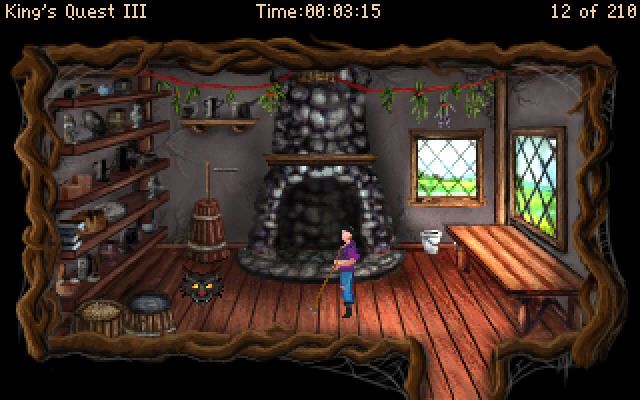
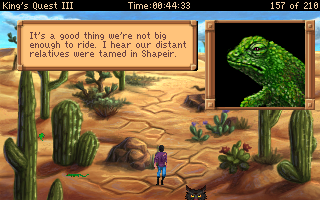
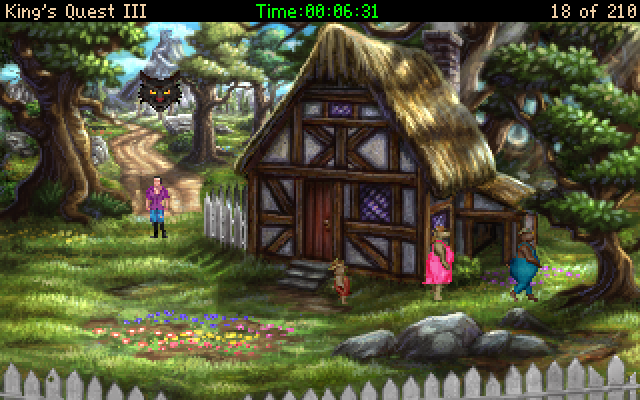
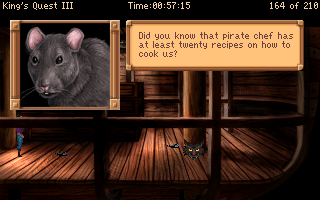
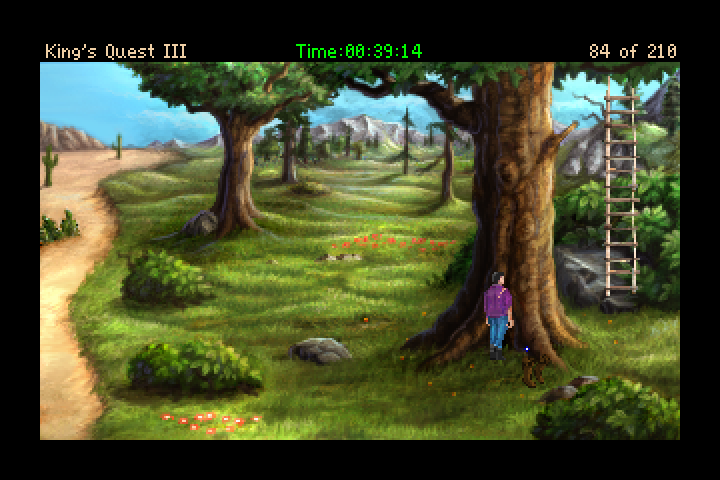
The completely redrawn background art gives this version a clear advantage over the 1986 game. Gwydion’s home and the wider land of Llewdor are presented through freshly painted adventure-game scenes, inviting you to linger over the details that might point toward a solution. The illustrated control bar fits neatly with that updated look.
Story
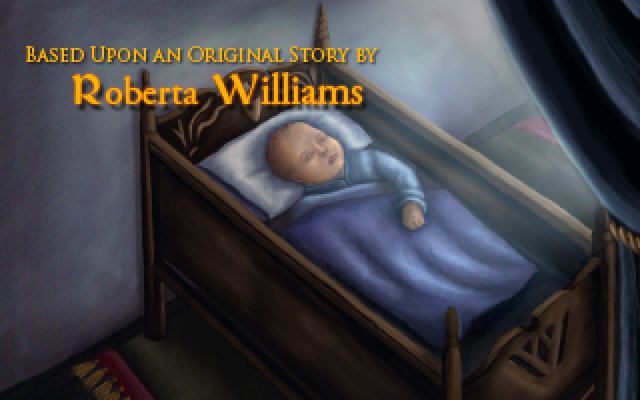
King’s Quest III has always had one of the series’ strongest hooks: an infant prince is stolen away by an evil wizard, raised under another name, and denied any knowledge of his birthright. Starting from Gwydion’s forced servitude gives the fantasy a more personal edge than a standard royal quest. You want out not just because the world is there to explore, but because staying put means remaining under Manannan’s power.
The remake retains that core tale of escape, exploration, and recovered identity. Gwydion’s adventurous streak is the engine of the plot, and Llewdor becomes the space where he can begin to test the life that has been withheld from him. Manannan’s threat keeps a welcome tension around the whole premise: this is a wizard who will not forgive an attempted betrayal.
Extra characters and story-adjacent content expand the journey without displacing the original arc. That makes Redux a good choice if you know the old game and want a broader retelling, but it also works for newcomers because Gwydion’s immediate situation is easy to understand and compelling from the start.
Overall Experience
King’s Quest III Redux succeeds because it respects the strange, tense heart of its source rather than treating the original as a museum piece. The chores, the looming master, and the gradual search for freedom give it a different flavor from a breezier fairy-tale adventure. Once you begin turning small discoveries into a possible escape plan, it is easy to understand the pull.
The full voice acting and professional music score add welcome life to a story that depends on its villain’s menace and its hero’s isolation. Appearances by Sierra veterans Josh Mandel and Lori Cole are a pleasant touch, but the larger benefit is that the remake feels deliberately performed rather than merely converted to a newer interface.
If you enjoy classic graphic adventures but have little appetite for their most hostile habits, this is the version to try. It preserves the methodical puzzle-solving and the danger that make King’s Quest III memorable, then eases the path with modern controls and less punishing revisions. The payoff is a richer, friendlier return to a fantasy adventure that still knows how to make escape feel earned.



Reviews
There are no reviews yet.