 Retro Replay Retro Gaming History, Reviews & Emulation

Retro Replay Review
Gameplay
Love puts you in a shared world where a settlement is both home base and a collective responsibility. You roam in first person, collect tokens, bring them back, and use the resulting unlocks to expand what your group can do. That loop has more weight than a typical shooter scavenger hunt because the reward can be a turret, a forcefield, a radio tower, wired power, a new weapon, or a personal ability such as diving.
The best part is how often the action and strategy pull on each other. Enemy settlements contain valuable tokens, but they also bring danger, including infrastructure that can be hacked or disrupted before artillery tears into your own base. You can immediately respawn after death, so the game encourages another push rather than a long walk back. Four tool slots and their power costs force choices about what you carry into a risky area, while remotely accessible towers and teleportation points give the larger defense effort some useful reach.
Building is not merely decorative. You can dig tunnels, raise hills, and break apart terrain, leaving permanent changes for everyone on the server, but only near your settlement’s monolith. That restriction keeps the shared landscape from becoming total chaos while still making local engineering meaningful. Enemy tribes rebuild after losing a city, and your own group can relocate after losing its settlement, which creates a war of pressure and recovery rather than a one-and-done victory lap. The game asks for patience, coordination, and a willingness to help with unglamorous jobs. It is a distinctive fit for you if communal problem-solving sounds better than topping a scoreboard.
Graphics
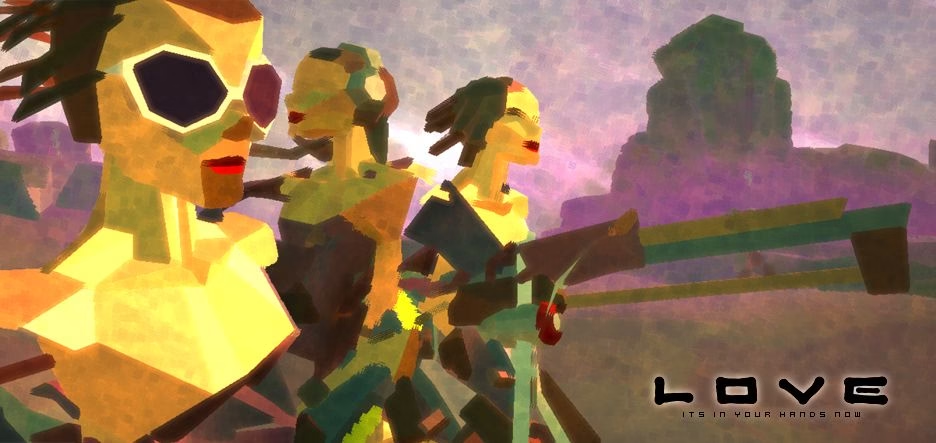
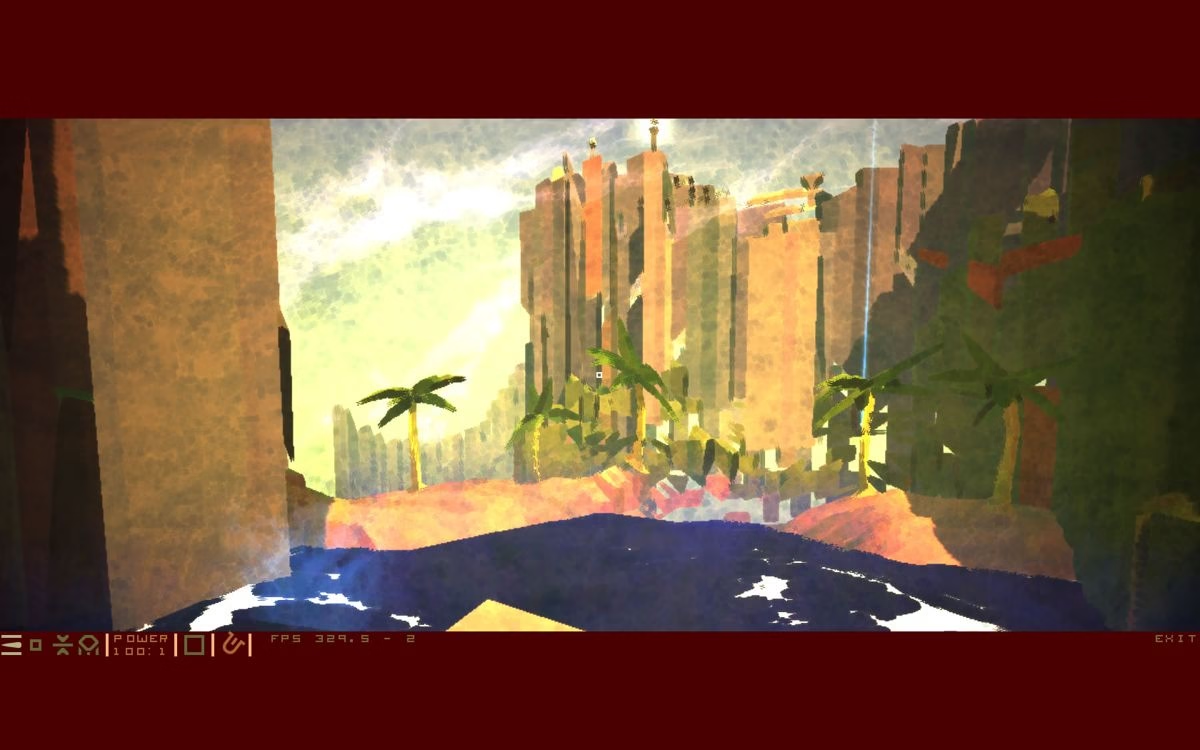
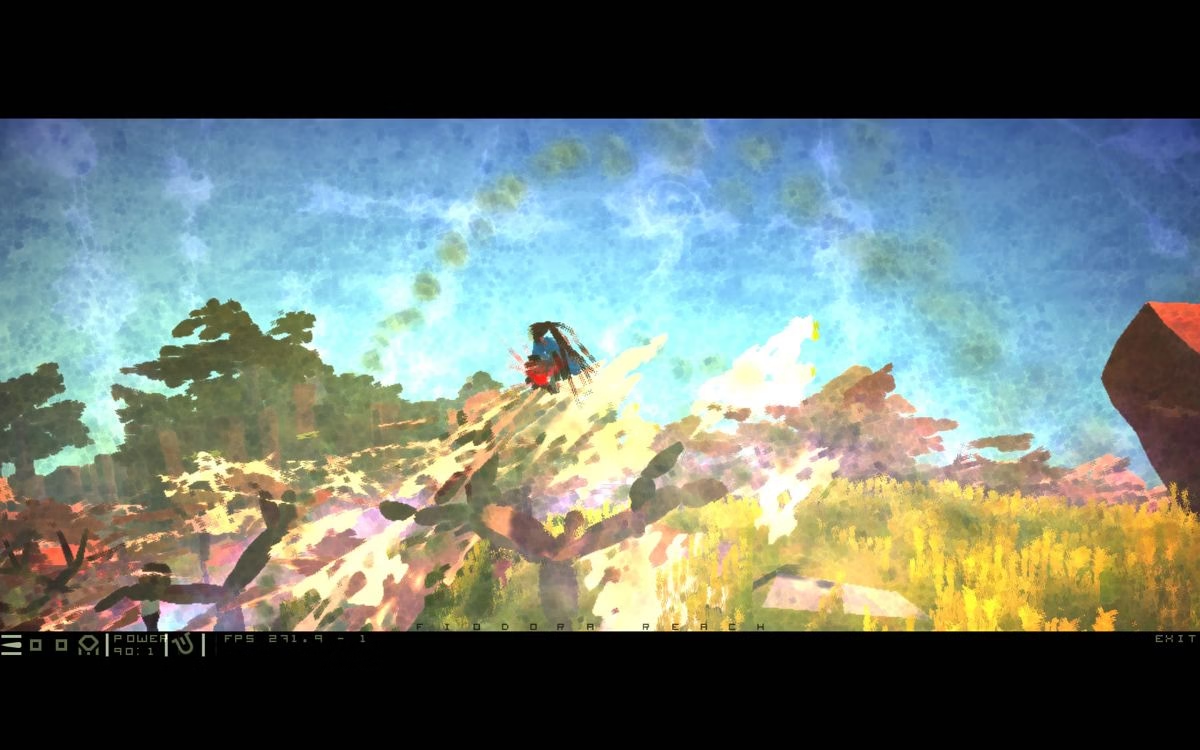
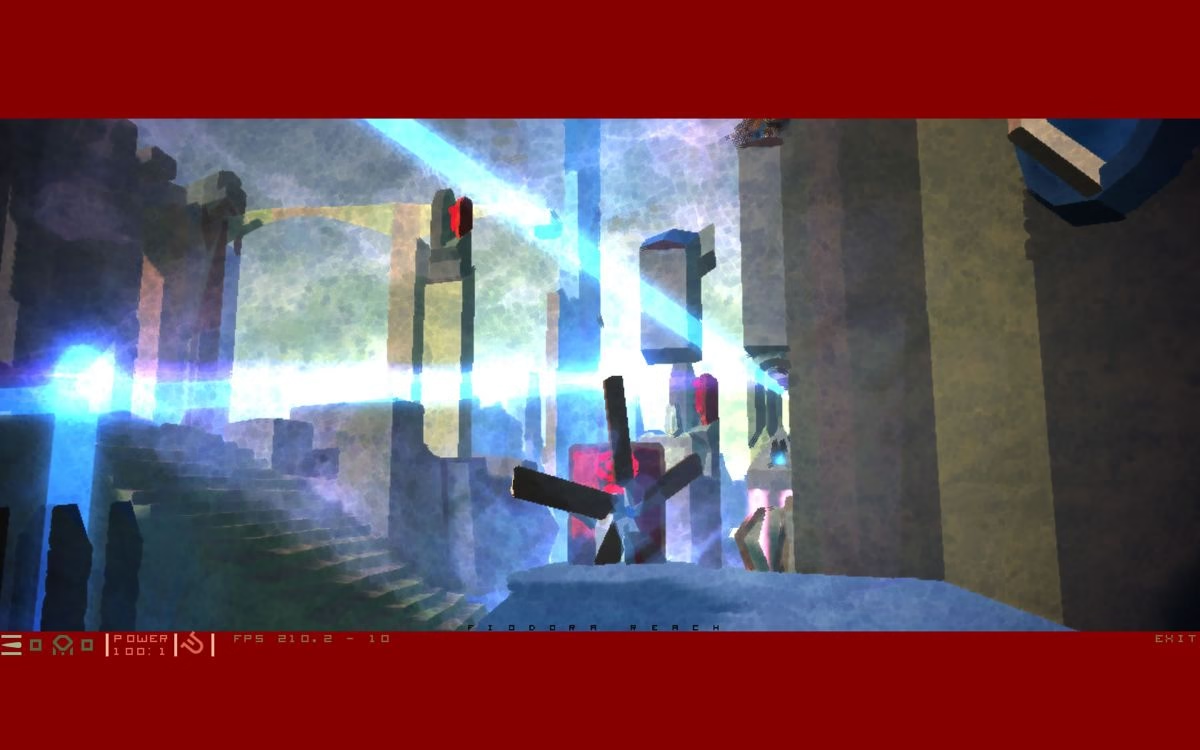
The first-person landscapes look like vivid impressionist paintings smeared across the screen. Sunlit yellow grass, blue-green skies, dark tree silhouettes, and huge blocky structures create scenes that are often beautiful in a handmade, slightly unreal way. Enemy territory is especially striking, with gray stone-like ruins, bright blue energy beams, and sharp red highlights that make the place feel hostile without abandoning the painterly color.
That style can also be rough when you need to judge a scene quickly. Distant objects and terrain blend into the brushy textures, while the world’s tall pillars and hard-edged structures stand out much more clearly. Still, the glowing linked power sources and the mix of water, jungle-like growth, and monumental architecture give Love a look far more memorable than its sparse geometric forms might suggest.

Story
This is a story of survival built from the situation rather than a tightly authored tale. Your group is trying to establish and defend a settlement in a persistent world contested by five AI-controlled tribes. That simple conflict gives every token run and every defensive project a purpose: you are not just improving a private base, you are helping a community endure.
The tribes provide a steady outside threat instead of turning the world into a player-versus-player grudge match. Destroying an enemy city does not close the book on that foe, since its members rebuild elsewhere. The result is a setting where territory feels contested and temporary, and where success means creating enough momentum to handle the next problem.
Most of the memorable moments are likely to come from fellow players. A rushed defense, a coordinated strike on enemy infrastructure, or a landscape altered into a useful route can become the kind of shared anecdote scripted campaigns cannot manufacture. Text chat and a permanent voice server support that social side, while the vote-assisted removal tool gives the community a way to push back against someone intent on spoiling the cooperation.
Overall Experience
Love is ambitious in a way few online games are. It combines first-person combat, settlement maintenance, a persistent battlefield, and permanent terrain changes into a world that expects people to depend on each other. The unusual part is not simply that you can build or shoot. It is that both activities feed the same shared struggle against enemies that can attack, regroup, and return.
Its demands are also its barrier. You need to accept a game where gathering resources, powering constructions, and protecting a settlement can matter as much as direct combat. There is no PvP outlet for players who want rival human opponents, and cooperative momentum can rise or fall with the people around you. If you need a polished solo arc or instant competitive thrills, this is unlikely to grab you for long.
For a gamer drawn to experimental online worlds, though, Love has a rare spark. It treats the world as something a community can scar, repair, fortify, and lose together. The painterly scenery helps it stick in your mind, but the real payoff is contributing to a settlement that feels altered by the work of the people sharing it with you.


Reviews
There are no reviews yet.