 Retro Replay Retro Gaming History, Reviews & Emulation


Retro Replay Review
Gameplay
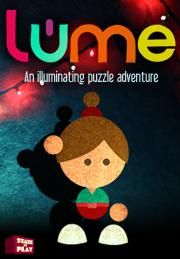
The first few minutes of Lume make a simple promise: the lights are out, Granddad has left a note, and you need to get his house running again. From there, it plays like a small, hands-on escape room. You click between fixed locations, inspect hotspots, collect useful objects, and gradually turn a collection of odd household details into solutions. It is immediately approachable because the goal is so concrete, even when the route to it is not.
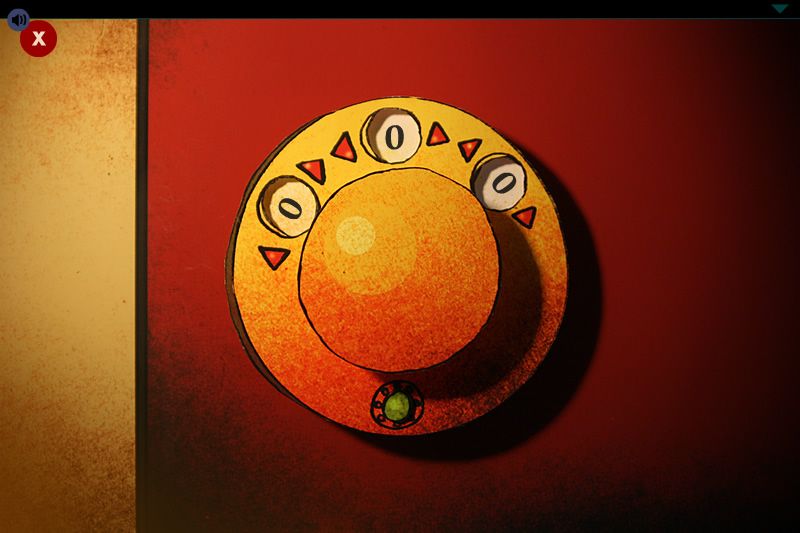
Most of the work is puzzle solving, and the puzzles ask you to pay close attention rather than rush. Fixing wiring, pairing a key with its shadow, and finding codes are the kind of tasks that reward a second look at the room and its messages. The inventory gives you a place to hold onto found items, but this is not an adventure built around broad exploration or constant combination experiments. Each area is more self-contained, so progress often comes from understanding the local problem in front of you.
That structure cuts both ways. When a clue clicks, Lume feels satisfyingly tidy: you saw the answer in the environment, made the connection, and restored another piece of order. When it does not, the cryptic messages can leave you circling the same hotspots and wondering what detail you failed to interpret. The limited movement keeps the search space manageable, but it cannot always remove the friction of an opaque clue.
The single save state is another small reminder that this is a lean, focused adventure rather than a sprawling one. Go in ready to slow down and examine the house carefully. You will get more out of it by treating every odd shape, note, and object as potentially relevant than by trying to brute-force your way through.
Graphics
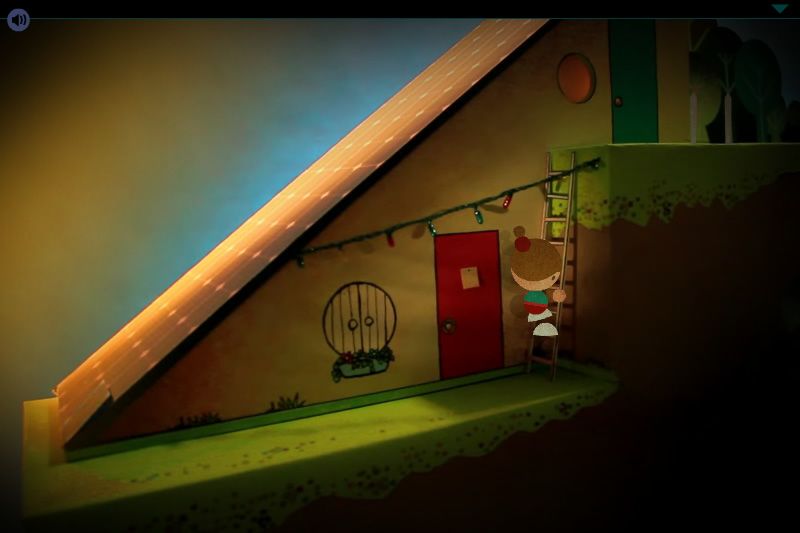
Lume’s photographed paper-and-cardboard house is its standout feature. Rooms, objects, and puzzle pieces have the tangible charm of a carefully assembled miniature set, and the fixed camera views let you linger over their handmade details. The key-and-shadow puzzle in particular fits this physical look naturally: you are studying shapes in a world that looks built to be touched.
Story
The story is modest but well matched to the game’s scale. Lumi arrives at her granddad’s house, finds that the electricity has been cut, and learns that his attempt to become self-sufficient with solar panels has not fully worked. His note turns a domestic inconvenience into your reason to start poking through the house.
Do not come expecting a densely plotted mystery. The narrative mainly gives context to the puzzles and keeps the focus on restoring full power. That is enough to make the tasks feel connected, but the game’s real storytelling is in the house itself and the clues it leaves for you to decode.
That light touch will suit you if a simple setup is all you need before getting down to puzzles. Anyone hoping for major character development or dramatic turns may find the premise runs out of momentum before the puzzle-solving does.
Overall Experience
Lume is an easy game to admire because its handmade construction is not just decoration; it makes the familiar point-and-click routine feel unusually personal. You are not crossing a huge map or unraveling an elaborate conspiracy. You are working through a compact chain of practical problems in a strange little house, and that close-up focus gives it a cozy, deliberate rhythm.
Its weaker moments are also typical of compact puzzle adventures: a vague hint can stop progress more completely than it would in a larger game, and the hotspot-based travel leaves little room for the joy of wandering. The game asks for patience and observation, then relies on you to make the final leap. Whether that feels clever or irritating depends on how much you enjoy cryptic logic.
Give it a chance if you like short, visually distinctive adventures where solving a puzzle means genuinely noticing your surroundings. Skip it if you want freer movement, a fuller story, or frequent guidance. For the right mood, Lume is a charming miniature; for everyone else, it is a handsome puzzle box whose stubborn locks may be more memorable than what is inside.


Reviews
There are no reviews yet.