 Retro Replay Retro Gaming History, Reviews & Emulation
Retro Replay Review
Gameplay
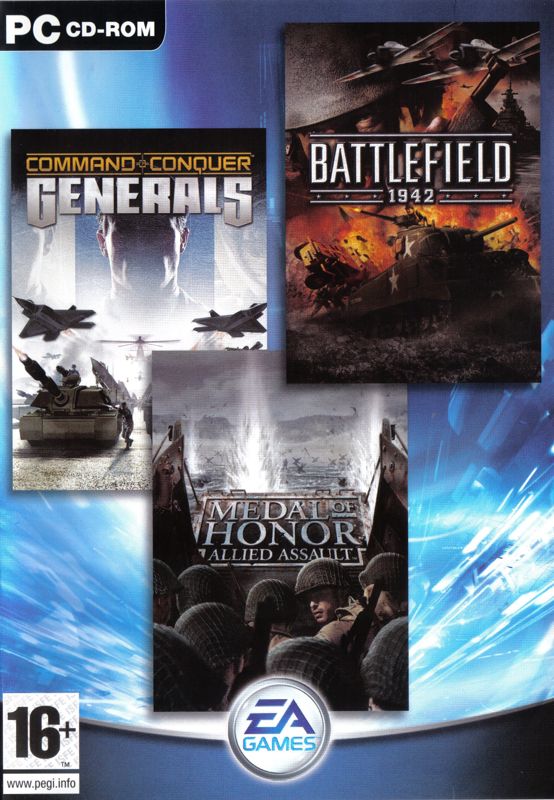
The first thing you notice is how well the collection avoids fatigue. Medal of Honor: Allied Assault puts you in a direct, campaign-driven first-person shooter rhythm: move forward, clear danger, and stay alert. Then Battlefield 1942 opens things out, making the jump from individual soldiering to battles where the wider field matters. Command & Conquer: Generals changes the perspective again, asking you to command rather than aim. Each game scratches a different itch, so switching between them feels refreshing rather than random.
Allied Assault is the most immediate place to start if you want a focused solo session. Its appeal is simple: you are on the ground, the pressure stays close, and the game keeps you moving through its World War II action. It is the least flexible game in the bundle, but that concentration is also its strength. When you want a shooter with a clear forward pull instead of a long tactical commitment, it remains an easy choice.
Battlefield 1942 is where the package becomes more expansive. The game’s large-scale combat and multiplayer focus create a looser kind of fun than Allied Assault’s guided campaign. It asks you to think about where the battle is happening rather than merely what sits in front of your weapon. The payoff comes when you embrace that scale and accept that a match can be messy; it is a game built for stories that emerge from a crowded battlefield, not perfectly controlled heroics.
Command & Conquer: Generals is the smart inclusion because it breaks up the shooting entirely. Real-time strategy gives you a different kind of momentum: decisions have to be made quickly, forces need direction, and a successful plan is satisfying precisely because you set it in motion. If you only came for World War II combat, it may feel like an odd detour. Give it a little time, though, and its faster, more aggressive strategy pace makes it an excellent palate cleanser between firefights.
Graphics
These are early-2000s PC games, and their 3D worlds naturally reflect that era. Allied Assault and Battlefield 1942 put you at ground level amid military combat, while Generals pulls the camera back over the battlefield so you can watch your units and bases at work. The shift in viewpoint alone helps the three games feel distinct every time you swap discs—or installs.
Battlefield 1942 benefits most from its broad battle spaces, while Generals’ overhead view makes the movement of opposing forces easy to track. Allied Assault is more enclosed and immediate, keeping your attention on the route ahead rather than a giant map.
Story
Do not buy this compilation expecting one connected narrative. It is three separate games united by combat, not a shared story, and that is honestly to its benefit. You can choose between Allied Assault’s World War II campaign framing, Battlefield 1942’s battle-driven scenarios, and Generals’ military strategy without having to remember what happened in another game first.
Allied Assault is the strongest fit when you want a sense of forward motion. A first-person campaign naturally gives your session direction: you are progressing through a war-themed action game rather than simply setting up the next encounter. The game’s World War II setting gives that action familiar weight, even when the real draw is the next dangerous stretch of combat.
Battlefield 1942 takes a different route. Its interest lies less in a personal tale and more in the incidents that arise from large battles. Generals, meanwhile, makes the conflict feel strategic by placing you above it and letting command decisions define the flow. Neither needs to compete with Allied Assault’s campaign structure; together, they make this feel like a collection of combat perspectives rather than three versions of the same story.
Overall Experience
This bundle earns its value through contrast. You are not getting three games that blur together after a few hours: Allied Assault is for direct shooter action, Battlefield 1942 is for broader multiplayer warfare, and Generals is for real-time command. That spread makes it especially appealing if you enjoy sampling different kinds of classic PC combat without leaving one compilation.
The rough edge is also obvious: the games come from a specific period, and they do not share a unified style or pace. Moving from a first-person campaign to multiplayer battles and then to strategy can feel abrupt if you want one seamless all-in-one experience. Treat them as three separate evenings, not chapters in a single mega-game, and the package makes much more sense.
Start with Allied Assault if you want the easiest entry point, move to Battlefield 1942 when you want the battlefield to feel less scripted, and save Generals for the moment you want to trade reflexes for decisions. The compilation is worth it for gamers who appreciate influential older PC action and strategy games, especially because no single title has to carry the entire package.


Reviews
There are no reviews yet.