 Retro Replay Retro Replay gaming reviews, news, emulation, geek stuff and more!
Retro Replay Review
Gameplay
The first hour has a clear rhythm: command groups of troops in real time, learn what each side can field, and decide when a wizard spell is worth spending mana on. That combination gives battles more texture than simply throwing units at one another. A spell is described as game-changing, and the recharging mana bar means you have to think about timing rather than treating magic as a one-off panic button.
The strongest hook is progression that survives between fights. Kills raise your level, and those levels unlock stronger troops, spells, and research. Instead of every battle feeling like an isolated puzzle, the campaign lets you build toward dragons, golems, and other higher-end choices over time. That makes early victories matter, and it gives replayed missions a practical purpose when you want to return with a broader tactical toolbox.
Draco and Phoenix have distinct class lists, so the two campaigns should offer more than a swapped banner. With 30 troop types across the game, there is room to experiment with different army compositions rather than relying entirely on basic shamans and warriors. The trade-off is that persistent advancement can make you feel invested in momentum: if you prefer every mission to begin on perfectly even footing, this structure may feel less clean than a traditional reset-heavy RTS.
Graphics
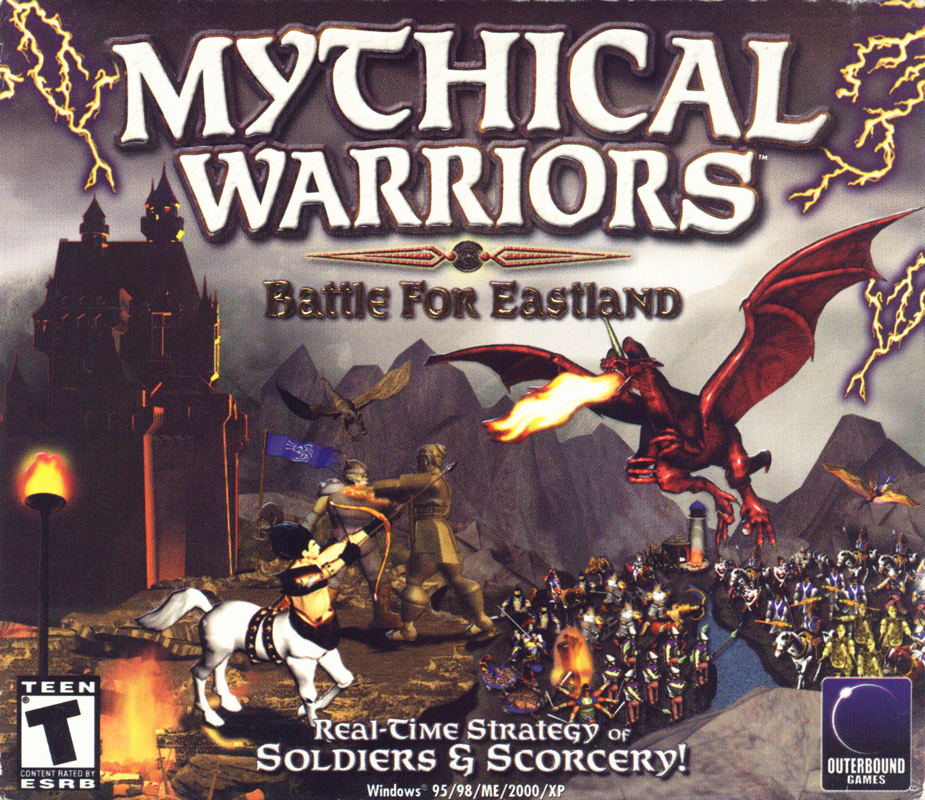
The game uses a top-down real-time strategy view, built around directing multiple units across fantasy battlefields. Its most concrete visual draw is the spread of fantasy forces: basic humanoid fighters sit alongside dragons and golems, giving the armies a wider look than a purely medieval troop roster.
Story
Eastland is a land of gods caught between Draco and Phoenix after an uneasy peace collapses into open conquest. It is a straightforward fantasy war premise, but it does provide a useful reason to see the conflict from both sides through separate single-player campaigns.
The question of whether the nations chose this war themselves, or were corrupted by the wizard Horus, gives the setup a welcome thread of suspicion. You are not asked to navigate a maze of political names before the fighting starts; the stakes are immediately understandable.
Do not come here expecting the premise alone to carry the experience. The story is most valuable as a frame for the two-faction campaign structure and the chance to play through the same war from opposing sides. For a strategy game centered on army growth and battlefield magic, that is enough to keep the objectives pointed in a useful direction.
Overall Experience
Mythical Warriors: Battle for Eastland earns its place through the way its pieces reinforce each other. Distinct factions, a wide troop roster, mana-based spells, and persistent unlocks all push you toward staying with a campaign long enough for its tactical possibilities to expand. When that progression starts to click, each successful battle feels like preparation for a bigger one.
There is plenty to return to after the campaigns: previous levels can be replayed, and there are 16 maps for multiplayer and skirmish play. The included level editor is especially welcome for anyone who enjoys shaping encounters instead of only consuming the authored ones. That suite gives the game a longer tail than its two campaigns alone would suggest.
Give it a chance if you like RTS games where advancement carries forward and where fantasy armies are more than a cosmetic swap for standard soldiers. The core war story is familiar, but the persistent experience system gives the fighting a satisfying sense of accumulation. It is a more rewarding fit for someone who wants to grow into stronger options over several battles than for someone looking for a quick, self-contained tactical match every time.


Reviews
There are no reviews yet.