 Retro Replay Retro Gaming History, Reviews & Emulation
Retro Replay Review
Gameplay
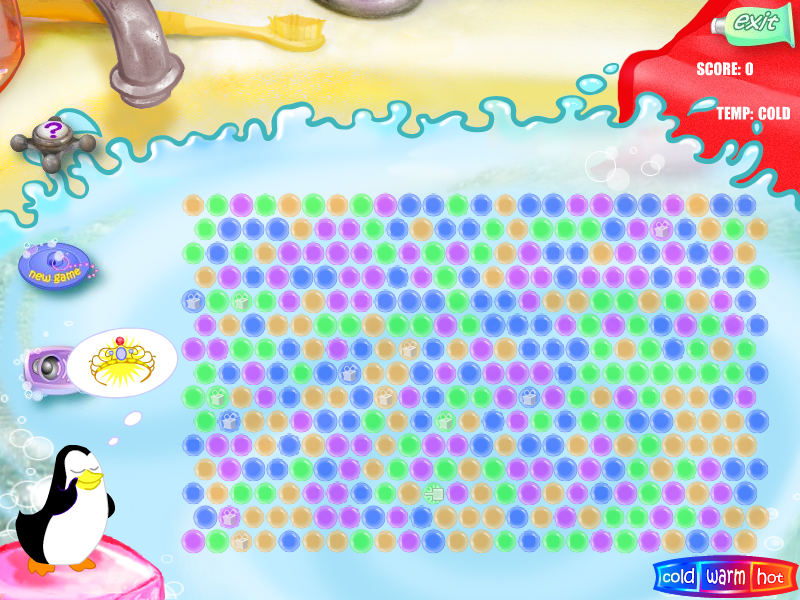
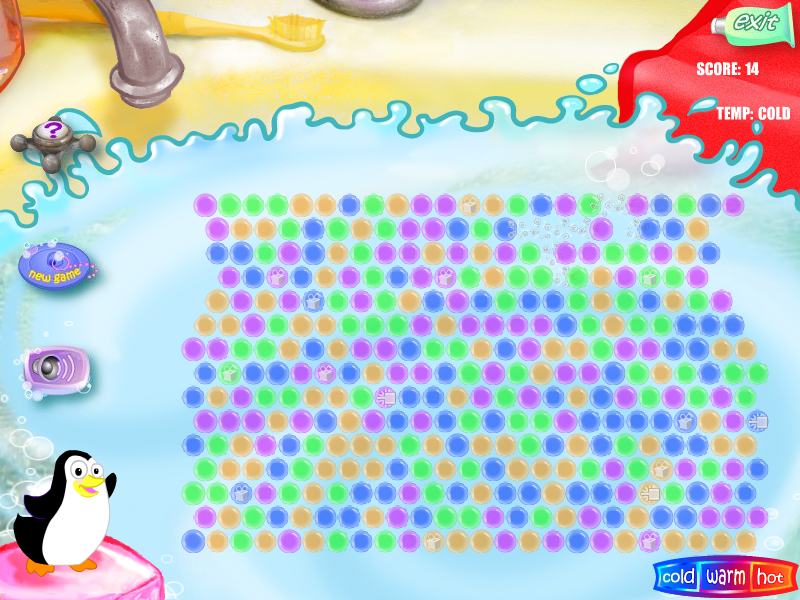
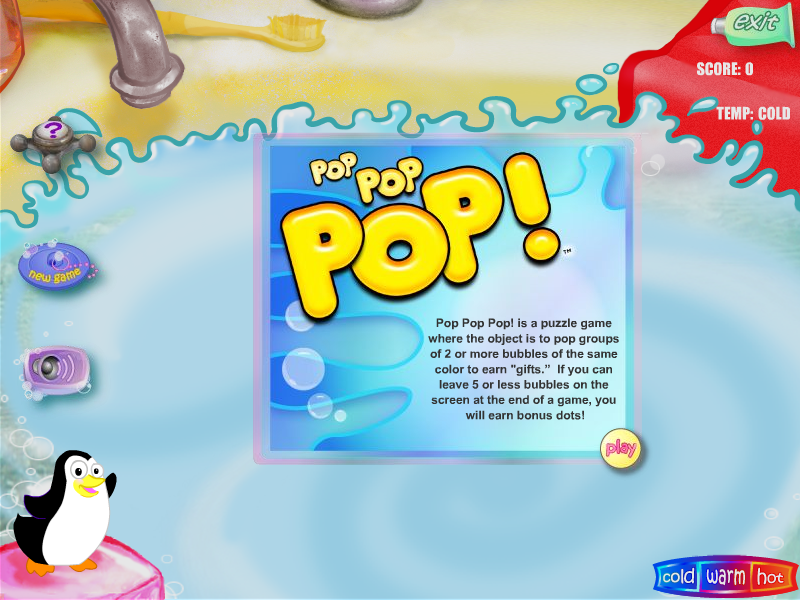
The first few moves are easy to understand: find connected bubbles of one color and pop them. The better you get, though, the less Pop Pop Pop! feels like a simple matching game. You start holding back an obvious group because removing it might leave behind isolated bubbles that cannot be paired with anything later. Chasing the lowest possible remainder, rather than merely clearing a few convenient clusters, is where the game finds its teeth.
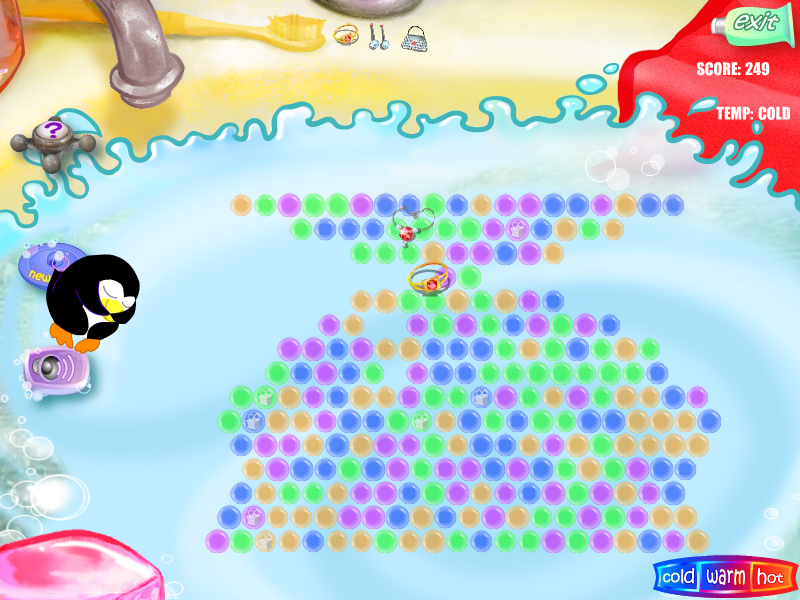
The hexagonal arrangement matters. Clusters branch in directions that do not feel quite as predictable as a square grid, so a move can open up a helpful connection or quietly ruin one you meant to preserve. That makes the board worth reading before you act. When a planned sequence works and several troublesome bubbles become removable, it delivers the small but genuine satisfaction that good compact puzzle games live on.
Power-up bubbles add welcome exceptions to the careful, conservative play. Some award points, while others clear a row, a small area, or every bubble of a chosen color. They can rescue a board that is turning ugly, but they also create decisions about timing: spend the help now for breathing room, or save it for the moment when it can break up the most stubborn leftovers. The downside is that the basic loop has limited room to grow. Once you understand the central puzzle, your enjoyment depends largely on how much you enjoy refining the same kind of board.
Graphics
The screen is built around differently colored bubbles in a hexagonal pattern, keeping the important information close at hand. It is a plain, functional look for a game where you need to see connected groups and the shape of the remaining board quickly.
Story
There is no narrative journey pulling you through Pop Pop Pop!. Your motivation is the board in front of you and the challenge of leaving fewer bubbles behind than you did last time.
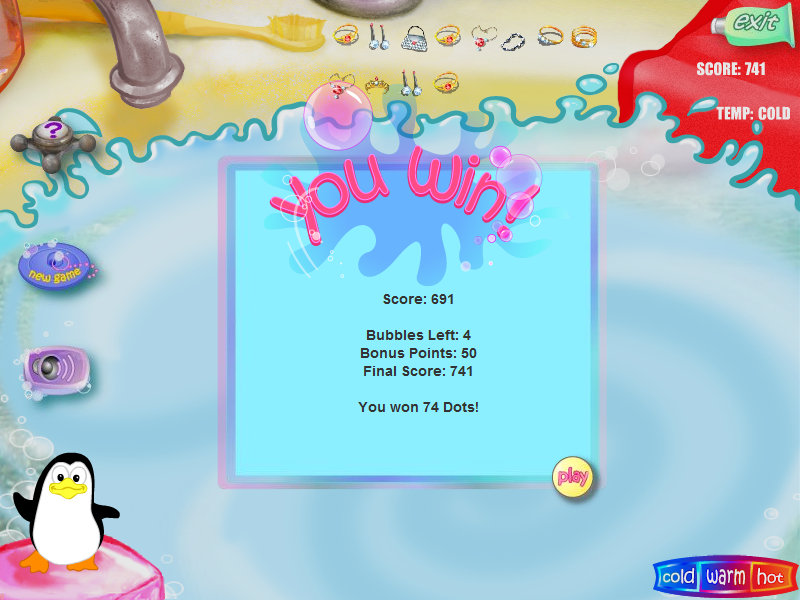
That stripped-down focus suits the game. Every round creates its own tiny arc: an opening full of options, a middle where the board begins to fracture, and an endgame spent trying to avoid being stuck with unusable singles.
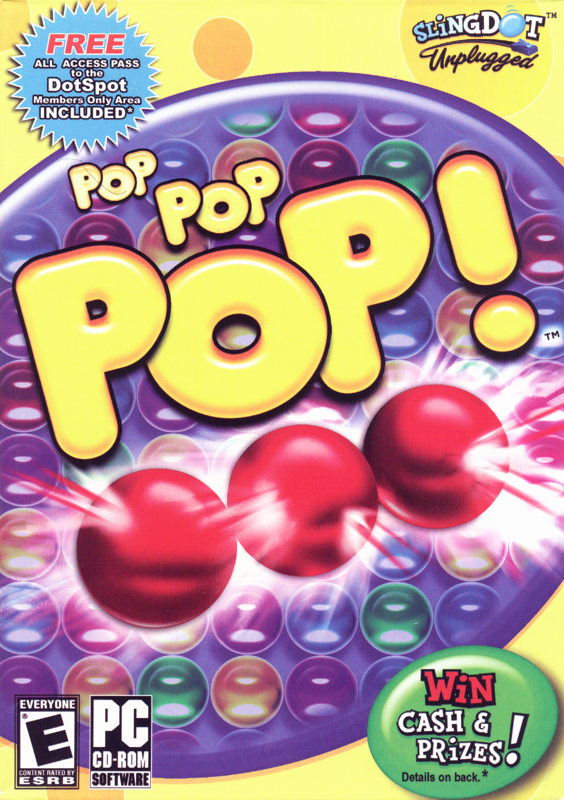
The original Dots reward tied play to prize drawings, but that connection no longer works after the associated site moved. It does not change the puzzle rules, yet it removes what was once an extra incentive outside the boards themselves.
Overall Experience
Pop Pop Pop! is a decent fit when you want a puzzle game that asks for observation rather than fast reactions. Its best moments come after the first hour, when you stop treating every large group as an automatic pop and begin seeing the board as a chain of consequences.
Frustration arrives when a promising layout collapses into a handful of disconnected bubbles, especially when you can trace the mistake back to a tempting move made several turns earlier. For puzzle fans, that is often the point: failure teaches you how to read the next board more patiently. For everyone else, it can feel like repeatedly being punished by a small ruleset.
The payoff is real but contained. There is no need to expect more than a focused tile-matching challenge with a few useful power-ups and a strong clean-up objective. Give it a chance if shaving bubbles off a final board sounds satisfying; skip it if you need story, variety, or a more expansive reason to keep playing.


Reviews
There are no reviews yet.