 Retro Replay Retro Gaming History, Reviews & Emulation
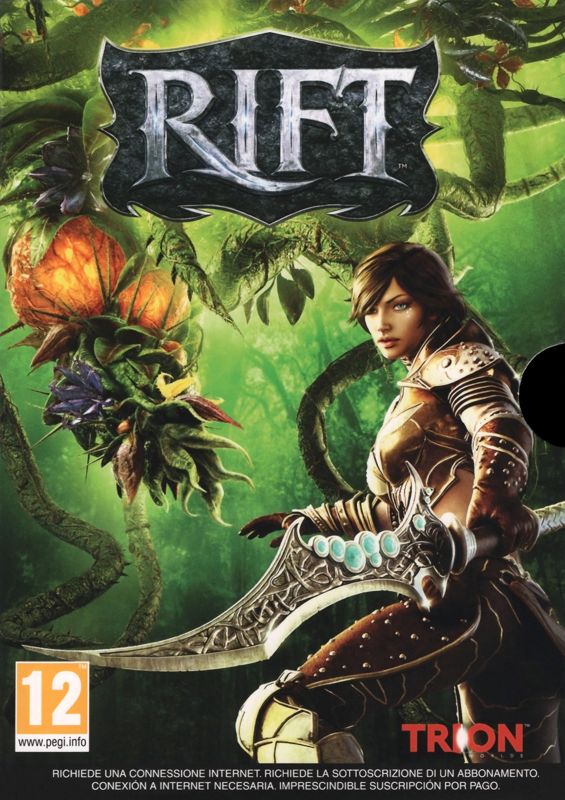
Retro Replay Review
Gameplay
The first hour has a welcome sense that the world may interrupt your plans. Rift’s dynamic breaches are not merely scenery around the quest grind: planar monsters can establish footholds, escalate into invasions, and make ordinary questing more dangerous while cities are threatened. When you encounter an active rift, the immediate question is less “what is my next marker?” and more “can enough people deal with this before it spreads?” That is a strong hook for an MMO, because it turns passing players into useful allies without requiring you to organize a full raid first.
Rifts also give the game a better social rhythm than a purely static quest world. You can tackle them alone or in a group, and every level can contribute toward restoring order. The fact that opposing elemental planes can interfere with one another adds another wrinkle to these conflicts. The payoff is clear: participation affects how dangerous the surrounding world becomes, rather than feeling like a detached side activity you can safely ignore.
Character building is where Rift earns its long-term attention. Pick Warrior, Cleric, Rogue, or Mage, then invest points into compatible Souls drawn from eight possible paths for that Calling. Mixing one Soul’s defense with another’s healing or spells invites experimentation, and the ability to rearrange investments and save separate roles means you are not locked into a single answer forever. It is a system that rewards thinking about what your group needs rather than blindly committing to one build.
There is plenty of standard MMO machinery around that core: NPC and object quests, crafting recipes, trading and auctions, guild perks, pets, companions, mounts, raids for six to twenty people, and extensive character statistics. Some of that will feel comfortingly familiar; some can make the game feel busy before its central rift idea fully clicks. PvP also has a sensible range of options. Choose a PvE shard if you only want faction conflict and Warfronts, a PvP shard if you want open-world danger, or a roleplaying shard if staying in character matters to you. Warfronts cover Martyrdom, Capture the Flag, Domination, and Conquest, offering a direct alternative to the world events.
Graphics
Rift uses a third-person view with the familiar MMO screen layout: your character is framed by a character display, action and inventory bars, chat, minimap, quest reminders, and buff and debuff icons. In combat, the clearest visual draw is the contrast between Telara’s normal adventuring spaces and the sudden presence of rifts and invading elemental monsters. The interface is dense, as genre veterans will expect, but it keeps the essentials close at hand.
Story
Telara’s crisis has a clean, useful premise: a magical Ward once held back gods from six elemental planes—Life, Death, Air, Fire, Water, and Earth—but rifts now let their forces invade in search of sourcestone. Closing those breaches is not just the game’s activity loop; it is the story’s central emergency. That close fit between fiction and what you repeatedly do gives the setup more weight than fantasy lore that lives only in dialogue boxes.
The faction split gives you two different angles on the same disaster. Guardians are resurrected by their gods from a past life to defend Telara, while Defiants come back through machines from a future in which the dragons have already won. Neither approach changes the fact that the world needs defending, but the contrast is a good foundation for choosing a side that suits your taste in fantasy framing.
Rift’s story is most compelling when the invasion state becomes a shared problem. Open breaches make quests riskier and can lead to overrun cities, so the world’s trouble asks something of the people inhabiting it. If you like an MMO narrative that is reinforced by collective action rather than separated into a private campaign, Telara’s ongoing struggle has real pull.
Overall Experience
Rift is at its best when you stop treating it as a checklist of quests and let its disruptions redirect you. A breach opening nearby, players gathering around it, and the possibility of a larger invasion give even routine travel a welcome tension. That is the reason to play: the world occasionally demands that you look up from your own progression and respond with everyone else.
The Soul system is the other reason it holds up as more than a novelty. Flexible role configurations let you adapt rather than roll a wholly new character every time your priorities change. If you enjoy working through build choices and finding combinations that help in solo play, groups, or raids, Rift gives you meaningful room to tinker.
Frustration will set in if you want a stripped-back action game or a tightly contained solo adventure. This is a subscription MMO built around interfaces, statistics, grouped content, and a large collection of familiar systems. But if you want a fantasy MMO where sudden cooperative objectives can reshape the difficulty of the area around you, Rift’s rifts are a genuinely persuasive centerpiece. The payoff is worth it for gamers who enjoy flexible class building and a world that occasionally turns everyone’s plans into the same emergency.

Reviews
There are no reviews yet.