 Retro Replay Retro Gaming History, Reviews & Emulation

Retro Replay Review
Gameplay
The first stretch of Shelter immediately understands how to make you care about a small group of animals without burying you in systems. Five cubs trail behind their mother, and feeding them turns every carrot, turnip, apple, frog, rodent, or fox into a quick judgment call. Food is scarce enough that you cannot casually feed whichever cub happens to be nearest. You need to notice who is fading and spread meals around, which gives a very modest action set a pointed kind of pressure.
That pressure works best when the journey asks you to move with care. Sneaking through long grass to escape birds of prey has a clean, anxious logic: keep the family covered, because a cub exposed in the open too long can be taken. Forest fires and overflowing rivers change the threat without changing the core concern. Your job is always to get the cubs through safely, and the game is at its strongest when that straightforward goal makes you slow down and count heads.
The drawback is that this is a narrow, linear trek rather than a deep wilderness simulation. Searching for food can become repetitive, and the limited interactions do not gain much complexity over time. Permanent loss gives every mistake weight, but it can feel harsh when a hazard is not immediately clear. Still, the stripped-down design has purpose. If you want a survival game built around vulnerability rather than mastery, its tense little decisions land harder than the mechanics suggest.
Graphics
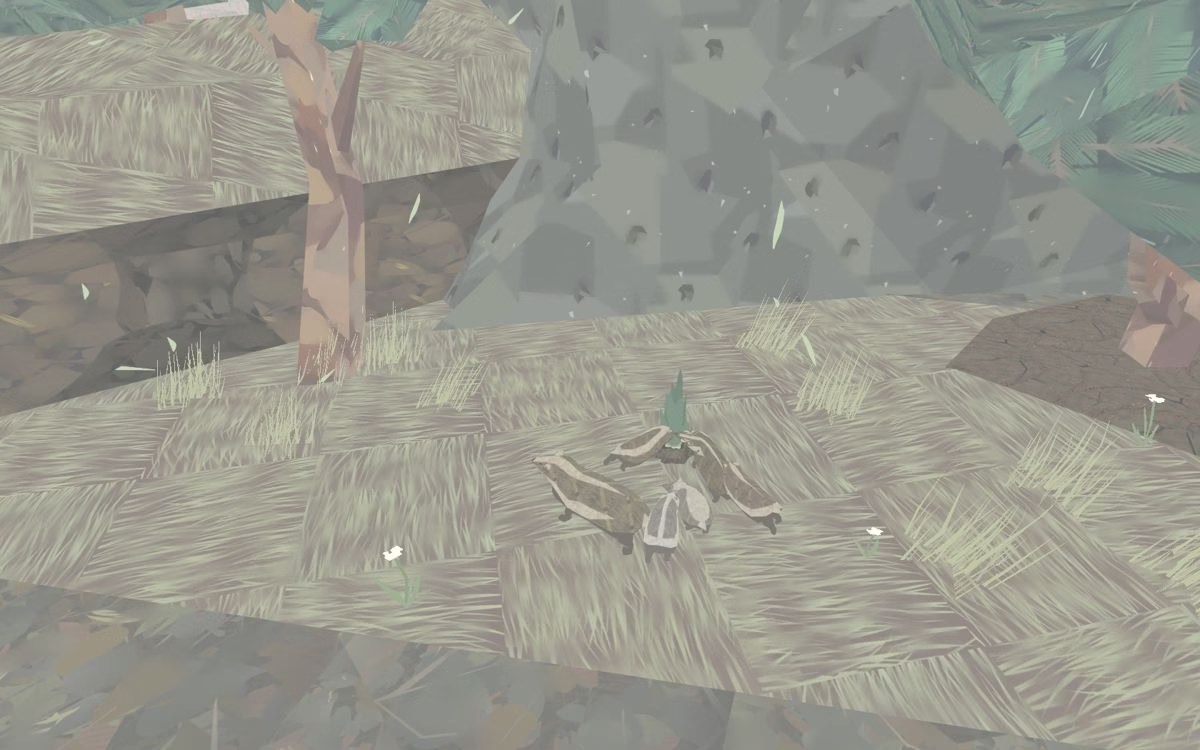
The wilderness looks like a world assembled from layered paper shapes. The gray-brown striped badger and her small cubs stand out against pale green, gray, cream, and brown surroundings, while patterned grass and cliffs give the terrain a rough handmade texture. A walk through a hollow beige log, wrapped in dark looping grain marks, is especially memorable.
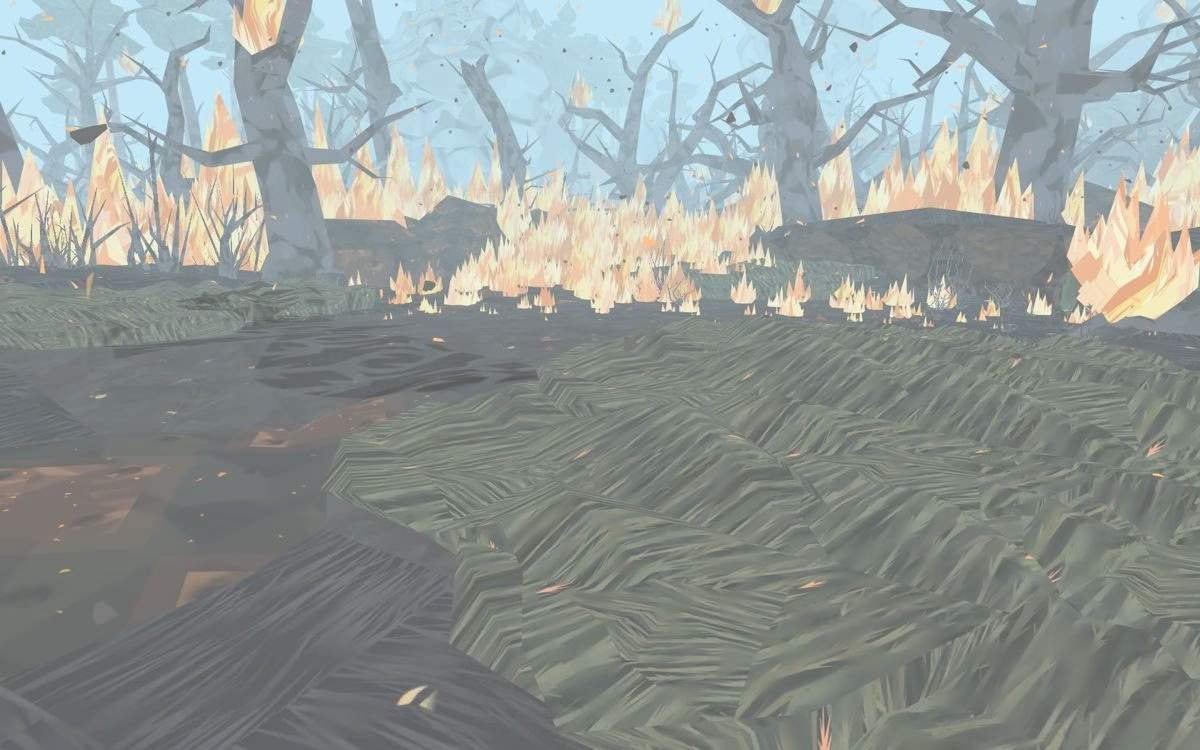
Fire brings the sharpest burst of color, with jagged yellow-orange flames cutting across a forest path framed by pale gray branching trees. The angular animals are expressive in silhouette, though the dense, straw-like ground patterns can make the smaller cubs easy to lose track of at a glance.
Story
This is a journey story told through responsibility rather than dialogue. A mother badger leaves the safety of her burrow and escorts her cubs through dangerous country in search of a new home. The premise is simple, but it gives every practical task a clear emotional context. You are not gathering food to inflate a meter. You are trying to keep a family moving.
The game wisely puts its dramatic weight on what happens along the path. Hunger wears cubs down, predators threaten from above, and nighttime turns sound into a source of panic as frightened young can scatter away from safety. The fact that the cubs can disappear permanently makes the journey feel less like a sequence of disposable challenges and more like an uneasy responsibility you carry from area to area.
Do not expect a heavily plotted animal adventure. Shelter relies on the player to supply much of the feeling, and that can make its most painful moments more personal. It is spare, sometimes almost too spare, but the central bond is strong enough to hold the experience together.
Overall Experience
Shelter is affecting because it refuses to make protection feel automatic. Its systems are basic, its route is authored, and its food gathering can drag, yet the game repeatedly turns small acts of attention into emotional stakes. You may be frustrated by a loss that feels sudden, but you are also likely to remember the cub you failed to protect more clearly than another game’s routine game-over screen.
Give it a chance if you value focused, melancholy survival games and can accept a brief set of repeated tasks in exchange for a strong central feeling. The later-added Nurture mode extends that parental focus across thirty days, asking you to return each day to gather food and watch the cubs grow. It is a fitting extra, though the main journey remains the reason to play.
For an older animal-survival perspective, Wolf makes an interesting comparison, even though its focus differs from this mother-and-cubs journey. You can also find the developer’s original description of the badger’s wilderness trek on the Shelter official developer listing. Shelter is imperfect, but its best moments make caring for five tiny followers feel unexpectedly heavy.


Reviews
There are no reviews yet.