 Retro Replay Retro Gaming History, Reviews & Emulation

Retro Replay Review
Gameplay
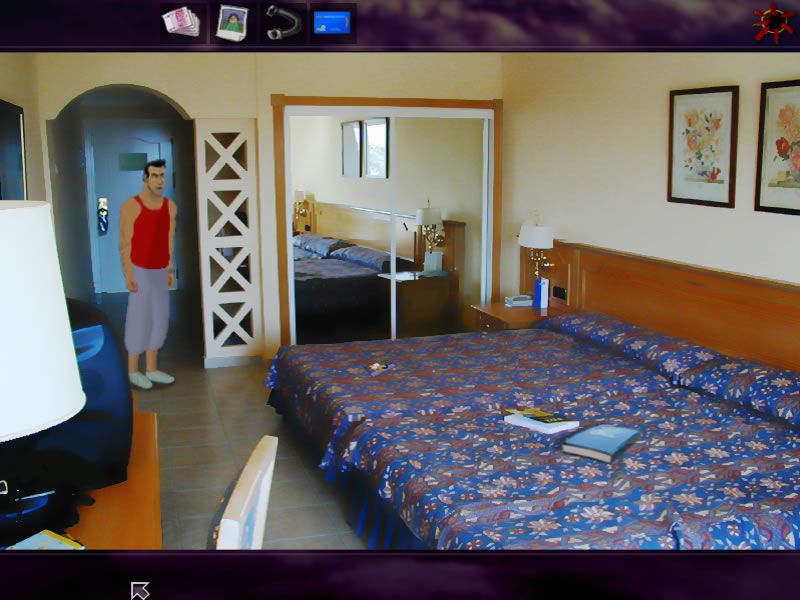
The first hour’s hook is simple and effective: a supposedly relaxing Lanzarote holiday abruptly becomes a missing-person job with a conspicuously large payout. You spend your time talking to locals through voiced multiple-choice conversations, examining locations, gathering items, and working out where those items belong. It is a familiar adventure-game rhythm, and that familiarity is part of the draw. If you want action or fast escalation, this is not aimed at you; if you enjoy methodically turning a suspicious object over in your mind until its use becomes clear, Frank’s detour has the right shape.
Its strongest practical idea is letting you pick the control method that feels natural. The standard setup separates investigation and interaction between left and right mouse buttons. The coin interface puts a choice of actions directly on a hotspot, while the changing-cursor option lets you cycle through actions with the right mouse button. That is more than a novelty: adventure fans tend to have very firm instincts about how they want to poke at a scene, and Timanfaya does not force you to unlearn them.
The space-bar hotspot display is the other genuinely player-friendly decision. Leave it enabled and you can focus on solving the item puzzles rather than sweeping every corner of every screen for a tiny interactive spot. Disable it if you prefer the older, more observational style. Puzzles remain the center of the game either way, but the option lowers the most tiresome form of point-and-click friction without removing the need to think.
Graphics
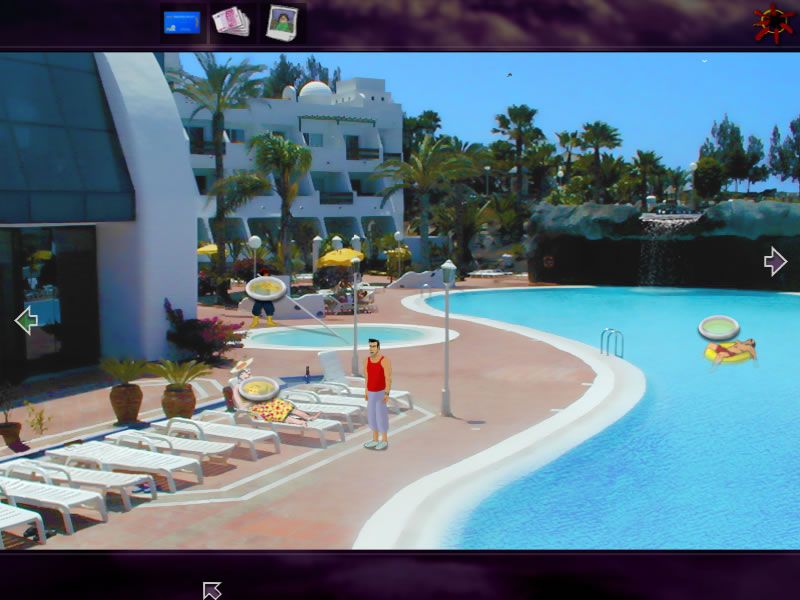
The game takes Frank across Lanzarote locations and into Timanfaya National Park, so the adventure has a concrete travelogue angle rather than unfolding in one anonymous mansion or city block. Its third-person viewpoint keeps the focus on moving Frank through those places and inspecting what is around him.
Story
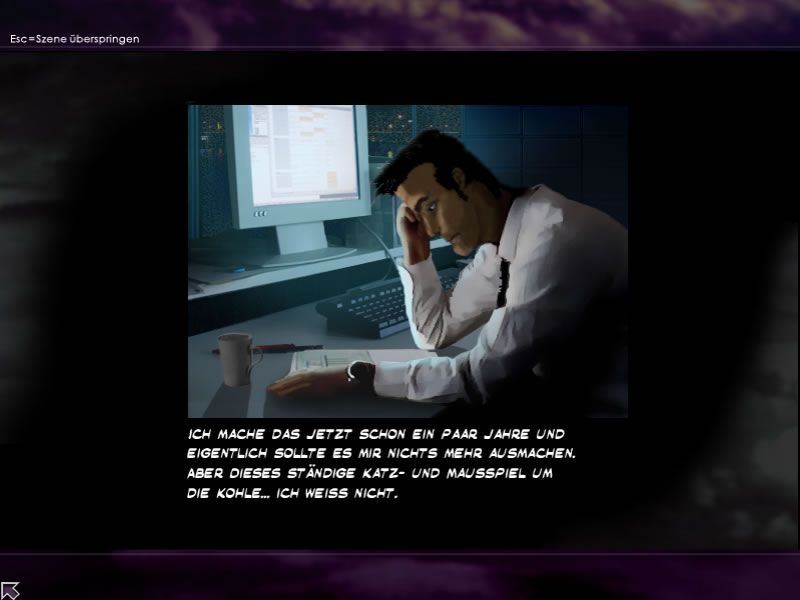
Frank Gruber is an agreeably unusual lead for this sort of case: he is a tax officer on vacation, not a detective who was already hunting danger. The offer of €50,000 gives his involvement a blunt, believable immediate motive, and the missing daughter supplies a clear objective from the outset. You know why you are asking questions and why a holiday has become work.
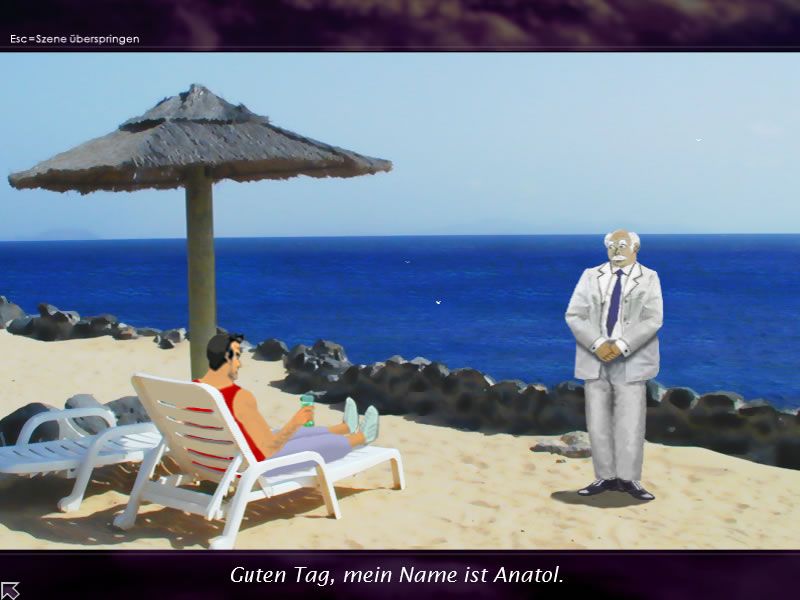
The investigation is carried by conversations as much as by objects. Multiple-choice dialogue means you are not merely collecting inventory; you are moving from person to person, trying to turn local information into the next useful lead. Voiced exchanges should help that process feel less like reading a checklist, particularly for a story that depends on Frank meeting people across an unfamiliar island.
Do not come to Timanfaya expecting a genre reinvention. Its premise is a clean missing-person mystery placed against Lanzarote’s tourist landmarks, and the appeal lies in following that case through a conventional adventure structure. That can be enough when you are in the mood for a contained mystery with a specific destination, rather than a sprawling detective epic.
Overall Experience
Timanfaya is easy to recommend to a particular kind of adventure fan: someone who still enjoys item puzzles and dialogue trees, but has no patience for hunting invisible hotspots. The optional hinting of interactive spots and exits makes it notably easier to settle into its investigation. Pick the two-click scheme for directness, the coin if you like choosing actions at the object, or cursors if that is the old-school language your hands already speak.
Its limits are also clear. This is a traditional puzzle adventure, and its central pleasures are examining, talking, combining clues, and gradually pursuing a missing-person case. If your ideal mystery game needs heavy player agency, rapid action, or a radically different structure, Frank’s Lanzarote assignment may feel too familiar. The payoff is the comfortable rhythm of a classic point-and-click given a useful set of control accommodations.
For the right evening, that is a worthwhile proposition. The Lanzarote setting gives the mystery a more distinctive backdrop than the average generic adventure, while the three control choices show uncommon consideration for how different fans actually play. It may not convert someone who already dislikes inventory-driven puzzles, but it is a solid fit if you want a straightforward, voiced mystery and the freedom to make the interface get out of your way.


Reviews
There are no reviews yet.