 Retro Replay Retro Gaming History, Reviews & Emulation

Retro Replay Review
Gameplay
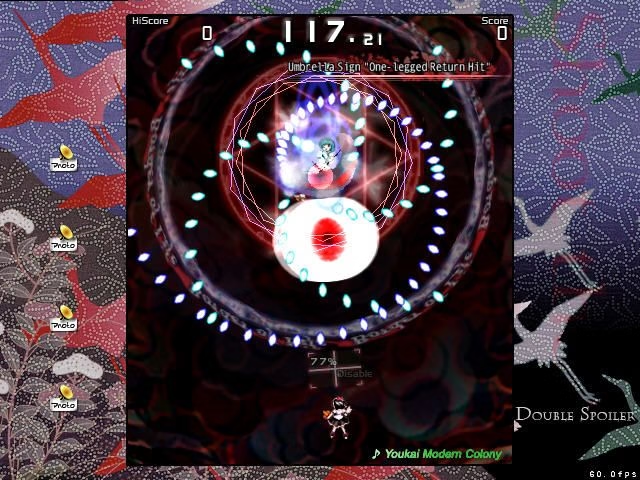
The first few seconds of a stage tell you exactly what kind of pressure Double Spoiler wants to apply. A boss fills the field with elaborate bullet patterns, Aya starts from below, and the usual instinct to fire back is useless. Your camera is the answer, but taking a picture asks you to move into danger and frame the subject at the right moment. That single reversal gives the game a wonderfully tense rhythm.
Photography is not a decorative theme pasted onto a shooter. A successful shot can annihilate enemy bullets, so the camera serves as both your goal and your way out of trouble. You constantly weigh a safe retreat against a more aggressive approach that might clear the screen and advance the fight. Once that starts clicking, patterns stop looking like pure walls of punishment. They become shapes to study for a route inward.
Each encounter requires a predetermined number of photographs, which keeps the focus on repeating and mastering one boss spell card at a time. That structure is great for short, intense sessions, especially if you enjoy gradually decoding a pattern that initially seems impossible. It can also be frustrating when one failed approach sends a promising attempt spiraling away. This is not the Tōhō game to pick if you want a forgiving power fantasy. It is for the player who likes turning panic into a practiced plan.

Graphics
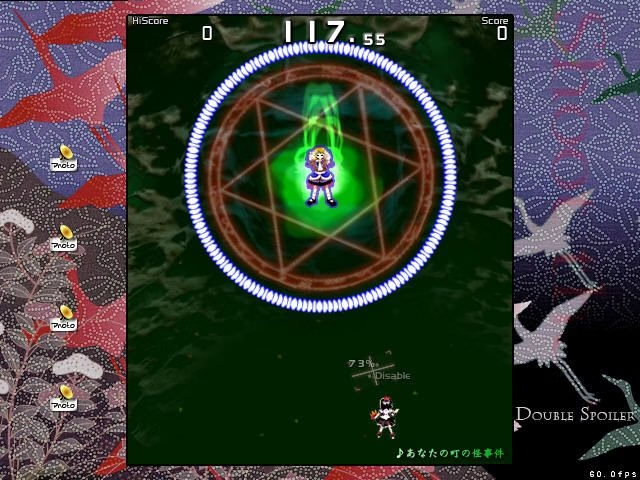
The playfield is packed with bright, carefully arranged bullet designs: white looping chains against a red-brown background, dense orange clusters over electric blue, and a near-perfect ring of pale blue shots around a boss. The tiny character sprites are simple, but the bosses remain easy to spot amid the chaos, and the camera’s framing circle gives each dangerous close approach a dramatic focal point.
Backgrounds lean dark and textured, from murky green space to swirling blue and shadowy red scenes, letting the bullet colors do most of the work. Some layers can look busy when patterns become dense, but that clutter suits a game built around daring you to find a clean photographic angle inside the storm.

Story
Aya Shameimaru is a Tengu Crow reporter looking to photograph bosses and their spell cards, and that premise is refreshingly direct. You are not asked to carry a long adventure on your back. You are chasing striking pictures from dangerous subjects, one spell-card confrontation at a time.
Hatate Himekaidou becomes available as an unlockable character, giving the reporter theme another face without pulling attention away from the central challenge. The game is a direct continuation of Shoot the Bullet, and it has the compact, side-story-like focus that description suggests.
That light framing works because the action already provides the drama. A boss floating at the center of a symmetrical barrage needs little extra explanation when your next photo depends on stepping into its most hostile territory. Come here for character flavor and a strong setup for the challenges, not for an expansive narrative arc.

Overall Experience
Double Spoiler is an inventive spin on bullet hell that understands how much tension can come from changing one basic assumption. Removing normal attacks means aggression has to be deliberate. Every useful photo is also an exposed, potentially disastrous commitment, and that makes success feel earned rather than accidental.
The narrow focus is its biggest strength and its clearest limitation. If you love replaying difficult boss patterns until their logic becomes familiar, the photo requirement gives each stage a satisfying purpose beyond mere survival. If you prefer long campaigns, varied mission types, or a gentler on-ramp to danmaku, the repeated boss-photo format may wear thin quickly.
For experienced Tōhō fans, this is an easy recommendation, particularly if Shoot the Bullet‘s idea appealed to you. Everyone else should try it only if the thought of diving into a bullet storm for one perfectly timed picture sounds exciting rather than exhausting. When it works, few shooters make a small opening in a barrage feel so valuable.


Reviews
There are no reviews yet.