 Retro Replay Retro Gaming History, Reviews & Emulation
Retro Replay Review
Gameplay
tranquility asks you to slow down before it asks you to get good. The immediate goal sounds simple—reach the spinner hidden somewhere among the platforms—but steering through the air with the mouse makes every approach feel fragile. Big, impatient movements are likely to ruin a promising line, while small corrections let you thread toward a ledge or set up another bounce. That tension between calm control and precarious height is the game’s strongest idea.
The movement has more depth than a straightforward floating-platform climb. You can bounce from floors and platforms, pass up through a platform to launch upward, and use the Space bar to accelerate your descent before releasing it for a stronger rebound. At first, that last technique is liable to feel counterintuitive: deliberately dropping faster is not the instinct most games teach. Once it clicks, though, it turns the climb into a series of measured risks. You are not merely drifting toward the next surface; you are judging how much momentum to carry into it.
Moving platforms and awkwardly placed spinners give that physics a real purpose. A successful route can feel elegant, especially when a controlled fall becomes the bounce that carries you into the hard-to-reach goal. The structure also keeps you moving: collect a spinner and you are sent straight into the next level, with points awarded after a batch of seven. The downside is that the game’s precision can make misses sting. If its unusually gentle mouse control does not suit you, the whole climb can feel more fiddly than meditative.
Graphics
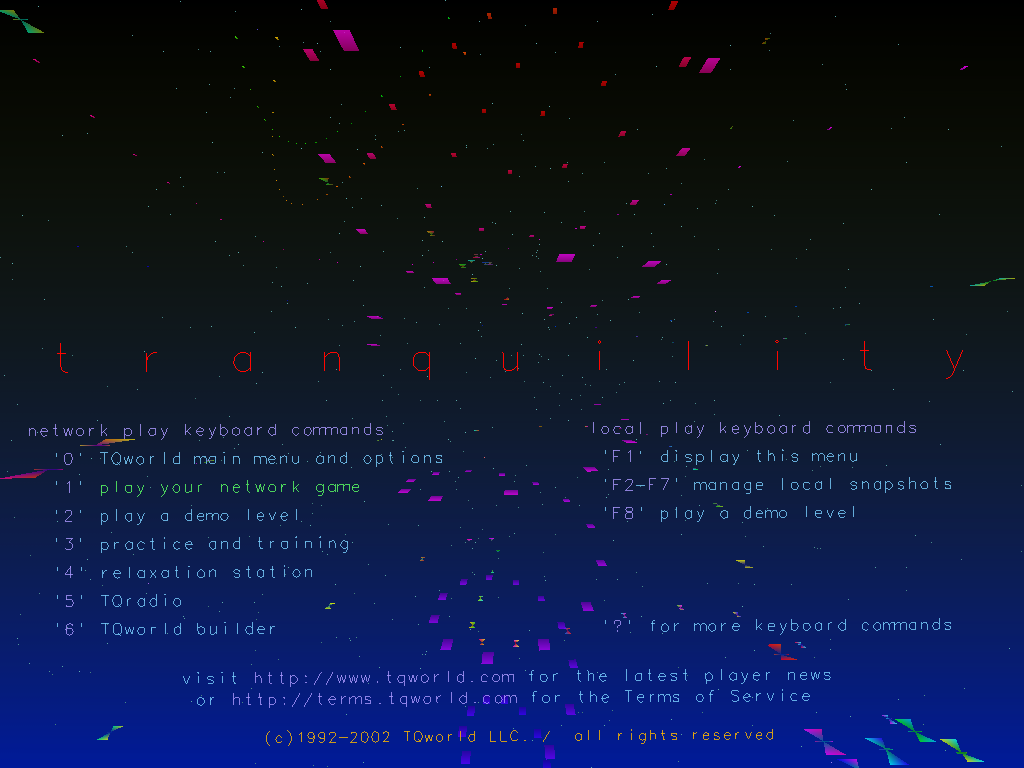
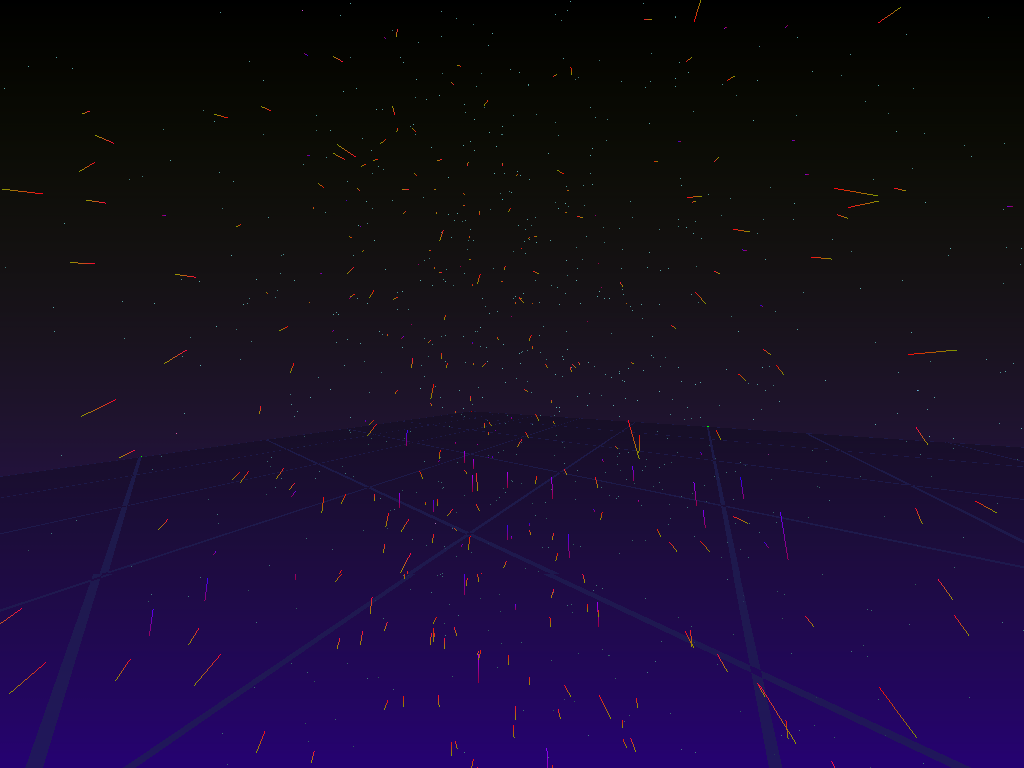
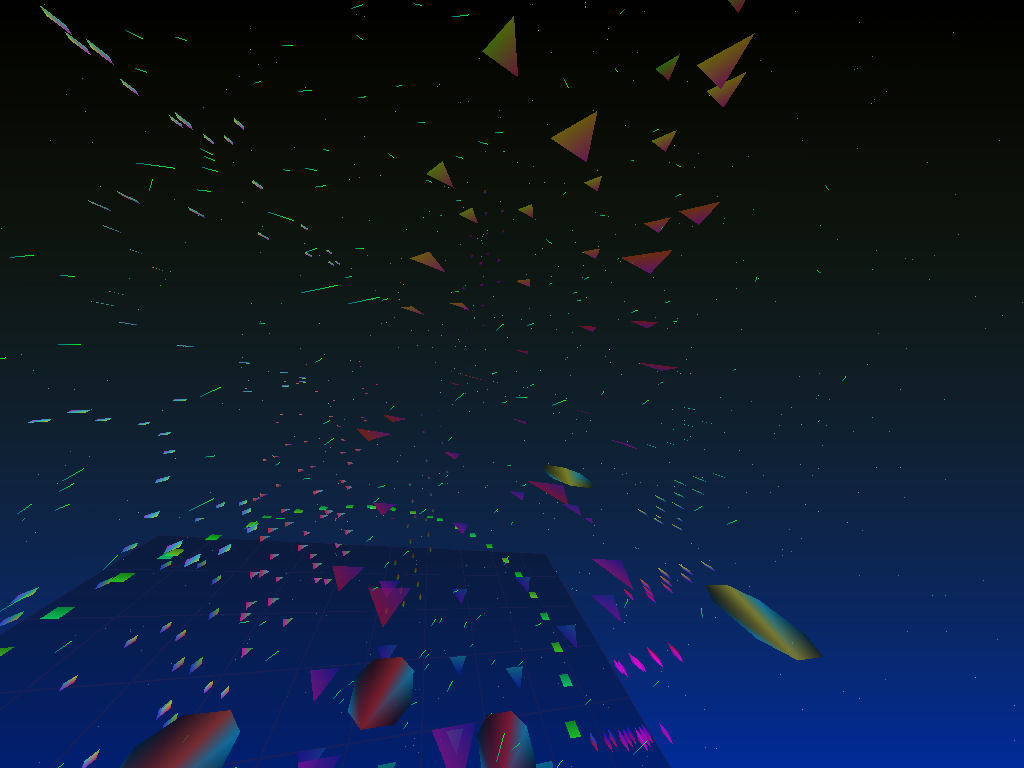
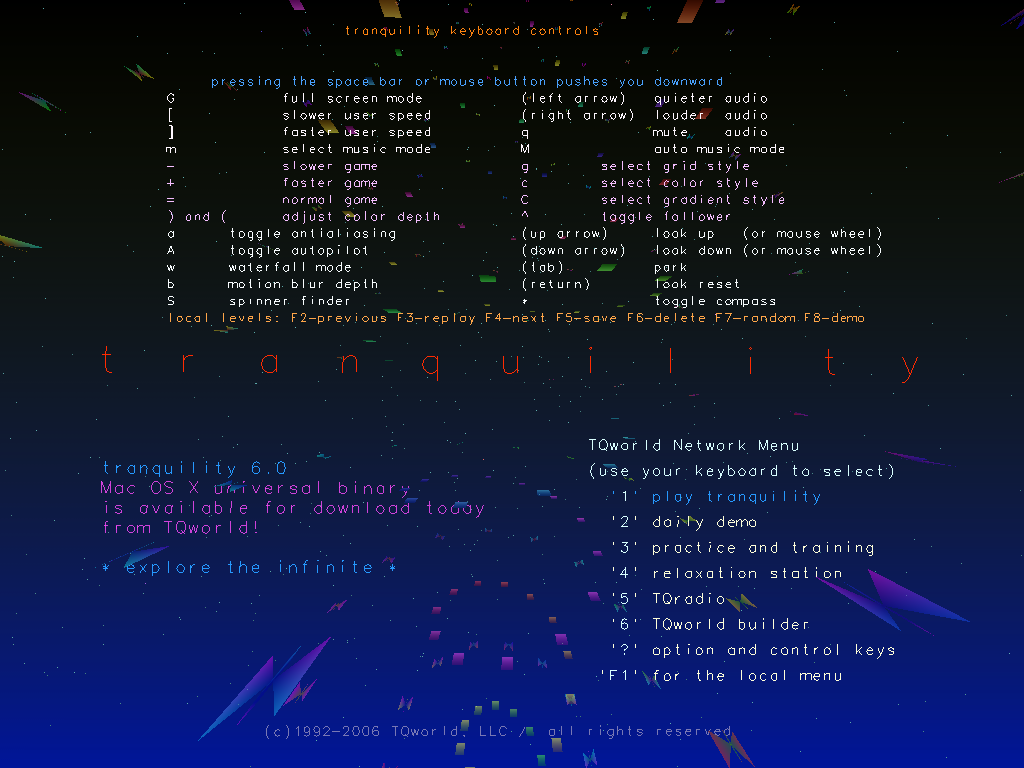
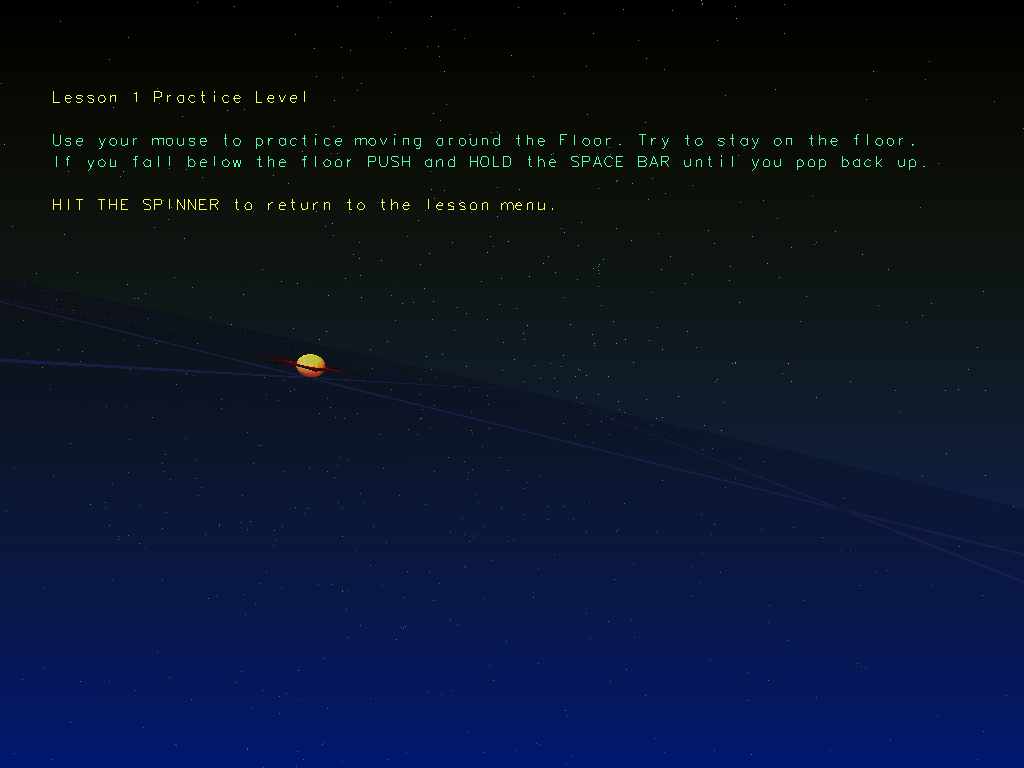
The world is built from colorful geometric forms: floating platforms in different shapes, open air beneath them, and a small spinner serving as the target. That stripped-down imagery suits a game about judging space and height, because your attention stays on surfaces, distance, and the next safe place to bounce.
Story
The game’s sense of progress comes from movement through its generated levels rather than from a plotted adventure. Each spinner ends one small challenge and immediately begins another, so the momentum is less about waiting for a story beat than about seeing whether you can keep your concentration through the next climb.
Ranks, Realms, points, and virtual cards give that progression a light layer of meaning. They turn repeated seven-level sets into a longer ascent, offering a record of how far you have pushed through the game’s challenges.
That is a modest framework, but it fits the subject matter. tranquility is interested in the personal arc of learning its movement: the shift from uncontrolled bouncing to purposeful routes, and from chasing altitude to understanding how to use it.
Overall Experience
There is something genuinely distinctive in a game that makes platforming feel like careful aerial calibration instead of a race. tranquility earns its meditative label not by removing challenge, but by making success depend on patience, restraint, and a willingness to learn a peculiar physical language. If you enjoy mastering movement systems that initially resist you, this has a strong hook.
The procedural online levels were a smart match for that loop. Fresh batches of platforms could keep the basic task from becoming too familiar, while the seven-level format gave each session a clean, manageable shape. The old free and paid membership split was less inviting: unrestricted access and score tracking were tied to the paid option, while free access was limited to a daily random set.
Most importantly, the servers closed in 2010, so tranquility can no longer be played. That makes it difficult to recommend as something you can sit down with today, yet its design remains worth remembering. It was an uncommon blend of first-person action and quiet concentration, and its bounce-driven platforming had enough bite to reward real practice.


Reviews
There are no reviews yet.