 Retro Replay Retro Gaming History, Reviews & Emulation


Retro Replay Review
Gameplay
Villa Banana earns its name as a match-three game, but you will know within the first few boards that it does not play like the usual fruit-swapping routine. You select one fruit, choose where it should go, and can move it across the board as long as its path is clear. The goal is still to make lines of three or more matching fruit, yet allowing horizontal, vertical, and diagonal lines makes each move feel more like arranging a compact puzzle than reacting to obvious swaps.
Clearing the fruit is only half the job. Every level asks you to remove all of its plates, and the silver-and-gold layering gives boards a useful sense of priority. A match over silver clears it, while gold first turns into silver and must be hit again. That simple rule makes you look beyond the biggest immediate match: sometimes the right move is the smaller line that reaches an awkward plated square before the board closes up around it.
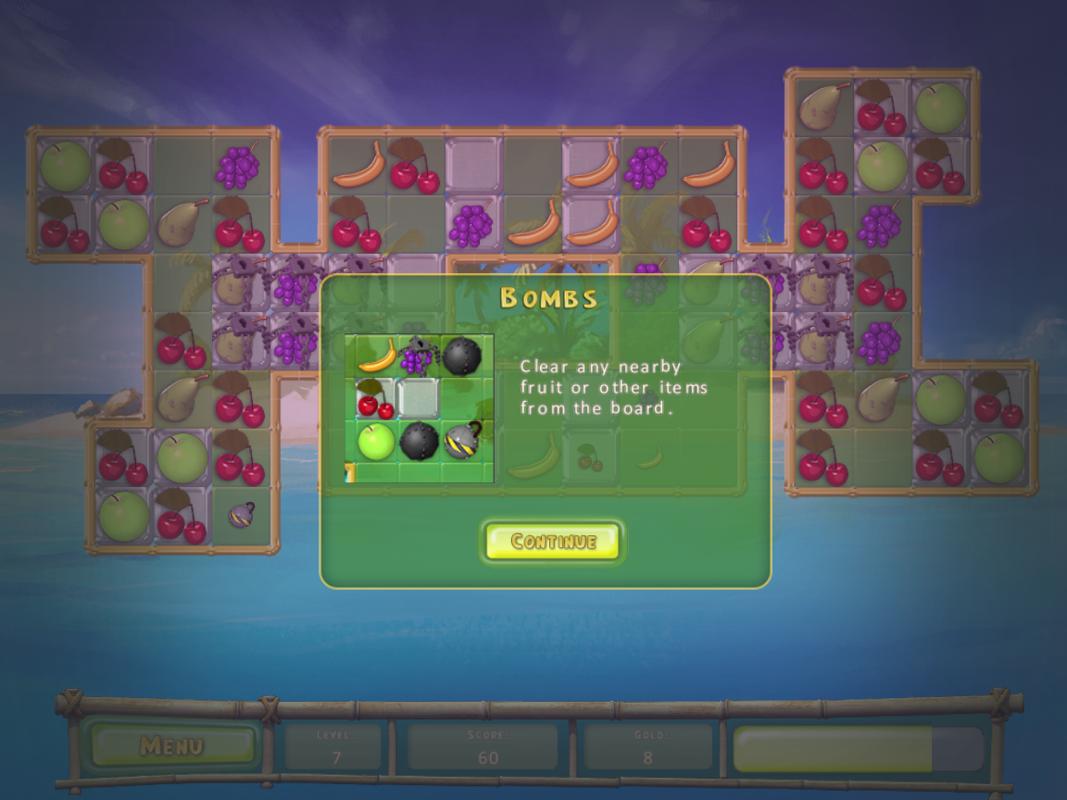
The game gets tougher by adding problems that cannot simply be matched away. Locks stop pieces from moving, bad balls resist normal matches, and a locked bad ball demands a bonus item to solve it. Bombs clear neighboring spaces, rockets cut through a line in their facing direction, rainbow lemons fill in as wild cards, and colored diamonds can erase every fruit of a matching color. These tools sound powerful, but their value comes from timing them around the plates and obstacles rather than firing them off at the first convenient opening.
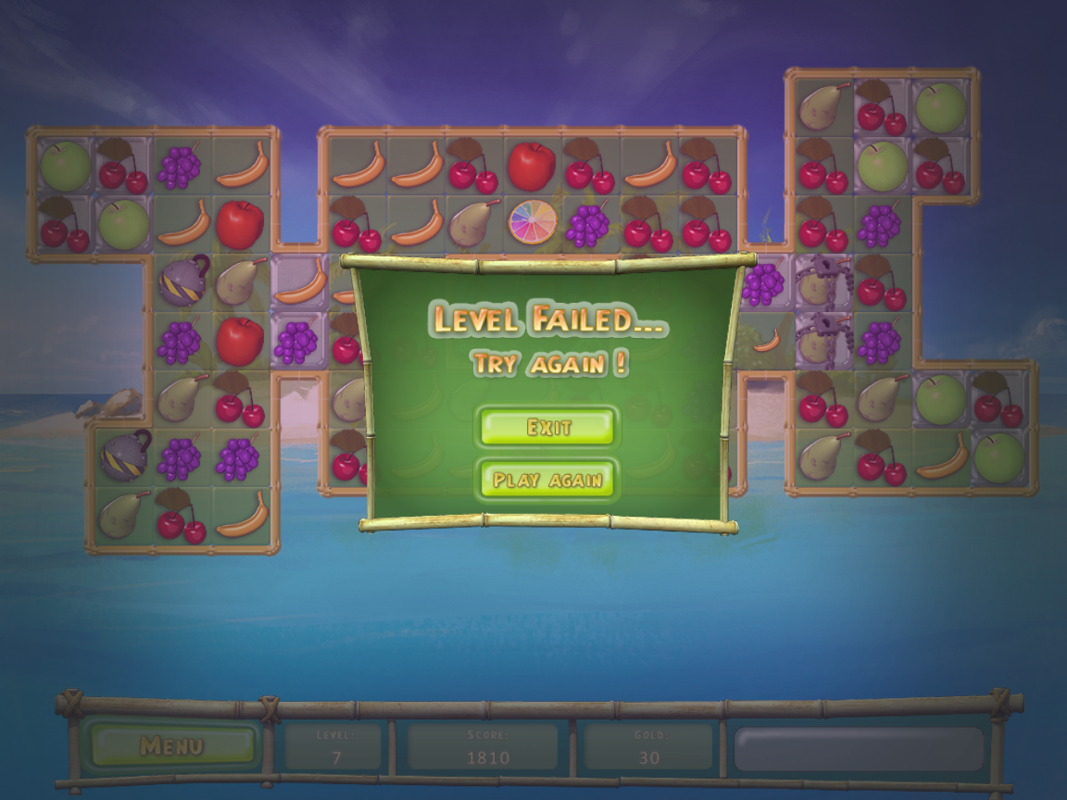
The sharpest frustration comes from the small fruit that can grow into larger fruit. They may give you the color you need, but leave too many alone and the board becomes crowded enough to lose the level. Restarts are part of the deal here, particularly when an early move blocks the route needed for a later placement. If you enjoy recovering from a cramped board and mapping out a few moves ahead, that pressure is engaging; if you want a relaxed, low-stakes matching game, it can feel harsh.
Graphics
The board is built around bright fruit, silver and gold plates, locks, bad balls, and clearly distinct bonus pieces such as bombs, rockets, rainbow lemons, and colored diamonds. The tropical villa theme also gives your earnings a visible destination through upgrades, while the fixed board view keeps attention on the puzzle grid.
Story
Villa Banana uses a light tropical-villa progression as its reason to keep clearing levels. You earn money from completed boards and spend it on upgrades, so the renovation is less a dramatic plot than a pleasant marker that your puzzle-solving is moving forward.
That restraint fits the game. The real tension comes from whether you can remove every plate before growing fruit clogs the board, not from a larger narrative thread competing for attention. The villa gives the campaign a sense of accumulation without distracting from the puzzles.
If you want characters, twists, or a story that carries the experience, this is not where the game puts its energy. Think of the villa as a cheerful reward loop: solve a board, collect money, improve the home, and take on a more complicated board.
Overall Experience
Villa Banana is a clever variation on match-three because it asks you to place fruit with intent instead of merely trading neighboring pieces. Once the board fills with layered plates and stubborn obstacles, a clean diagonal line or a well-placed rocket can feel genuinely earned. The renovation loop is simple, but it gives each cleared level a reason to matter beyond chasing the next board.
Its difficulty can be unforgiving. Growing fruit and blocked movement can turn a promising layout into a restart, and the game asks for patience when the board becomes congested. Still, the rules are consistent enough that failures should usually teach you what to protect, clear, or save for later.
Give it a chance if you like tile puzzles that reward planning, spatial awareness, and careful use of limited board space. The tropical fruit wrapper is cheerful, but the best moments come from solving a board that initially looked tangled beyond repair. It is a solid fit for anyone who wants a more deliberate match-three challenge rather than a purely casual time-filler.


Reviews
There are no reviews yet.