 Retro Replay Retro Gaming History, Reviews & Emulation


Retro Replay Review
Gameplay
The first hour of Virtual Families is easy to understand and surprisingly easy to care about. You adopt a little person, settle them into an empty house, and begin steering the basics of a life: food, water, work, fun, and health. It is not a game about mastering complicated systems all at once. It is about checking in, spotting what needs attention, and slowly turning a sparse household into a functioning family.
What makes the routine stick is that your people are not completely blank slates. You can praise or scold behavior to influence their personalities, which gives your interventions some weight beyond simply filling needs. Dynamic illnesses can also interrupt a comfortable rhythm, so a family that appears settled still needs watching. The game is strongest when a quick visit becomes a small chain of decisions about who needs care, who should work, and what kind of household you are shaping.
The real-time structure is both the hook and the limitation. Time, weather, and the day-night cycle follow your computer clock, while the family continues living when you are away. That is great if you enjoy returning to see what changed, but it can frustrate you if you want to drive every outcome immediately. Hidden house puzzles and more than 100 trophies add goals beyond basic caretaking, though the game works best when you accept that progress often comes through patience rather than constant action.
Graphics
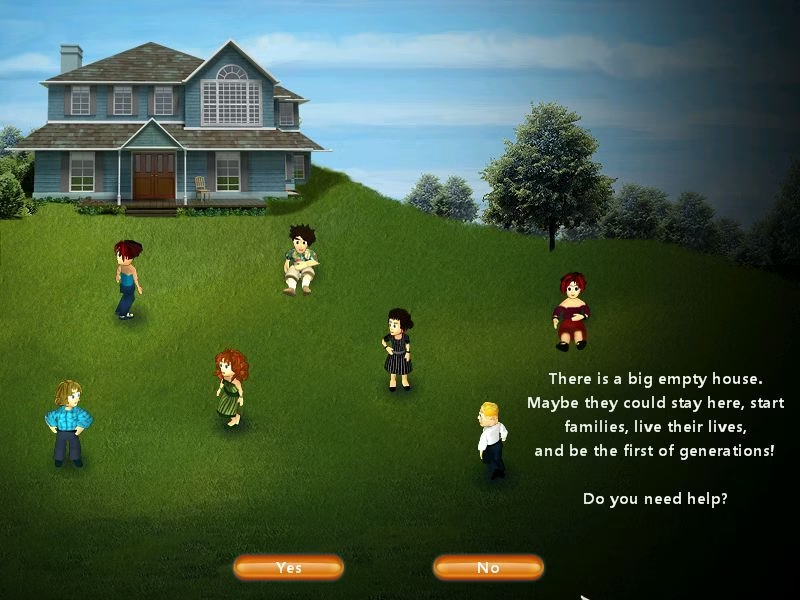
The house sits in a bright green field beneath a soft blue sky, with trees and a large two-story home that make the opening feel pleasantly domestic. The little people are small, cartoonish figures with distinct hair and clothing colors, so the scene reads more like a casual computer toy than a detailed life sim. It is simple artwork, but the roomy lawn and cozy house give the family a place you can immediately imagine growing into.

Story
There is no single dramatic plot to chase. Instead, the story begins with adoption: someone needs a home, and you decide to take responsibility for their daily life. That tiny premise is enough because the game understands that a household becomes interesting through accumulation, not a scripted crisis.
Finding a mate and starting a family pushes that personal story forward, even if the game’s direct way of encouraging a pairing can feel amusingly unromantic. A person’s likes, dislikes, work, health, and behavior give each household its own texture. You are not writing dialogue or choosing branching scenes, but you are creating the conditions for a particular family to emerge.
The generational idea is the part with real emotional pull. Passing the home onward turns ordinary care into a longer project, and a difficult illness or an unexpected household discovery can feel more meaningful once you have invested time in the people who live there. It is quiet storytelling, but it can be satisfying precisely because the game leaves room for your own attachment.

Overall Experience
Virtual Families is a good match if you like low-pressure simulation games that reward brief, recurring visits. Its strongest moments are not flashy. They are the moments when you return, notice the household has changed, and decide what kind of help this family needs next. The steady rhythm makes it easy to fit around a busy day.
It will be less satisfying if you need detailed control, rapid advancement, or a carefully authored story. Much of the experience is waiting, monitoring, and gently redirecting people rather than making big strategic moves. The game asks you to meet it on its own slow schedule, and that can feel restrictive when you are in the mood for something more immediate.
For the right player, though, that restraint is the point. Virtual Families turns simple caretaking into a long-running household project with enough personality shaping, setbacks, puzzles, and legacy-building to keep a calm routine from becoming empty busywork. The Virtual Families publisher details are worth a look if you want the original game’s official listing before committing.


Reviews
There are no reviews yet.