 Retro Replay Retro Gaming History, Reviews & Emulation

Retro Replay Review
Gameplay
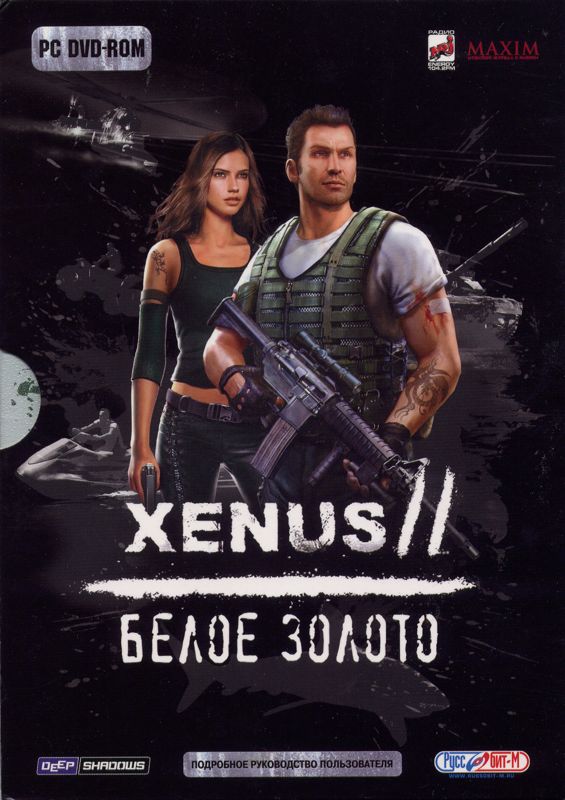
Xenus II: White Gold is most interesting when it lets you treat its Caribbean archipelago as a web of opportunities rather than a straight line. Saul Meyers can work for civilians, the government, mafia, guerrillas, bandits, natives, and the CIA, and those jobs are not merely optional decoration: completing faction missions is how you move the story forward. That gives early decisions some welcome weight. You are always looking at who might help you reach the next objective and which side is worth your time.
The broader mix is ambitious for a first-person shooter. You shoot, drive, roam freely, and develop Saul through RPG progression, so a session can shift from a firefight to travel to picking the next contact to pursue. Reaching different islands is a major goal, which gives exploration a tangible purpose beyond wandering. The game has the kind of structure that encourages you to poke at the world rather than wait for a level to funnel you onward.
The revised progression is a practical improvement in concept. Quests award a fixed pool of experience, and you spend it on perks instead of raising skills through repeated use. Weapon proficiencies, combat abilities, immunities, and bartering all compete for those points, so you can steer Saul toward the parts of the game you lean on most. The trade-off is that progression depends heavily on committing to quests, and the faction-gated route through the campaign can become frustrating when you would rather press onward than cultivate another group.

Graphics
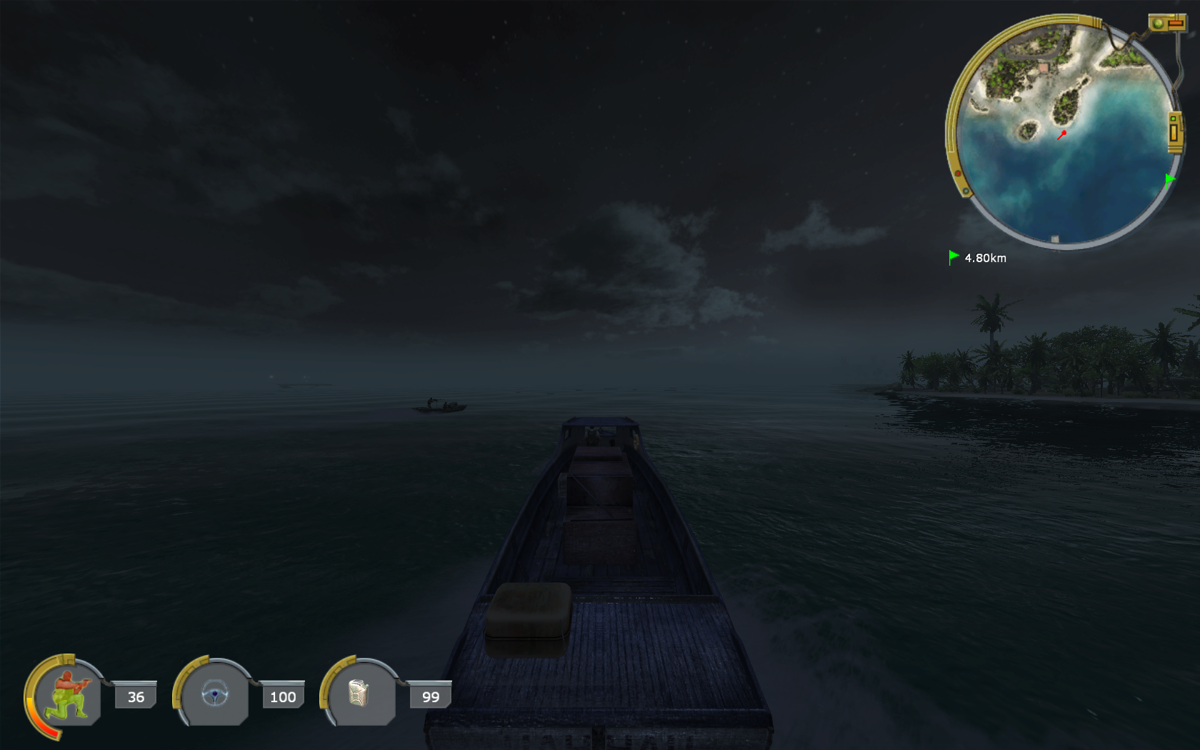
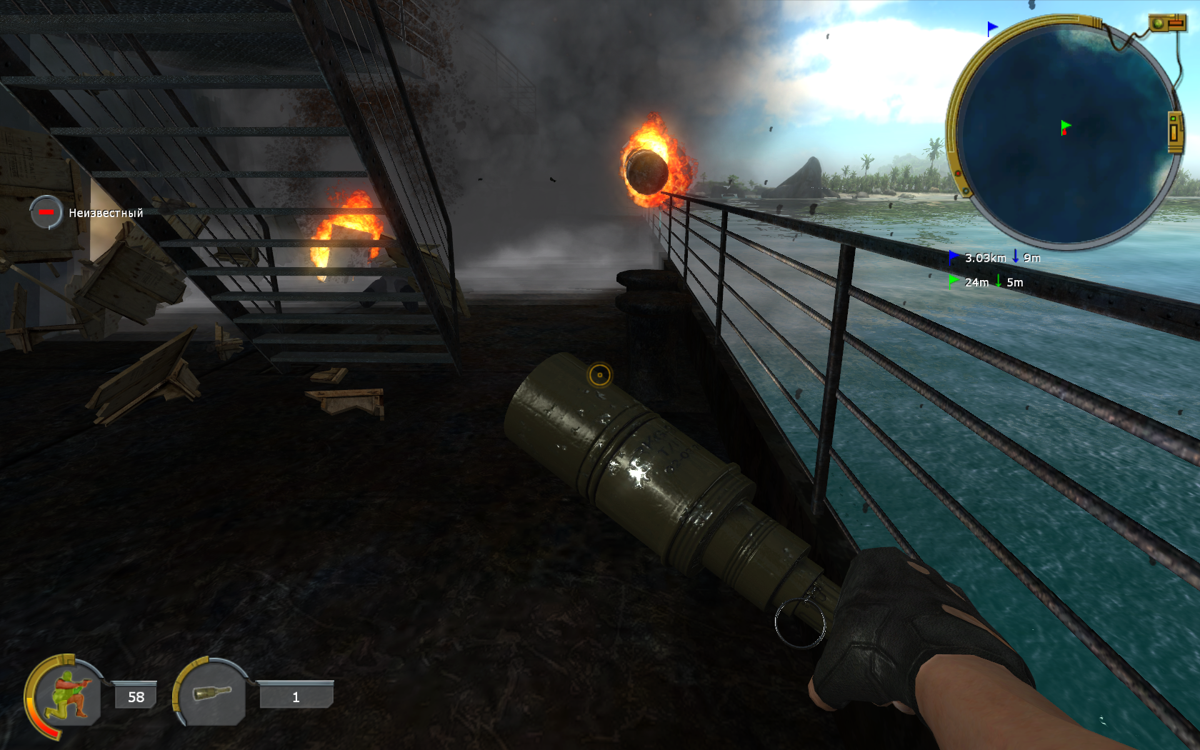
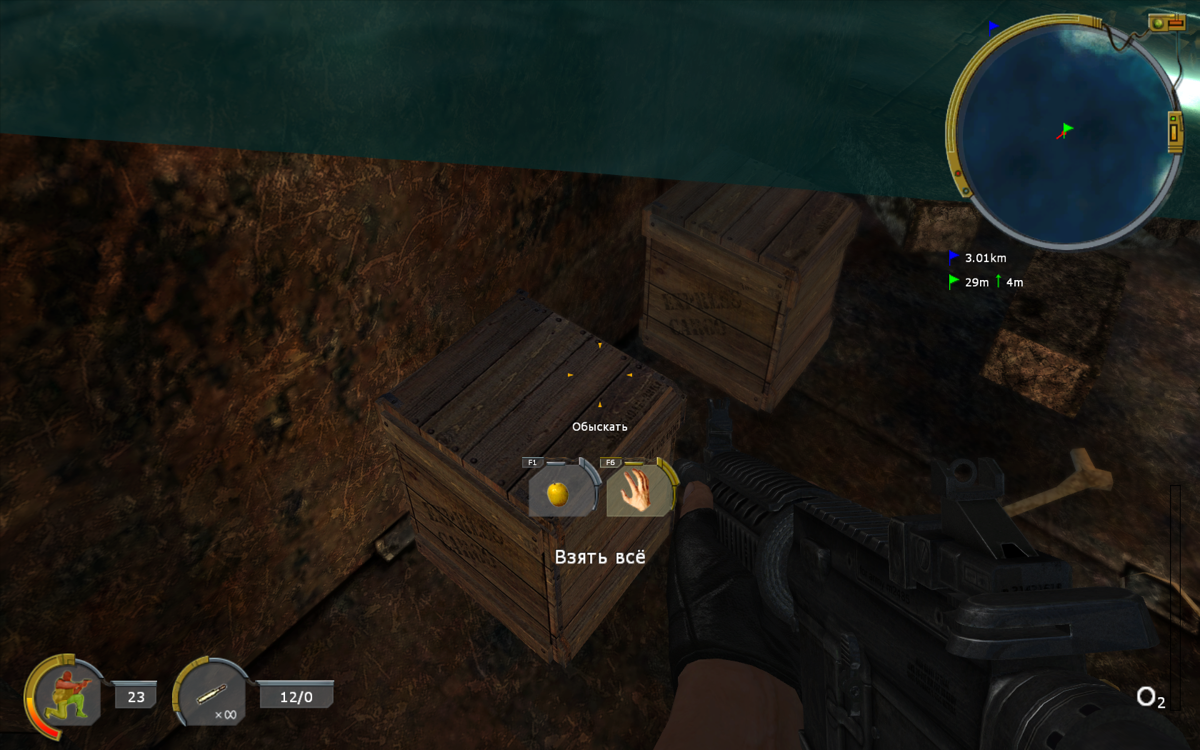
The game is viewed primarily through Saul’s eyes, with a third-person option also listed, and its island setting gives the action a broader backdrop than a run of enclosed shooter arenas. The most useful visual contrast comes from moving between the archipelago’s different locations and seeing the groups that contest them, rather than staring at one repeated combat space.
Story
Saul has a sturdy action-game setup: he is a former member of a special military squad whose disastrous last mission ended with most of his comrades dead and the sole other survivor losing his sanity. He retired after that trauma, only to be called back when a powerful new drug takes hold in a troubled Caribbean region. It is a familiar assignment, but the personal history gives Saul a more credible reason to carry the burden than a generic anonymous agent would have.
The drug lords’ growing wealth and the damage done to victims supply a clear moral urgency. More importantly, the conflict is not framed as one clean war between two sides. Government forces, criminal organizations, guerrillas, bandits, natives, civilians, and the CIA all have a place in the mission structure, which makes the journey feel politically crowded in a useful way. You are navigating interests, not just hunting a single target.
As a prequel to Boiling Point: Road to Hell, White Gold is clearly built around returning to that blend of personal military baggage and unstable regional politics. The story’s strongest quality is its fit with the sandbox: advancing requires dealing with the people and organizations tangled up in the crisis. Do not expect the premise to carry every moment by itself, but it gives your quest work a firmer hook than simple mercenary busywork.
Overall Experience
White Gold is a 6.7 kind of game in the most understandable sense: messy, ambitious, and more compelling when you meet it on its own terms. Its central idea—an open Caribbean shooter-RPG where factions matter and islands must be opened up—has more personality than a standard mission-by-mission action game. When you are choosing allies, budgeting experience points, and pushing toward new territory, the pieces click together.
Its frustrations follow directly from that same design. Progress is tied to faction work, so freedom has limits, and the game asks you to invest in its network of missions before it lets the larger archipelago fully open. That can feel like satisfying role-playing if you enjoy building a position in a contested world; it can feel like an obstacle if your only goal is the next major story beat.
Give it a chance if you have patience for an older, wide-ranging shooter that mixes driving and RPG systems into its action rather than polishing one discipline to a shine. The payoff is not immaculate momentum. It is the gradual sense that Saul is finding a route through a dangerous region full of competing agendas, with your chosen perks and faction work shaping how you get there.

Reviews
There are no reviews yet.