 Retro Replay Retro Gaming History, Reviews & Emulation
Retro Replay Review
Gameplay
The first few minutes of Crosstown are refreshingly direct. You enter a randomly generated top-down maze, hunt for four qreds, steer clear of monsters when you need to, and fight when the route demands it. That is a sturdy arcade loop because every decision points back to a clear goal: do you push toward another qred, deal with the threat in front of you, or make your own route through a wall?
Drilling is the detail that gives the maze more life than a simple collect-and-exit chase. A wall is not always a dead end, so you are encouraged to look at the layout as something you can alter rather than merely memorize. Since the maze changes from level to level, the game can keep you alert without needing a complicated rulebook. The pressure comes from finding what you need while monsters turn detours into risks.
Four-player play should be the preferred way to approach it if you have company. A shared qred hunt naturally creates useful cooperation and the occasional selfish dash toward a nearby pickup, while more people in the maze should make monster trouble harder to ignore. Solo play has a cleaner, more focused rhythm, but it also exposes how much Crosstown asks you to enjoy its repeating objective. If short, replayable action games work for you, that repetition is the point rather than a flaw.
Graphics
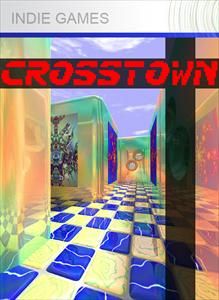
Crosstown uses a retro-style, top-down look built around maze corridors, qreds, and roaming monsters. The overhead view suits the action: you can quickly judge passages, enemies, and possible drilling routes while the maze becomes crowded.
Story
Crosstown does not leave its odd premise entirely in the background. Between levels, a computer called PIGGY explains rules, the history of Crosstown, and the monsters that inhabit it. That is an unusual choice for a compact action game, and it gives progress a little more character than a bare score-and-restart structure.
The premise leans into a strange reality rather than a conventional heroic quest. PIGGY’s explanations make the setting feel deliberately off-kilter, which is a good fit for a game about tunneling through random mazes while collecting objects called qreds. You are not likely to come here for a dense narrative, but the lore breaks help the game feel like more than a disconnected set of rounds.
These between-level messages also create a useful rhythm. After a tense maze, you get a pause before the next layout and another piece of context about why this bizarre place works the way it does. That framing will land best for anyone who likes arcade games with a little weird fiction wrapped around their score-chasing core.
Overall Experience
Crosstown’s strength is its lack of fuss. It knows that collecting four targets in a hostile maze is enough to create momentum, then adds random generation, wall drilling, and multiplayer to make each attempt less predictable. You can understand the assignment immediately and still find yourself reconsidering routes once the maze and its monsters start closing in.
Its limitations are tied to that same simplicity. The level-to-level goal remains fixed, so frustration can set in if you need constant new objectives or a large mechanical toolbox to stay engaged. Crosstown asks you to enjoy the small tactical shifts inside a familiar loop: a different maze, another blocked path, another dangerous choice about whether to fight or flee.
Give it a chance if you want a lean retro action game for quick solo runs or local group sessions, especially if procedural mazes and improvised paths sound more appealing than carefully scripted stages. The PIGGY material adds enough mystery to distinguish the game, but the real payoff is mastering the push-and-pull between exploration, combat, and drilling a route to the last qred.


Reviews
There are no reviews yet.