 Retro Replay Retro Gaming History, Reviews & Emulation
Retro Replay Review
Gameplay
The first few battles make a strong case for Skulls of the Shogun’s five-order limit. You are never simply moving every unit forward until the map is empty. Five orders disappear quickly when a rice field needs taking, a general needs protection, and an opening appears to push someone into a hazard. That tight allowance keeps turns brisk while giving each decision enough weight to sting when it goes wrong.
Free-radius movement is the key difference. Instead of counting squares, you are judging how far a unit can drift into cover, reach a target, or set up a follow-up attack. Infantry, archers, and cavalry give you a clear set of battlefield roles without turning the game into a rulebook exercise. If you know Advance Wars, think of its concise command decisions loosened from the grid. Positioning feels more fluid here, and a small nudge can matter.
The skull-eating system creates the game’s most tempting gamble. Feed a unit three enemy skulls and it becomes a demon with extra actions, which can turn a tough fight in your favor. But it is easy to spend too many orders shepherding one future monster while the rest of your force gets surrounded. The game is at its best when you balance that long-term prize against the immediate value of healing, reinforcing, or taking ground.
Generals keep the pressure high because their loss ends the battle. Cover and hazards make defensive positioning worthwhile, but the strongest moments come when you spot a chance to knock an opponent somewhere fatal instead of trying to win a clean exchange. Local and online multiplayer support up to four people, and the original release also supported cross-device play across Microsoft’s platforms, as noted in the Microsoft launch-day feature.
Graphics
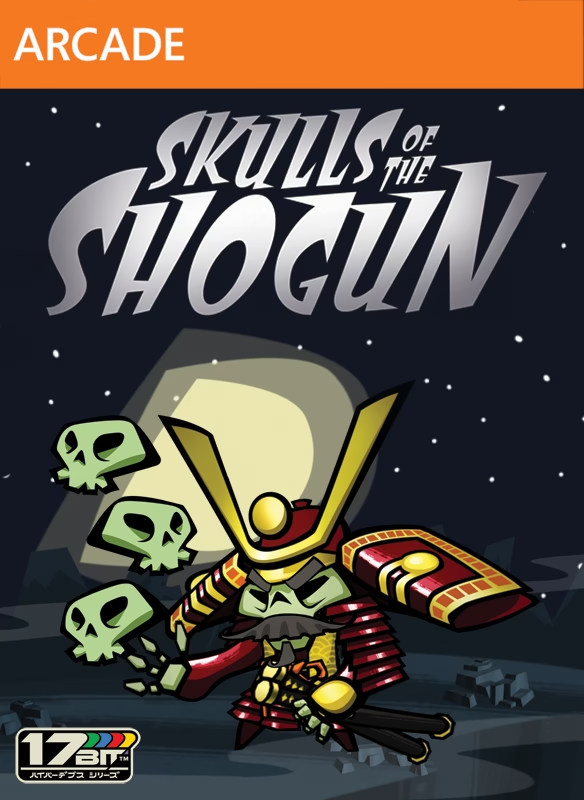
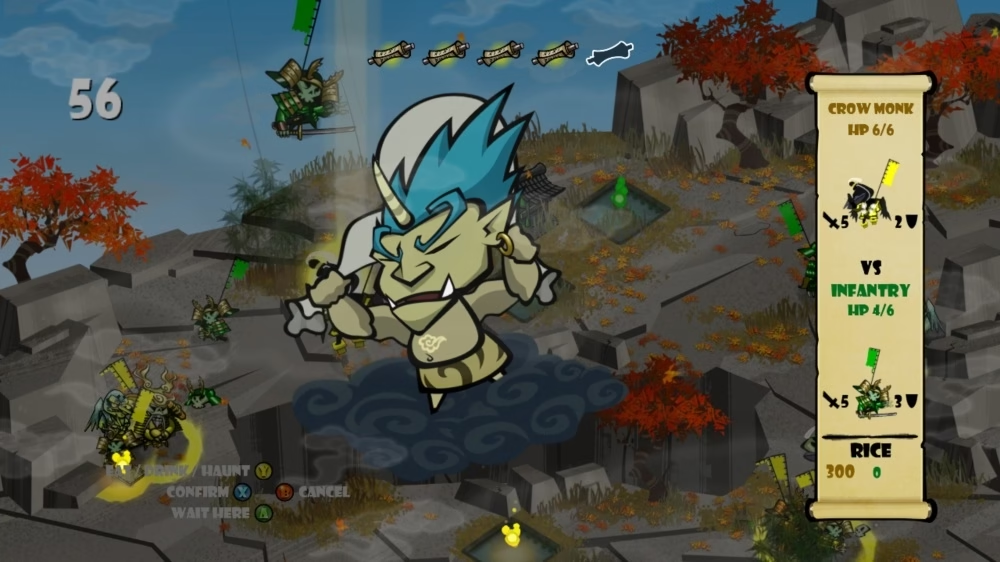
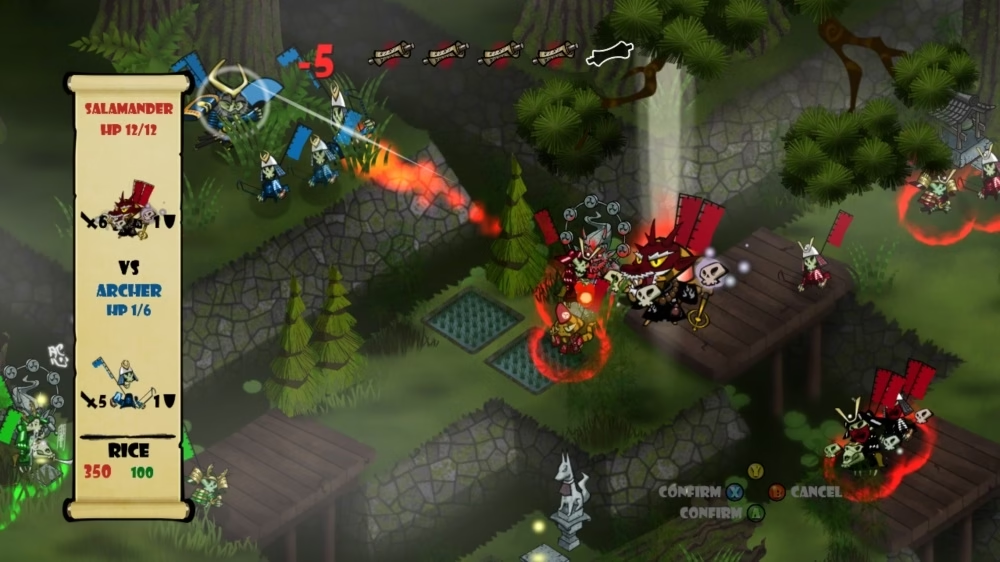
The Xbox 360 battles have a chunky, cartoonish afterlife look. Green-faced skeleton samurai wear oversized helmets, colored armor, and tall banners that make opposing forces easy to pick out. Dark green pines, stone paths, shrines, footbridges, rock terraces, and red autumn leaves give the maps more character than a bare tactics board.
Orange fireballs, red glowing circles on the ground, and broad exaggerated faces fit the comedy well. When several units bunch together amid spell effects, though, the isometric battle view can get visually busy and make a crowded clash harder to parse at a glance.
Story
Akamoto begins as a samurai general murdered before he can become shogun. Faced with a long wait in the afterlife, he rejects it and raises an undead army instead. It is a clean, silly setup for a campaign about fighting your way through the next world rather than solemnly accepting death.
The humor matters because it keeps the stakes from becoming self-important. Skeleton warriors, demons, and spell-casting monks could have made for a grim fantasy war story, but the dialogue frames the whole affair as a playful supernatural grudge. That tone gives failed plans a little less bitterness, which is helpful in a tactics game where losing a general can abruptly end a battle.
Do not come here expecting dense political drama. The story is the seasoning around the missions, and its main success is giving the army-building and brawling a personality. Akamoto’s stubborn refusal to wait quietly is a fitting engine for a game that constantly asks you to seize ground and press an advantage.
Overall Experience
Skulls of the Shogun earns its reputation through discipline. It has enough systems to make every map feel tactical, yet the five-order cap prevents turns from dragging into chores. You can make aggressive plays, build a demon, defend around terrain, or focus on reinforcements, but you cannot do everything. That is exactly why the decisions stay interesting.
Frustration sets in when you overcommit. A prized veteran can become a liability, and a general left too exposed turns a promising position into an immediate defeat. Still, these losses usually point back to a choice you made, whether you spent an order greedily or neglected the shape of the battlefield. The learning curve feels fair because the rules are direct even when the consequences are sharp.
Give it a chance if you want turn-based tactics with a mischievous sense of humor and room for bold, improvised moves. The original Xbox 360 version does not need a sprawling ruleset to create satisfying clashes. Its best battles leave you staring at the five orders in front of you, certain there is a brilliant solution, then realizing you must decide what problem to leave unsolved.


Reviews
There are no reviews yet.