 Retro Replay Retro Gaming History, Reviews & Emulation


Retro Replay Review
Gameplay
The Dishwasher: Dead Samurai begins with a simple, satisfying promise: put meat cleavers in the hands of a furious little killer and turn suited goons into a bloody mess. The side-scrolling fights have immediate bite because they are not content with basic button-mashing. Combos and Dish Magic give you reasons to experiment, while bosses steadily raise the pressure and demand more than blindly charging forward.
The upgrade loop helps the campaign avoid feeling static. Defeated bosses supply currency, and the clean-kill or messy-kill finishers let you earn more if you hit the required prompt correctly. That is a smart incentive, but it can also be a point of irritation when you are already occupied with a crowded fight and a missed prompt costs you the extra reward. You need to enjoy the game’s aggressive rhythm rather than merely tolerate it.
The 14-level story mode is only part of the package. Challenge mode turns the combat into a wave-clearing test built around combo points, while Arcade mode offers shorter themed rooms. Separate leaderboards make those modes a better fit for players who want to refine runs instead of simply reaching the credits. Drop-in, drop-out Story co-op is particularly welcome, and the second player’s unusual support entities, including a scythe-wielding demon and a floating guitar, give multiplayer a deliberately offbeat flavor. Letting someone use a guitar controller to play chords for nearby damage is the kind of weird extra that suits this game perfectly.
Graphics
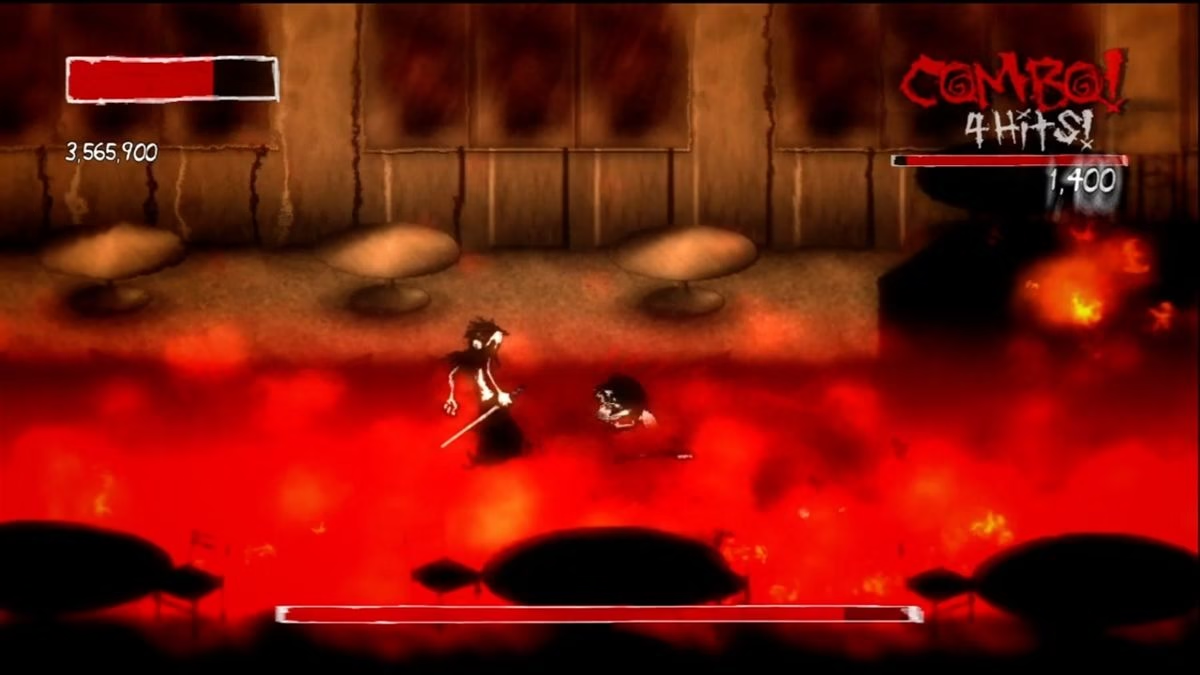
The action is drawn in a harsh, grimy style built from black silhouettes, smeared blood, and sickly washed-out interiors. A kitchen fight turns pale walls, counters, and shelves into a violent red-stained backdrop, while the small, dark player character stands out sharply against it. The effect is crude in places, but intentionally so, like a splattered underground comic brought to life.
Stages do make room for stronger color when they need it. One boss arena glows with red liquid and orange fire against a dark industrial background, while an outdoor arcade scene frames its combatants beneath a huge pale moon and murky water. The short story interludes use stark black-and-white comic panels with yellow speech boxes, matching the game’s punk-horror mood.

Story
This is not a brawler that pauses to deliver a dense, carefully explained epic. You control an unnamed dishwasher, and the central drive is violent forward motion through minions and bosses, with the presence of a dead samurai adding to the game’s knowingly strange title concept.
Between levels, short comic strips carry the narrative. Their black-and-white imagery and fragmented dialogue give the story a feverish, confrontational tone instead of slowing everything down with long scenes. That approach works well if you want connective tissue between fights, not a reason to put the controller down and study lore.
The downside is that the story functions more as attitude than emotional anchor. It gives the slaughter a grim context, but the real payoff is still mechanical: reaching another encounter, surviving it, and buying your next improvement. If you need character depth to stay invested, this is unlikely to be the game that wins you over.

Overall Experience
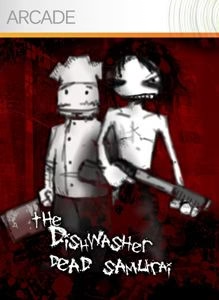
The Dishwasher: Dead Samurai feels like a brawler made by someone who wanted every encounter to be louder, harsher, and more excessive than good taste recommends. That commitment carries it. The cleaver-based opening, supernatural attacks, finisher rewards, and escalating enemy pressure create a game with a specific nasty energy rather than a generic retro beat-’em-up routine.
It is also a game that asks for some patience. The increasing difficulty and prompt-based finishers mean you can hit stretches where the violence feels more demanding than cathartic. Still, the campaign is supported by enough side modes and score-chasing to reward learning the combat rather than treating it as a one-and-done curiosity.
Give it a chance if you want an abrasive, stylish action game with real replay value and a co-op mode that embraces the absurd. Skip it if constant gore, frantic fights, and a thin comic-strip story leave you cold. For the right player, its messy intensity is exactly the point.


Reviews
There are no reviews yet.