 Retro Replay Retro Gaming History, Reviews & Emulation
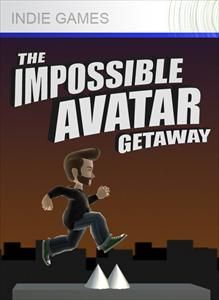
Retro Replay Review
Gameplay
The Impossible Avatar Getaway starts fast because it refuses to let you ease into it. Your Xbox Avatar is always running forward, and the whole game becomes a string of split-second reactions. A gap means jump, a low hole means slide, and a closed door means push. You understand the rules almost immediately; surviving them is another matter.
That simplicity gives every death a clear sting. There are only three actions, so failures rarely feel like the result of an overloaded control scheme. More often, you jumped a fraction too late, slid too soon, or failed to read the next obstacle while recovering from the last one. The first hour is likely to alternate between “I have this” confidence and instant humiliation, which is exactly the rhythm hardcore one-button-style runners live on.
The flag system is the sensible concession. You can place up to three flags in a stage and restart from the latest one after dying, rather than replaying the entire route every time. Use them deliberately: a flag before a stretch you have not mastered gives you room to learn it, while saving one for later can protect a stronger run. The three levels start at impossible and get harder, so the game makes no real attempt to court anyone who dislikes repeated failure.
Graphics
You guide an Xbox Avatar through side-view platforming stages, with the camera framing the immediate hazards ahead. The important pictures are the ones you need to read in an instant: gaps below your feet, openings that demand a slide, and closed doors that call for a push.
Story
The story is stripped to a setup: your Avatar is trying to escape an unknown place. That is enough to give the forward motion a purpose, but this is not a game you play for plot development.
Instead, the escape premise works as a clean excuse for the relentless pace. You are not stopping to explore or linger; you are trying to get out, one lethal-looking obstacle at a time. The game’s real drama comes from reaching a flag and then trying not to waste that progress.
If you want characters, twists, or a richer sense of place, this will feel bare. If all you need is a direct reason to keep running, the premise stays out of the way and lets the challenge carry the experience.
Overall Experience
This is a narrow, demanding arcade platformer that knows exactly what it wants from you: attention, timing, and the willingness to die repeatedly while learning a route. Its compact command set is a strength. When a sequence finally starts to click, you feel yourself turning panic into rhythm.
Frustration will set in quickly if you expect variety or a gentler learning curve. “Impossible” is not a joke here, and the later stages promise even less mercy. The flags prevent the punishment from becoming completely exhausting, but they do not make the underlying challenge forgiving.
Give it a chance if Canabalt-style forward momentum and precision platforming make you want to chase one better attempt. The payoff is not discovery or spectacle; it is the hard-earned satisfaction of executing a route that seemed ridiculous a few minutes earlier. For the right kind of stubborn gamer, that is enough.


Reviews
There are no reviews yet.