 Retro Replay Retro Gaming History, Reviews & Emulation
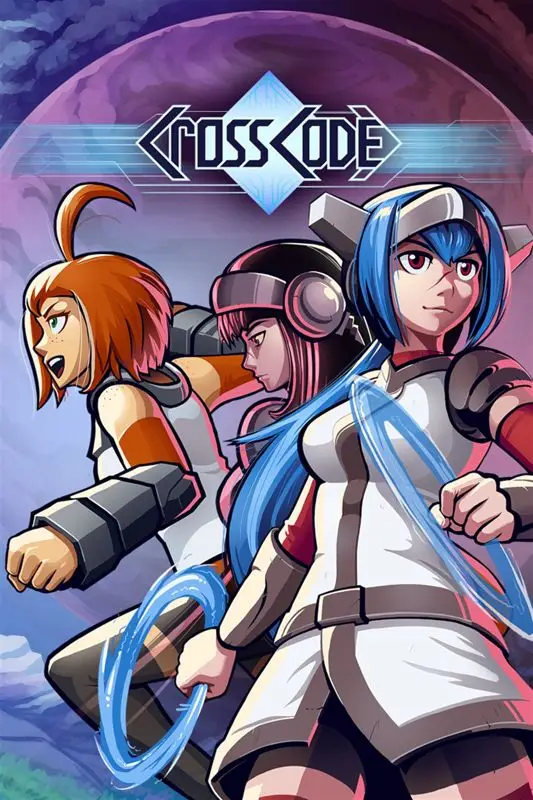
Game Overview
Gameplay
CrossCode feels sharpest when you are moving, aiming, and improvising under pressure. Lea can fight up close or fire projectile orbs from a distance, and the ricochet angle on those shots gives combat more personality than a standard top-down hack-and-slash. You are not simply mashing through mobs. You are positioning for a bounce, watching for an opening, then deciding whether a dodge, guard, or direct melee response is the safer answer.
That foundation grows into a genuinely flexible combat system. Elemental modes add fire, ice, wave, and shock options, while enemy weaknesses make it worth changing tactics rather than relying on one comfortable attack pattern. Boss battles especially benefit from that demand for awareness. The game expects you to use its tools well, and that can be frustrating when a tough fight exposes bad habits, but victories feel earned instead of handed out.
Exploration is where CrossCode makes its biggest ask. Dungeons lean heavily on ricochet puzzles, mechanisms, timed challenges, and platforming-like obstacle sequences. The best puzzles make you look at a room differently and reward a precise shot or clean sequence of movement. The harder ones can test your patience, particularly when timing is involved and you already understand the idea but need several attempts to execute it. This is not an action RPG that treats puzzles as a quick break between battles. They are a central part of the experience.
Progression gives all that effort a useful sense of momentum. Leveling feeds points into a skill grid with branches for melee, ranged combat, defense, and special techniques, so you can lean into the parts of Lea’s kit you enjoy most. Gear from shops, crafting, and quests lets you tune health, attack power, and resistances as well. Side quests add plenty to do across towns and hubs, though their objectives can be familiar fetch or combat work. They are most worthwhile when you want rewards and a reason to spend more time mastering the game’s systems.
Story
Lea’s situation gives CrossCode more pull than its fictional-MMORPG setting initially suggests. She enters CrossWorlds without her memories and with limited speech, then follows missions, guild connections, and clues about her own past. That setup makes the larger mystery easy to invest in because you discover the world and Lea’s place in it at the same pace. The premise also gives the many NPC interactions a little more purpose than typical quest-hub chatter.
Overall Experience
CrossCode is for you if the phrase “action RPG with serious puzzles” sounds exciting rather than exhausting. It delivers a satisfying loop of combat, character building, exploration, and problem-solving, but it never lets any one piece coast for long. A dungeon can demand careful aiming, elemental knowledge, timing, and movement in quick succession. That intensity is the point, and it gives the game a welcome confidence.
The rougher moments come from that same commitment. When you hit a puzzle solution that refuses to click, or a timed sequence asks for more precision than you have left in the tank, progress can stall hard. There is a clear difference between being challenged and being ready to move on, and CrossCode occasionally lands on the wrong side of that line. You should go in ready to slow down, experiment, and accept that not every obstacle will yield immediately.
Still, the payoff is substantial. Few games combine real-time fighting and environmental puzzles so thoroughly, and the skill grid, equipment choices, elemental options, quests, and guild content give you reasons to keep engaging with the world beyond the main mystery. CrossCode is not casual comfort food, but it is a strong recommendation for anyone who wants an action RPG that respects their ability to think as much as their ability to react.


Reviews
There are no reviews yet.