 Retro Replay Retro Gaming History, Reviews & Emulation
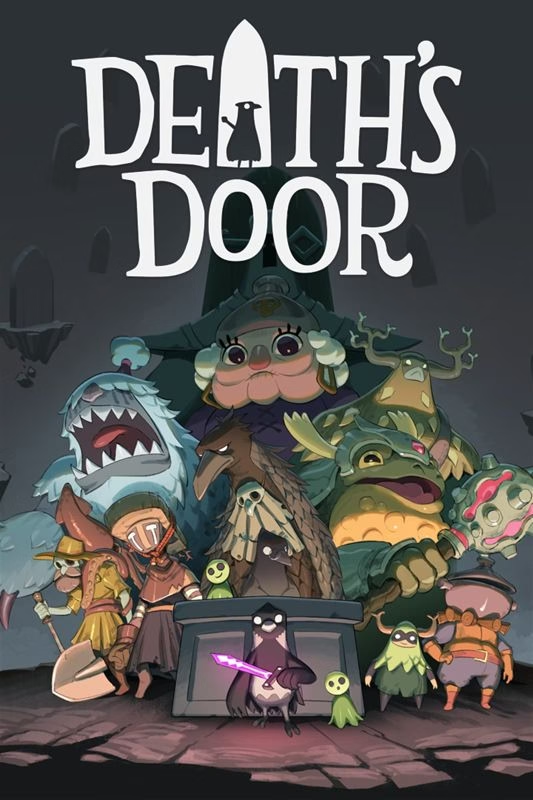
Retro Replay Review
Gameplay
Death’s Door starts with a wonderfully direct hook: you are a crow whose ordinary soul-reaping assignment goes wrong, and the answer is to head out and fight your way through a strange world. The basics are approachable. Crow has quick melee strikes, a heavier charged or post-dodge attack, and a ranged option with limited ammunition. That combination gives combat a useful rhythm, especially when you stop treating dodging as a panic button and begin using it to create an opening for a stronger hit.
Bosses are where the game asks the most of you. Bigger enemies demand that you recognize patterns, avoid their attacks, and sometimes work out a weakness rather than simply outlasting them. That can sting when you die just before seeing the solution, but the checkpoint structure softens the blow. Unlocked doors return you to the Hall of Doors, where you can fast travel between opened routes, and death sends Crow back to the last unlocked door instead of making you repeat a huge stretch.
Exploration has real purpose beyond filling a map. Melee and ranged attacks solve environmental puzzles, while later magic tools and weapon options can uncover routes and secrets that were previously out of reach. The five melee weapons differ in damage, reach, speed, and feel, so switching on the fly is more than a cosmetic choice. Upgrades to strength, dexterity, haste, and magic also give the soul energy you collect a satisfying long-term use.
There is some welcome tension in the health system. Seeds can be planted in designated pots for a full heal, but each pot only works once until you die or leave the area. You have to decide whether to spend that safety net now or press farther ahead. If you enjoy action RPGs that reward patient observation, revisiting old paths, and learning through a few hard losses, Death’s Door is firmly in your wheelhouse.
Graphics
Death’s Door uses a 2D diagonal-down viewpoint that keeps Crow, enemies, and puzzle objects in view as you move through each area. The perspective is especially useful in busy fights, where watching enemy movement and finding a safe dodge route matters as much as landing a hit.
Story
The story works because it begins from an unusually mundane angle. Crow is an employee of the Reaping Commission, a bureaucratic workplace that turns collecting souls into paid work. When a giant soul is stolen after Crow defeats its demonic forest-spirit owner, the job becomes personal, but it never loses that wry office-job edge.
There is a clear reason to keep moving forward: Crow cannot move on until the missing soul is recovered. An old reaper who tricked Crow points the way toward other giant souls, which may open Death’s Door itself. It is a clean quest structure, but one with enough mystery in the stolen soul and the door’s purpose to make each new destination feel connected to the larger problem.
Humor matters here. Conversations with the characters at headquarters and elsewhere give the game breathing room between fights and puzzles, preventing the reaper premise from becoming overly grim. The story is likely to land best if you enjoy fantasy that can be sincere about death and duty without taking every line of dialogue with funeral-level seriousness.
Overall Experience
Death’s Door is the kind of action RPG that respects your ability to put pieces together. You are expected to read a boss, notice a puzzle clue, remember a locked path, and return later with the right tool. In exchange, progression feels earned. Every new weapon, magic item, shortcut door, and upgrade has a practical effect on how confidently you move through the world.
The rougher moments come when several demands pile up at once. A hard boss can require careful dodging and pattern recognition, while the limited healing pots make mistakes costly. Backtracking can also test your patience if you prefer a game that always points straight to the next objective. Still, the Hall of Doors fast travel system means revisiting areas is built around brisk returns rather than long slogs.
At 8.8, Death’s Door earns its strong reputation through a focused mix of combat, puzzles, exploration, and offbeat reaper humor. Give it a chance if you want a compact adventure where a nimble crow can gradually turn a frustrating assignment into a satisfying act of persistence. Skip it only if repeated boss attempts and revisiting earlier areas drain the fun from discovery for you.


Reviews
There are no reviews yet.