 Retro Replay Retro Gaming History, Reviews & Emulation
Game Overview
Gameplay
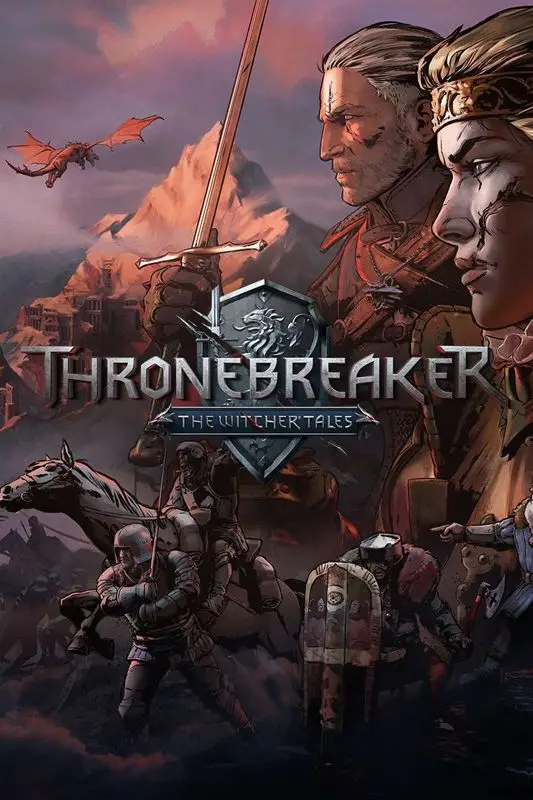
Thronebreaker grabs you by making Gwent feel like a campaign rather than a side activity. You roam as Meve across each area, picking your route toward the next major story beat while detouring for resources and optional encounters. Those detours matter because recruits, wood, and money feed directly into card crafting and upgrades. That loop gives exploration a welcome sense of return: finding something off the main path can change what your deck is capable of later.
Standard matches are tense because winning is not simply about throwing down your largest numbers. You are working through up to three rounds, trying to take two, with a limited twelve-card draw each round and used cards clearing away afterward. Passing at the right time can be as important as deploying a unit. Card abilities, from damaging enemies on entry to boosting allies or drawing more cards, turn the point totals into a constantly shifting problem. Meve’s companions and her equipped leader ability add another layer without making the central rhythm hard to understand.
What keeps the campaign from becoming a long run of similar matches is its willingness to bend the rules. Some battles demand that you protect or destroy particular cards, others compress the action into one round, and optional puzzles hand you a fixed set of cards and ask for a precise solution. That variety is a real strength, though it can also expose the game’s stubborn side. If a specialized objective does not click, you may spend more time untangling its intended solution than enjoying the free-form deck tactics. Still, the changing conditions make each new encounter feel like a challenge to solve rather than another routine ladder match.
Story
Set during the second war between the Northern Realms and Nilfgaard, alongside the Witcher books and before the video game series, the campaign gives Queen Meve a strong position at the center of its conflict. Its choices range from quick resource decisions on the map to larger illustrated and animated scenes, and the bigger calls can alter later events and determine who joins or leaves her cause. That makes the journey feel more personal than the usual card-game excuse to move between battles.
Overall Experience
This is an unusually focused single-player card game: it wants you to care about your army, your route, and the consequences of Meve’s decisions, not just chase a win streak. The campaign structure makes deck improvement satisfying because each new craft or upgrade comes from time spent traveling and taking risks off the direct route. If Gwent’s underlying back-and-forth ever appealed to you, Thronebreaker gives it far more room to breathe.
Its best moments come when the narrative pressure and tactical pressure meet. A difficult match feels connected to the march you have chosen, while a consequential decision can make the next stretch of the journey feel less predetermined. The mostly linear route means this is not an open-ended adventure, but the side paths, optional puzzles, and choices give it enough texture to reward curiosity.
You should give it a chance if you want thoughtful turn-based card battles with a substantial Witcher story wrapped around them. Come prepared to read the board carefully, accept that some encounter gimmicks will ask for a specific line of thinking, and savor the slower pace. The payoff is a campaign that makes its cards feel like part of a hard-fought royal campaign instead of a detached collection exercise.


Reviews
There are no reviews yet.