 Retro Replay Retro Gaming History, Reviews & Emulation
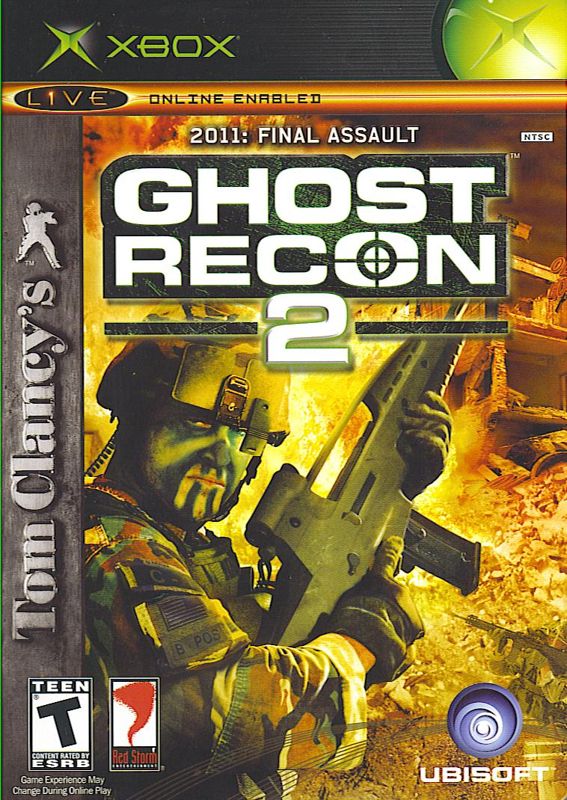
Retro Replay Review
Gameplay
Final Assault pulls you in by making every enemy position feel like a small problem to solve. Most of your time is spent shooting, but the important part is deciding how to enter an encounter: where to move, when to hold back, and how to avoid walking your Ghosts into a bad line of fire. That tactical pause gives the action more bite than a straightforward run-and-gun shooter.
This Xbox version streamlines the squad control noticeably. You command a single squad, point the cursor at a location, and use context-sensitive or broad movement orders instead of laying individual waypoints for each soldier. It is faster and easier to handle in the middle of danger, so you can stay focused on the immediate fight rather than wrestle with planning tools.
That accessibility comes with a real trade-off. You cannot swap to another squad member, and there is no second squad to coordinate, so the wider tactical juggling of its predecessor is reduced. If you loved carefully orchestrating multiple teams, Final Assault can feel narrower. If you mainly wanted Ghost Recon’s cautious firefights without as much command overhead, the change is likely to click quickly.
The anytime save system is a particularly welcome fit for this kind of game. You can test a risky approach, learn what an encounter demands, and reload without being forced to replay a long stretch. The default third-person view gives the game its main feel, while the optional first-person view lets you take a more direct look at the battlefield when you prefer it.
Graphics
The action is built around a third-person camera following the Ghost team through its missions, with a switch to first-person view available whenever you want a tighter shooting perspective. That choice changes how close you feel to the firefight: third-person is better for keeping track of your character and nearby space, while first-person makes aiming feel more immediate.
Story
This campaign moves the conflict to 2011 and sends the American Ghost team against a general who has fought his way to the top of North Korea. It is a clean military-thriller setup: a dangerous political crisis, a specialist unit, and a sequence of missions intended to stop the escalation.
The different storyline matters because Final Assault is not simply the same campaign as the 2007 version of Ghost Recon 2. Its 15 levels are distinct, giving this release its own route through the Korean conflict rather than functioning as a minor retread.
Do not come expecting the story to replace the shooting and squad decisions as the main attraction. The plot supplies the stakes and mission context, while the moment-to-moment tension comes from working through hostile encounters with your team intact.
Overall Experience
Tom Clancy’s Ghost Recon 2: 2011 – Final Assault is a confident tactical shooter that favors brisk, accessible squad command over the more elaborate control of the earlier game. Its best moments arrive when you stop treating an objective like a shooting gallery, take stock of the terrain, and turn a difficult engagement into a controlled one.
The streamlined design will divide Ghost Recon veterans. One squad, fewer fine-grained orders, and no character switching remove some of the old complexity. At the same time, the simpler controls and flexible save system make it much easier to recover from mistakes and keep moving through the campaign.
Give it a chance if you want a tactical shooter that still values thought and positioning but does not demand extensive micromanagement. Its 7.9 score feels fair: Final Assault is not the deepest expression of the series’ squad tactics, yet it remains a satisfying, focused version of Ghost Recon’s careful-combat formula. For another take on this era of the series, Tom Clancy’s Ghost Recon 2: 2007 – First Contact offers a related campaign.


Reviews
There are no reviews yet.