 Retro Replay Retro Gaming History, Reviews & Emulation



Retro Replay Review
Gameplay
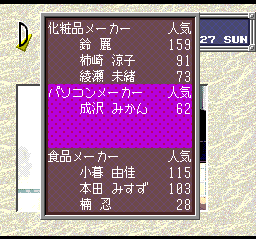
The first hour of Tanjō: Debut is about getting to know the numbers behind Aki, Kumi, and Saori. Each girl begins with her own statistics and personality description, then you start building schedules around practice, jobs, and vacations. It is a simple setup with immediate pressure: practice improves professional ability, but too much of it risks leaving a girl stressed and unhappy.
That trade-off is where the game earns its keep. You cannot simply grind training and expect clean results, nor can you hand out endless breaks without watching professional skill slip. The enjoyable part is learning to read the group’s condition and making compromises before the damage becomes too severe. It asks for patience and a willingness to think a few steps ahead rather than chase an instant reward.
Eventually, preparation leads into a chosen entertainment path, including commercial modelling, musicals, pop concerts, and movies. Your earlier choices are judged through ratings, then the group’s results are compared with rival agencies in a league. That structure gives the routine scheduling a purpose: every week is preparation for a public test. The 3DO version, Debut Pure, adds events such as a costume contest and fashion show, but the central scheduling game remains the same.
Graphics
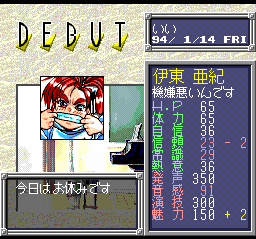
The game is framed around three young aspiring entertainers—Aki, Kumi, and Saori—and its anime/manga classification fits that idol-management subject matter. The reference material places its emphasis on their stats, personalities, schedules, and event ratings rather than detailed visual set pieces.
Story
This is not a story about one fixed protagonist climbing to fame. You step in as the agent at a music company, with responsibility for a small group that needs to develop into viable stars. That role makes the basic premise work because your attachment comes from stewardship: you decide what each girl does and then have to answer for the results.
The personality descriptions matter because they give the three trainees a little context before the management begins. Rather than treating the group as interchangeable meters, the game invites you to consider individual needs while still chasing a shared professional goal. It is a modest narrative frame, but an effective one for a simulation built on judgment calls.
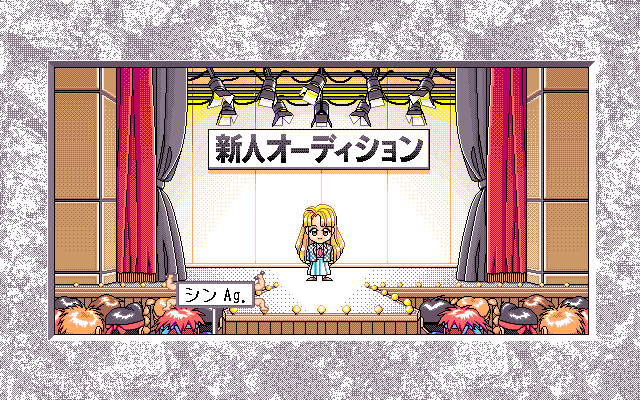
Competition with other agencies supplies the ongoing tension. Choosing a branch of entertainment is not merely a menu selection; it is the moment where your long preparation receives a rating and a place in the league. The story is therefore told through career progress, setbacks, and whether your management creates performers capable of competing.
Overall Experience
Tanjō: Debut is most satisfying when you accept that it will not let you optimize everything at once. A hard practice schedule may look smart until stress starts eroding the group’s condition; a generous break may preserve happiness while weakening the skills needed for the next major event. That friction gives the game its personality.
Frustration can set in if you want a management game that hands out obvious best answers. Here, the whole point is maintaining a moving balance between ability, work, stress, and happiness, then committing to an entertainment route before you know exactly how well it will pay off. The league results make those choices feel accountable rather than purely theoretical.
Give it a chance if you enjoy older management simulations where a small set of decisions carries real weight. The payoff is not flash; it is the satisfaction of taking three inexperienced entertainers, steering their development with care, and seeing whether your planning holds up against competing agencies. Its focused premise and meaningful trade-offs make it a worthwhile curiosity for idol-management fans.



Reviews
There are no reviews yet.