 Retro Replay Retro Gaming History, Reviews & Emulation
Retro Replay Review
Gameplay
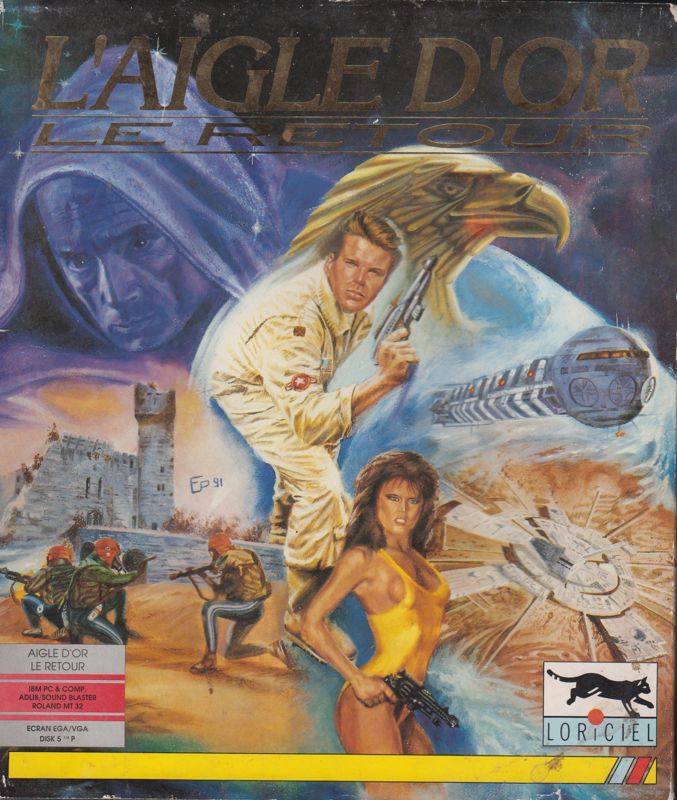
Golden Eagle has the kind of immediate, no-nonsense setup that suits a 1991 action game: an evil priest has broken the Golden Eagle into five pieces, hidden them around a city, and sent mutant employees after anyone trying to retrieve them. As a special agent, you head into side-scrolling levels with a gun and a clear goal. The first stretch pulls you in because movement and combat are easy to understand; walking, shooting, jumping, and ducking establish the basics quickly.
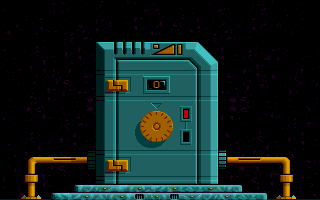
What separates it from a simple corridor shooter is the need to investigate. Eagle pieces are tucked behind the sort of practical obstacles that demand an item found elsewhere, a switch, a code, or the right special equipment for a safe. That turns forward momentum into a small-scale scavenger hunt. When you have paid attention and suddenly understand why a previously useless object matters, Golden Eagle earns its puzzle elements.
That same design can become a sticking point when you want to keep moving. The game asks you to alternate between fighting and methodical searching, so it rewards patience more than speed. Traps add another reason not to rush blindly, while terminals can ease the burden by supplying messages and maps. Use them. They are the best answer to the city becoming disorienting or to uncertainty over where your next lead lies.
The optional Reversi terminals are an odd but welcome breather. They do not drive the main mission, which is exactly why they work: you can ignore them when the hunt has your attention, or take a short detour when you want a change from shooting mutants and checking every suspicious location. Golden Eagle is not deep in any single direction, but its action, traps, and inventory-style puzzles make a more varied package than its bare premise suggests.
Graphics
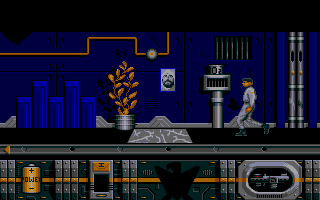
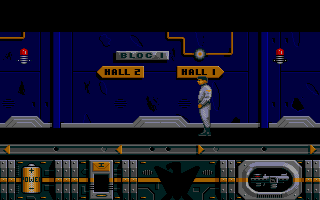
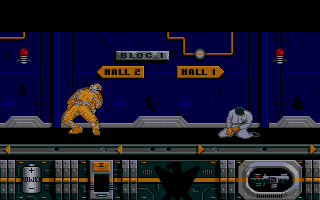
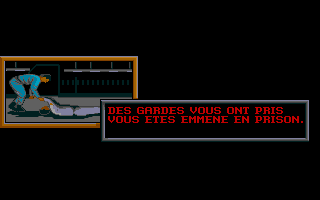
Golden Eagle uses a 2D side-scrolling view, putting your agent and the city’s mutant opposition on the same horizontal playfield. The perspective suits the game’s mix of shooting, jumping, ducking, and searching: you can see the immediate route ahead while keeping an eye out for hazards and places worth investigating.
Story
The story is deliberately basic, and that is not really a flaw. Nahmur steals the Golden Eagle, splits it into five parts, and hides them across the city; your job is to put the situation right. It is a clean excuse for the mission rather than a narrative that asks you to dwell on characters or moral stakes.
The more interesting wrinkle is the city’s mutant workforce, which gives the opposition a little more personality than anonymous guards would have. Still, the plot’s real purpose is to point you toward the next piece of the artifact. The game keeps the focus on tangible objectives—find clues, open safes, avoid traps, recover the pieces.
Terminals provide fragments of useful information and maps, so the narrative arrives mainly through practical messages rather than lengthy exposition. That fits the game’s brisk, functional tone. If you want a story-rich adventure, this will feel thin; if you just want a concrete reason to explore a dangerous city, it does the job.
Overall Experience
Golden Eagle is a modest but enjoyable hybrid for retro action fans who like their shooting interrupted by a little problem-solving. Its strongest quality is that it gives you several small things to do: fight, explore, decode the use of an item, open a safe, dodge a trap, and consult a terminal when you lose the thread. The result has more rhythm than nonstop blasting, even if that rhythm will not suit everyone.
You should give it a chance if you enjoy older games that expect you to search carefully and make your own progress from clues. Go in wanting a compact action-puzzle trek rather than a polished arcade sprint. The occasional need to backtrack mentally through items, codes, and switches is part of the deal, and it can frustrate you if you only want immediate combat.
The payoff is a straightforward city-spanning recovery mission with enough side activities to stay engaging. Golden Eagle never needs to be grand to be worthwhile; it works when you meet it on its own terms, take the terminals seriously, and treat each obstacle as a prompt to investigate instead of another thing to shoot. Its 6.6 reputation feels fair: competent, lightly distinctive, and most rewarding for gamers with patience for its old-school pace.


Reviews
There are no reviews yet.