 Retro Replay Retro Gaming History, Reviews & Emulation



Game Overview
Gameplay
Hanse puts you in the frame of mind of a merchant before it makes you feel like a ruler. In the first hour, the core routine is blunt but compelling: buy salt, sail to another Hanseatic city, exchange it for goods, and bring those goods back to Lübeck when the price is right. You are always measuring a possible profit against the salt market and the weather, which gives even simple shipments a useful sense of risk.
What starts to click is that wealth is not just a number on a ledger. You need trading stations, ships, and cannons, and each purchase asks whether you are expanding intelligently or spending tomorrow’s cargo money today. That is the kind of pressure a good old-school business strategy game needs. Hanse does not bury its central idea under a mountain of systems; it keeps returning you to the uncomfortable question of whether this voyage is actually worth making.
The trouble is that its completely menu-driven structure can make that tension feel dry rather than lively. If you enjoy plotting routes, comparing prices, and accepting that a bad run of weather can spoil a plan, the pace has a stubborn charm. If you need constant action or a forgiving learning curve, the repeated financial decisions may begin to feel more like work than adventure.
Smuggling offers a more dangerous alternative to ordinary trade, while the AI rival can attack your trading stations. When that happens, you place cannons before the attack plays out automatically, turning your earlier investments into a direct defensive problem. Weddings, disasters, and similar random occurrences also force you to adjust rather than simply repeat a profitable route forever.
Multiplayer for up to six people is the strongest reason to return once you understand the economy. A human group can make the race for money and status feel much sharper than competing only with the AI, especially when everyone is trying to turn the same broad commercial opportunities into a route to Lübeck’s mayoralty.

Graphics
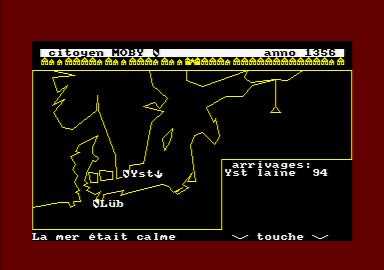
Hanse is completely menu-driven, with its most distinct change of pace coming during the attack sequences where cannon placement matters. The game is built around information and decisions rather than detailed on-screen spectacle, so the interface-facing style suits its trading focus even when it makes the experience feel austere.

Story
There is a clean, useful ambition at the center of Hanse: begin as an ambitious citizen and earn enough through Hanseatic trade to become mayor of Lübeck. That goal gives the price tables and shipping decisions a purpose beyond accumulating cash for its own sake.
Do not come in expecting a character-driven historical tale. The story is carried by your commercial rise, the pressure of a rival, and the occasional interruption from events such as weddings and disasters. It works more as a frame for a career than as a sequence of authored drama.
That restrained setup fits the game. A successful run can feel like a personal story precisely because you remember the shipments that paid off, the costs that hurt, and the defensive problems you survived. Your decisions supply most of the narrative momentum.
Overall Experience
Hanse is a modest but thoughtful trading strategy game whose best moments come from making a plan with incomplete comfort, then watching the market, weather, and expenses test it. The salt-first economy is simple enough to grasp quickly, yet it creates a credible chain of decisions about where to go, what to bring back, and how much risk you can afford.
Its age shows in the menu-heavy flow and in the limited direct involvement of the combat sequences. Placing cannons is a welcome interruption, but the automatic attack phase means these encounters are more about preparation than tactical command. That can be satisfying if you value consequences for your investments, less so if you want battles to carry the game.
Give Hanse a chance if you enjoy compact economic strategy, historical trading themes, and the pleasure of slowly converting good judgment into influence. It is easier to respect than to love at times, but its focused trading loop and multiplayer option give it more staying power than its plain surface first suggests.



Reviews
There are no reviews yet.