 Retro Replay Retro Gaming History, Reviews & Emulation

Retro Replay Review
Gameplay
The first thing that separates Austerlitz 1805 from many period wargames is that it refuses to wait politely for your next decision. This is a tile-based battle game played in real time, so command carries urgency rather than the leisurely rhythm of a turn-by-turn contest. You have to form a plan, commit to it, and live with the fact that the battlefield is continuing to change while you do so.
That pace makes its single-battle focus feel purposeful. You may take the French or Russo-Austrian command in the complete Battle of Austerlitz, play only part of it, or try an alternative scenario. The shorter options are especially useful if the full engagement sounds intimidating; they let you get a feel for the demands of the system without treating one enormous battle as the only way in.
Infantry, cavalry, and artillery are not interchangeable counters. Fatigue and morale affect all three, which gives the fighting a needed human limit. A force may exist on the field, but that does not mean it is ready to deliver what your plan requires. Frustration can set in when a plan asks too much from tired or shaken troops, yet that is also where the game earns its historical-strategy character. You are managing an army’s condition, not merely arranging pieces.

Graphics
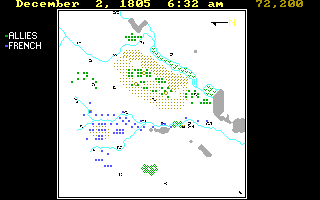
The battlefield is viewed from the top down and built from tiles, keeping the focus on the placement and movement of military units across the map. It is a functional wargame view: the important picture is the changing arrangement of French and Russo-Austrian forces, not character close-ups or theatrical battle imagery.
Story
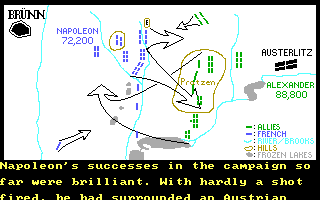
This is history presented as a command problem rather than a character-driven tale. The subject is the Battle of Austerlitz on 2 December 1805, the clash that ended in a massive Third Coalition defeat. Knowing that outcome gives the French side a particular weight, while the opposing command naturally carries the challenge of trying to alter a famously lopsided result.
The game’s alternate scenarios matter because they keep the subject from becoming a museum piece. You are not only reenacting a result; you are being asked to make decisions inside the same conflict and see whether a different handling of the armies produces a different battle.
There is no need for a broader campaign to make the premise work. Austerlitz is the entire dramatic frame: two armies, one decisive date, and command choices made under pressure. If you enjoy military history most when it becomes a difficult “what would you do?” exercise, that concentration is more compelling than a loosely connected string of battles.
Overall Experience
Austerlitz 1805 is a focused, demanding historical wargame with a distinctive hook for its era: real-time battlefield command. The pressure suits the material. Rather than letting you endlessly calculate, it asks whether you can make a credible decision before the situation shifts.
Its strongest audience is the gamer who wants to wrestle with one famous Napoleonic engagement from either side and accepts that morale and fatigue can ruin an overconfident plan. If you prefer strategy games where every move can be examined at leisure, the real-time structure may feel more stressful than satisfying.
For everyone else with patience for a compact, battle-specific simulation, the payoff is in mastering the interaction between timing, troop types, morale, and exhaustion. It is not a broad survey of the Napoleonic wars; it is a sustained argument that one battlefield can be enough when the command decisions are given real consequences.


Reviews
There are no reviews yet.