 Retro Replay Retro Gaming History, Reviews & Emulation

Retro Replay Review
Gameplay
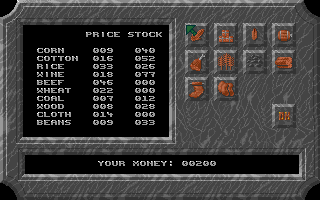
The first stretch of Piracy on the High Seas makes its priorities clear: before you can chase the Golden Chalice, you need cash. That means charting a course between towns, spotting profitable goods, and turning modest trades into enough money to buy upgrades, crew, and eventually more ships. It is familiar merchant-sailing work, but it has a pleasant incremental pull when you learn which journeys are worth your time and watch your funds finally rise.
Building trade routes for up to four additional ships sounds like the moment the game should open up, and it does help create the feeling that you are running a real sea-going concern. Yet the automation stops at travel. You still handle each ship’s buying and selling yourself, which makes growth feel more like extra bookkeeping than a reward for smart planning. If you enjoy optimizing repeated trade runs, that routine will be the game’s backbone; if you want the fleet to reduce the chores, frustration arrives quickly.
Random encounters break up the top-down sailing with one-on-one sabre fights, sea battles against pirates or a huge octopus, and gambling. The spread of activities keeps a long voyage from becoming totally monotonous, and the dungeon sections shift into isometric action combat once the main quest advances. But the stakes are harsh: a crew member risks death in a sabre fight, and failing to keep the required dungeon-going character alive can make the quest impossible to finish. Hire extra crew before taking risks, because the game is much less forgiving than its breezy pirate premise suggests.

Graphics
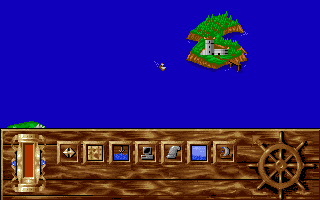
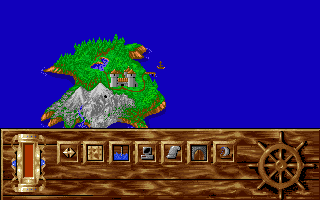
Most of the journey plays out on a top-down sea map, while the quest dungeons switch to an isometric view for combat. Shore visits are menu-based rather than explorable locations, so the strongest sense of place comes from sailing between cities and the change of viewpoint when the adventure finally moves inland.
Story
Three men set out to recover the Golden Chalice of Balance and restore peace to the world, in a Nordic-flavored setting that mixes seafaring piracy with a little magic. It is a solid excuse for a broad adventure, but the story spends much of its time waiting for your business empire to fund the next clue.
That structure creates a strange rhythm. You do not steadily advance through a chain of dramatic quests; instead, you trade for long stretches, earn enough to obtain information, then receive a new reason to head toward the next dungeon. The quest becomes more interesting whenever it actually pulls you away from commerce, but those moments are separated by a lot of economic legwork.
The required hero’s vulnerability also changes the tone of the narrative. A character needed for the dungeon can die in an earlier fight, leaving the central mission unfinished. That consequence adds tension, but it can feel needlessly punishing when the story’s progress depends on protecting one particular person through side activities.
Overall Experience
Piracy on the High Seas is at its best when you settle into its merchant-captain rhythm: make a smart run, improve the ship, add a crew member, and slowly turn a meager purse into a working fleet. The mixture of trade, pirate encounters, and dungeon crawling is more ambitious than a straightforward sailing game, and that ambition gives it a distinctive shape.
Still, the pieces do not always reinforce one another. Trading is competent but routine, fleet management leaves too much manual work in your hands, and the mini-games can feel like interruptions rather than a natural escalation of your voyage. The dungeon action gives the main quest a welcome change of pace, yet the risk of permanently losing essential progress can sour the whole trip.
Give it a chance if the idea of a patient, 1992-era trading game with pirate skirmishes and a fantasy quest sounds appealing, and go in ready to manage the details yourself. Anyone after a smooth action adventure or a more hands-off economic game will likely lose patience. There is enough here to enjoy, but the voyage never quite turns its promising mix of ideas into a consistently rewarding adventure.



Reviews
There are no reviews yet.