 Retro Replay Retro Gaming History, Reviews & Emulation
Retro Replay Review
Gameplay
The Power starts with a rule that immediately changes how you look at a level. Max does not take neat, square-by-square steps; choose a direction and he travels until he hits a block. That makes every obstacle both a wall and a possible launching point. In the first few puzzles, you are simply trying to collect the scattered hearts without firing yourself into an unrecoverable corner. Before long, you are plotting several rebounds ahead and realizing that the block in your way may be the only thing capable of getting you where you need to go.
The colored movable blocks give the game its extra bite. They follow Max’s movement rules, so shifting one is not a minor adjustment but a commitment. When particular color combinations collide, they vaporize, which lets you clear paths and reshape the puzzle board. This is where The Power moves beyond a straightforward Atomix-like sliding exercise: you must decide whether a block is more valuable as a barrier, a movable tool, or something to erase. The best moments come from recognizing that a route which looked sealed is only waiting for the right collision.
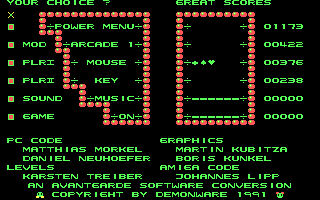
The time limit keeps the pressure on, especially in arcade mode, where the scrolling levels make you work through a larger space. Tactic mode puts a whole level on one screen, a better fit when you want to study the layout and untangle its logic. Arcade mode has more forward momentum; tactic mode is kinder to the deliberate, pause-and-plan mindset these puzzles often demand. Either way, expect restarts. Frustration sets in when an early move ruins a solution, but the tight movement rules mean you can usually identify exactly where your plan went wrong.
Amiga owners get the most distinctive extra: split-screen competition for two people racing to solve a level first. It is a smart match for a game built around rapid recognition and clean execution. The C64 cassette edition, meanwhile, lacks the level editor, so anyone drawn specifically to making their own puzzles should bear that version difference in mind.
Graphics
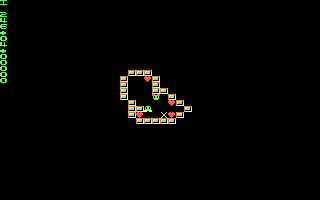
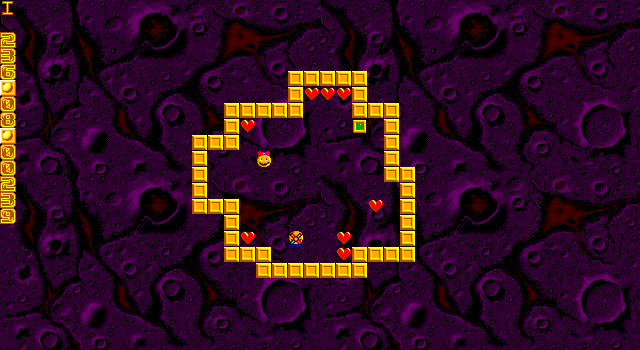
The view is top-down, with Max, hearts, and colored blocks arranged as clean puzzle pieces on compact playfields. In tactic mode, seeing the entire level at once suits the careful route planning; arcade mode instead scrolls as you travel through the board. The visuals serve the puzzles directly, making the important objects easy to pick out while you calculate your next slide.
Story
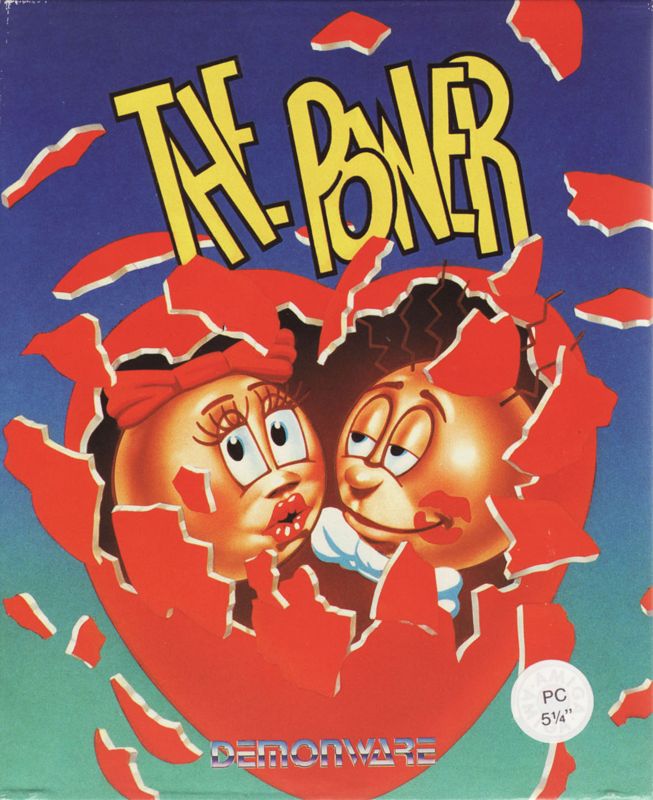
There is barely any story to get in the way, and that is appropriate. Max needs to collect every heart in a level and then reach his girlfriend Mimi before time expires. It gives the goal a bit more personality than a bare exit square without asking you to invest in a plot.
The real narrative is the one you create from failed routes and recovered plans. You see a heart sitting just out of reach, make room with a vanished block, then discover you have changed the board in a way that strands Max from Mimi. That small, practical objective keeps each level focused: collect everything, preserve a route, finish cleanly.
Do not come here for character development or elaborate world-building. The Power uses its light setup as a frame for spatial puzzles, and it is better for being direct about that.
Overall Experience
The Power is the sort of puzzle game that rewards patience far more than improvisation. Its sliding movement is easy to understand and consistently demanding in practice, while the colored blocks add enough board-changing possibilities to make later puzzles feel like proper problems rather than simple obstacle courses. If you enjoy Atomix-style planning, the connection is immediate, but The Power has its own rhythm thanks to the need to use and destroy blocks intelligently.
Its main limitation is also part of its charm: this is uncompromisingly old-school. A timer and irreversible-looking moves can make a level feel harsh when you are still learning how its pieces interact. You need to enjoy examining a layout, testing a theory, and accepting that an elegant solution may require several failed attempts before it becomes obvious.
For the right puzzle fan, that payoff is worth it. Tactic mode is the place to savor the board design, arcade mode adds urgency through scrolling stages, and Amiga split-screen gives the formula a lively competitive edge. The Power earns its 7.1 because it takes a familiar sliding-puzzle foundation and makes every stop, block, and collision matter.

Reviews
There are no reviews yet.