 Retro Replay Retro Gaming History, Reviews & Emulation
Retro Replay Review
Gameplay
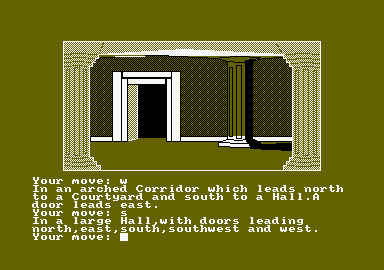
The first few minutes tell you exactly what kind of bargain Double Gold expects you to make. You are not pushed through a sequence of highlighted interactions; you type commands, interpret the room picture and text, and try to turn the objects you find into progress. When a command produces the response you hoped for, it has that distinctly satisfying text-adventure snap. When it does not, you may spend a while rephrasing a sensible idea until the parser agrees with you.
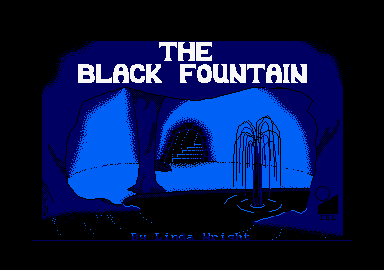
The Black Fountain is the more ambitious half. Its opening court section gives you a practical scavenging phase before the game opens into the wider world of Areth, where money and your brothers become part of the search. That two-part structure gives the adventure a pleasing sense of escalation: first you prepare, then you put that preparation to work. It also means that overlooking an apparently ordinary object can become a serious problem later, so make notes and examine your surroundings carefully.
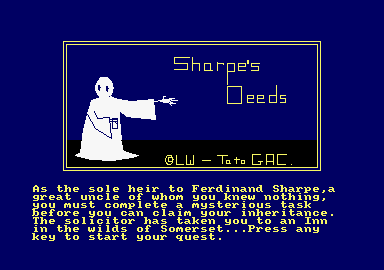
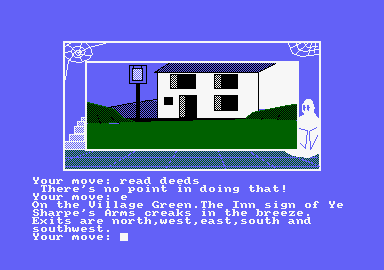
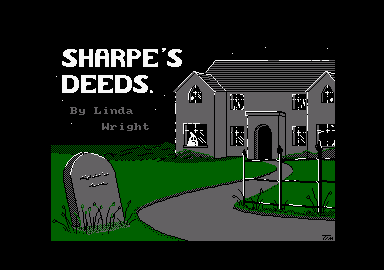
Sharpe’s Deeds is a cleaner, more compact counterpoint. The goal is immediately graspable—earn an inheritance by lasting a night in Stapley—and beginning at the local inn gives the adventure a grounded starting point. It is still a puzzle game first and foremost, with object collection and task-solving driving every step, but its smaller setup makes it a good place to settle into Double Gold’s command-driven rhythm.
Both adventures demand patience rather than quick reflexes. You need to pay attention to descriptions, retain clues, and be willing to experiment with verbs and inventory. That can be frustrating if you want brisk forward momentum, especially because the pleasure comes from personally untangling the puzzle logic. But if you enjoy mapping places and having a breakthrough after a period of poking at a problem, the slow pace is the point.
Graphics
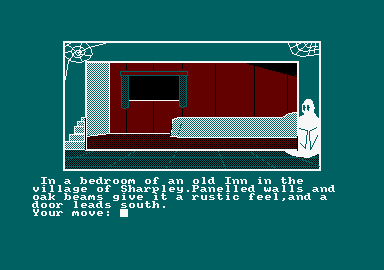
Each location is accompanied by a picture of the surrounding area while the text supplies the detail and context. The images give you a useful visual anchor before you start typing, whether you are searching the Chancellor’s court, travelling through Areth, or working through the village setting of Sharpe’s Deeds.
Story
The Black Fountain starts with a strong fantasy-adventure hook. As a servant to Areth’s High Chancellor, you are allowed to leave court to seek your brothers, who have been investigating a black-water fountain poisoning the rivers. Evil wizard Abholdos supplies a clear source of menace, and the mission has more urgency than a simple treasure hunt.
Its story works best as a reason to keep exploring. The shift from court errands to the larger world makes the journey feel like it is expanding beyond your initial assignment, while the search for your brothers gives the wandering a personal destination. You are not merely collecting things for their own sake; the inventory work is tied to getting out into a threatened land and following an investigation.
Sharpe’s Deeds takes a more intimate route. Great Uncle Ferdinand Sharpe’s inheritance comes with a condition: spend one night in Stapley, and the treasures can be yours. It is a familiar setup, but a useful one for a compact puzzle adventure, since every task feeds into a single immediate objective. The contrast between the two premises is a real strength of the compilation.
Overall Experience
Double Gold is rewarding in the particular way only a traditional text adventure can be: progress feels earned because you supplied the observation, the command, and the leap of logic. The two games avoid feeling like duplicates. The Black Fountain offers the longer, broader quest, while Sharpe’s Deeds delivers a more contained inheritance puzzle.
You should give it a chance if typed adventures, object puzzles, and careful exploration sound relaxing rather than laborious. Go in ready to write down useful details and try alternate wording when a plan seems right but does not land. If you need constant direction or immediate answers, the same qualities will feel stubborn instead of involving.
As a small package of 1987 Amstrad CPC adventuring, it has a worthwhile split personality: one game reaches for a wider fantasy journey, the other keeps its focus on a village-night challenge. Fans looking for another entry from this line can also look at Double Gold: Top Secret and Mountains of Ket. For everyone else, this is an easy recommendation only if the thought of typing a command, studying the reply, and slowly cracking a puzzle still sounds like a good evening.


Reviews
There are no reviews yet.