 Retro Replay Retro Gaming History, Reviews & Emulation
Retro Replay Review
Gameplay
The first few turns of Computer Air Combat are less about daring dogfights than getting your bearings. You alternate movement and combat with the opposing side, checking where friendly aircraft are, which enemy planes are visible, and how fast everything is moving. That deliberate rhythm is the point: every decision has time to feel considered, and a bad approach can linger long enough to make you regret it.
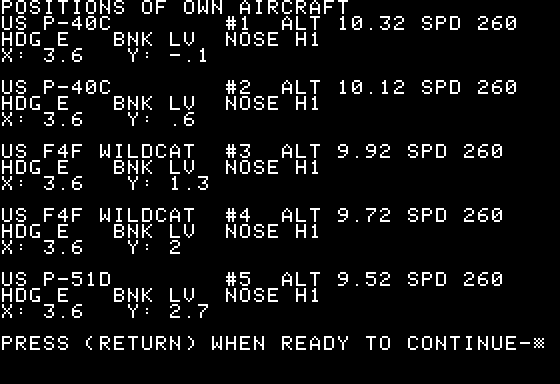
What starts to click is the relationship between information and commitment. Position reports let you track friendly aircraft and visible enemies, while status reports keep damage and ammunition in view. You are not simply steering toward a target; you are deciding how much risk to take with aircraft that may already be hurt or short on ammunition. That makes the combat phase feel like the consequence of choices made earlier, rather than a separate arcade-style test.
The pace will be the dividing line. Turn-based aerial warfare can be tense when you enjoy plotting and reassessing, but it can also become laborious when you want the immediacy usually associated with flying games. Mutual termination of an engagement adds a practical escape hatch, while destruction of all enemy aircraft gives battles a clear, uncompromising finish. Give it a chance if you like old-school tactical contests where patience is a skill, not dead time.
Graphics
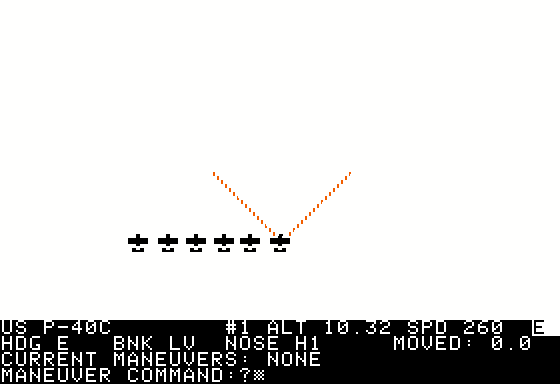
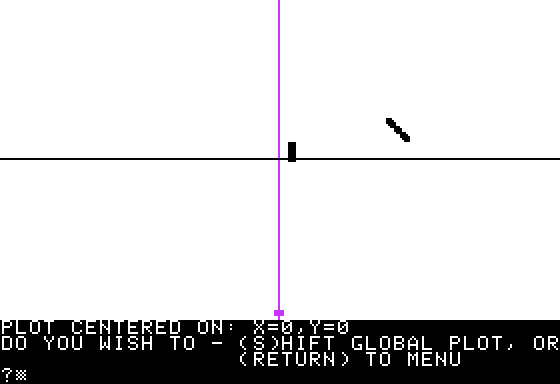
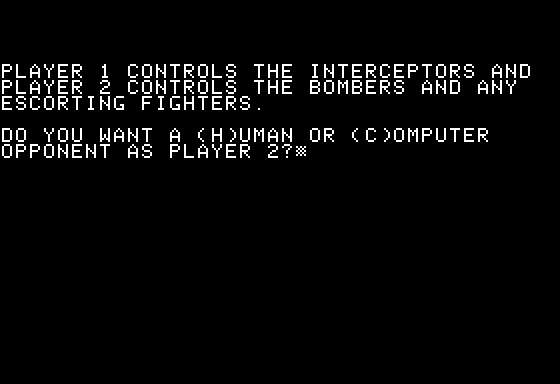
The game uses a top-down, text-and-report-oriented view rather than putting you in a cockpit. Aircraft positions and speeds are the important things to read, so the screen serves the tactical map first: you watch where planes are in relation to one another and consult reports for the details that matter.
Story
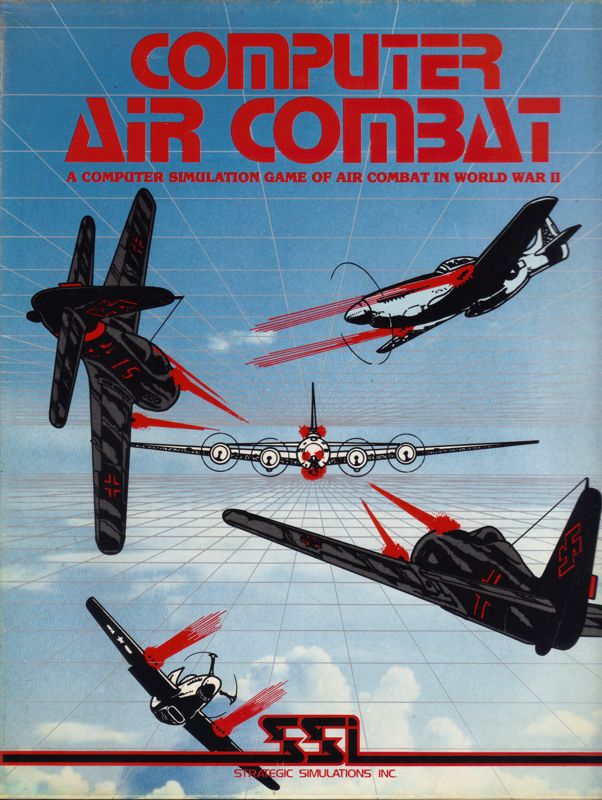
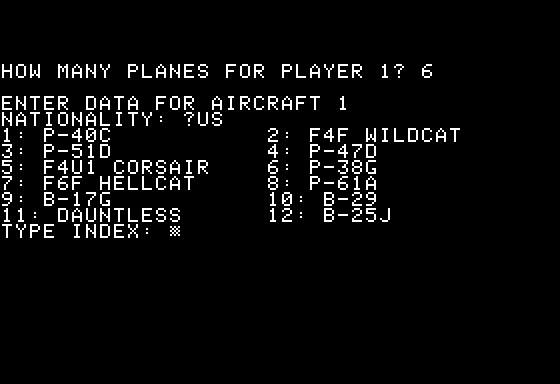
World War II supplies the conflict and the aircraft choices, with American, British, German, and Japanese forces available for air-combat missions. The focus stays on the engagement in front of you rather than on a sweeping historical drama.
Its strongest stories are the ones created in play: an enemy aircraft you can see but cannot safely chase, a damaged plane you hesitate to expose, or an ammunition count that turns an aggressive plan into a retreat. Those small reversals suit the game’s orderly turn structure.
Each match reaches its own conclusion when one side is destroyed or the engagement ends by agreement, followed by final results. That gives even a compact battle a beginning, a hard middle of changing odds, and a definite outcome to judge yourself by.
Overall Experience
Computer Air Combat is a thoughtful piece of early computer wargaming. It trades speed and spectacle for a clear sequence of tactical questions: where are the aircraft, what can you see, how damaged are you, and is this attack worth the ammunition?
There is satisfaction in that restraint. You can choose aircraft from four major WWII combatants, but the core pleasure is not collecting factions; it is seeing whether your decisions during movement produce a favorable combat turn. When the pieces line up, the game’s slow tempo becomes suspenseful.
It is not the right pick for someone chasing cinematic air combat or instant feedback. For a gamer who likes turn-based WWII strategy, report checking, and battles decided by positioning as much as firepower, though, it remains a focused and worthwhile challenge. The payoff is modest but genuine: you finish a battle knowing exactly which decisions put you there.


Reviews
There are no reviews yet.