 Retro Replay Retro Gaming History, Reviews & Emulation
Retro Replay Review
Gameplay
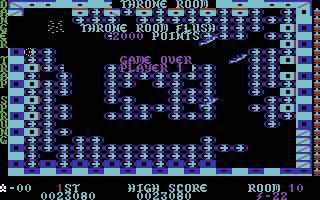
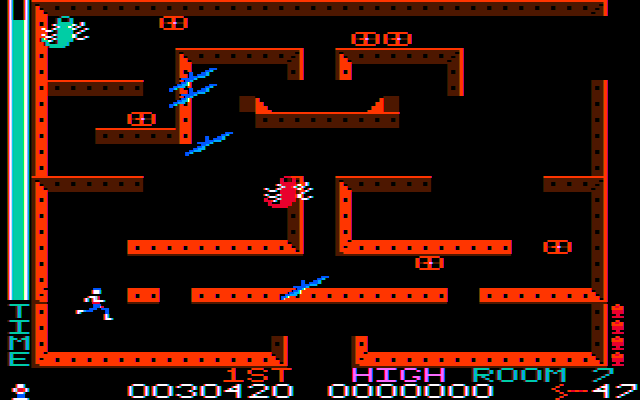
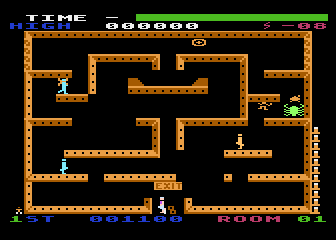
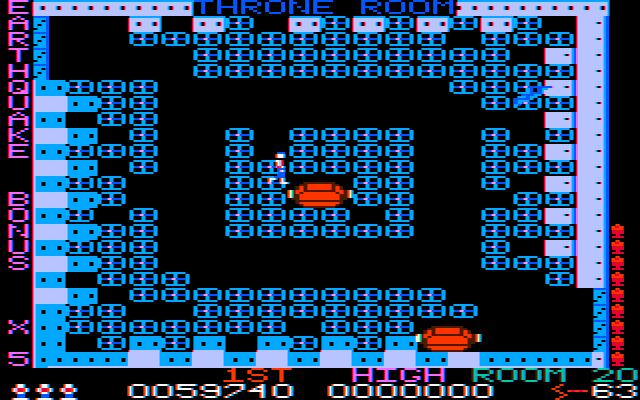
Lost Tomb starts with the kind of clear objective arcade games do well: clear enough danger to grab the treasure, locate the key, and leave. Then it starts tightening the screws. Each chamber is a self-contained arena of walls, traps, valuables, and creatures, and staying too long can trigger an earthquake that makes the surrounding walls fire at you. That escalation keeps even a familiar room from becoming a lazy cleanup job.
The twin-stick setup is the heart of it in the arcade version. Moving in one direction while firing in any of eight directions gives you room to kite enemies and shoot through openings without walking straight into trouble. Home versions adapt that idea to their own joystick and keyboard arrangements, so control comfort will vary by machine, but the underlying demand remains: you need to steer, aim, and think about the room at once.
The whip is where Lost Tomb becomes more interesting than a simple shooter. It is limited, but it can remove nearby creatures and traps and even break wall sections, opening a shortcut or a panic exit. That makes every use feel consequential. Spend one to save yourself now, or hold it for a throne room packed with traps and richer rewards? Ammunition creates a similar pressure, since your gun is only as useful as your supply.
The branching pyramid map gives the action a welcome layer of route choice. You are not merely surviving chambers in a fixed order; you are choosing paths toward the bottom, then racing through stairways and corridors to the next entrance before bat swarms arrive. The repeated expeditions after reaching the base are straightforward arcade replay structure, but the large bonus and extra resources make a successful run feel like progress rather than a hard reset.
Graphics
Lost Tomb shifts between top-down treasure chambers and differently viewed stairways or corridors, which helps the trip through the pyramid feel less like one endless board. The chambers put walls, hazards, loot, and enemies in clear view, while the home releases lean into Egyptian imagery and pharaoh references. The arcade introduction’s South American location sits oddly beside that later Egyptian framing.

Story
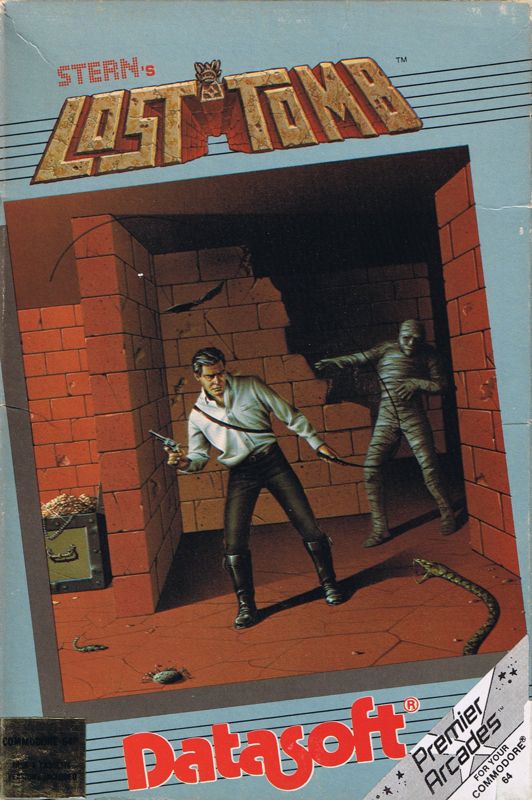
Story is mostly a framing device: an explorer pushes down through a treasure-filled pyramid toward its base. That is all the game needs for its loop of risky rooms, keys, and loot. You are here to raid a dangerous tomb, not unravel a plot.
There is a small thematic muddle in the setting. The arcade opening identifies the structure with South America, while the home editions use Egyptian imagery and pharaoh language. Neither direction changes how the game plays, but the Egyptian version fits the mummies, tombs, and treasure-chest hunt more naturally.
What comes through strongest is the expedition fantasy. The map, alternate routes, stairways, and deeper descent give your score chase a sense of moving through a place rather than merely clearing disconnected screens. It is thin storytelling, but it supplies enough context for the game’s pressure and rewards.
Overall Experience
Lost Tomb is a good, somewhat stern arcade maze shooter whose best ideas arrive once you stop treating every room as a shooting gallery. The first hour is about getting comfortable with independent movement and firing; after that, route choices, dwindling ammunition, wall-breaking whips, and earthquake pressure start to connect. A clean escape often comes from planning rather than reflexes alone.
Frustration can set in when a trap or prolonged stay makes a room erupt into projectile fire, particularly if you have already burned through your whips. That harshness is deliberate and very much of its era. The game asks you to learn from bad resource decisions rather than smoothing them over, and alternating two-player turns means competition can be as much about who manages the pyramid better as who shoots better.
At 6.6, Lost Tomb lands as a worthwhile curiosity for arcade fans who enjoy compact, demanding runs with a bit of tactical choice. Give it a chance if the idea of mapping a route through hostile rooms sounds as appealing as blasting monsters. If you only want a generous shooter that lets you hold the trigger and coast, its traps, limited supplies, and escalating rooms will wear thin quickly.


Reviews
There are no reviews yet.