 Retro Replay Retro Gaming History, Reviews & Emulation
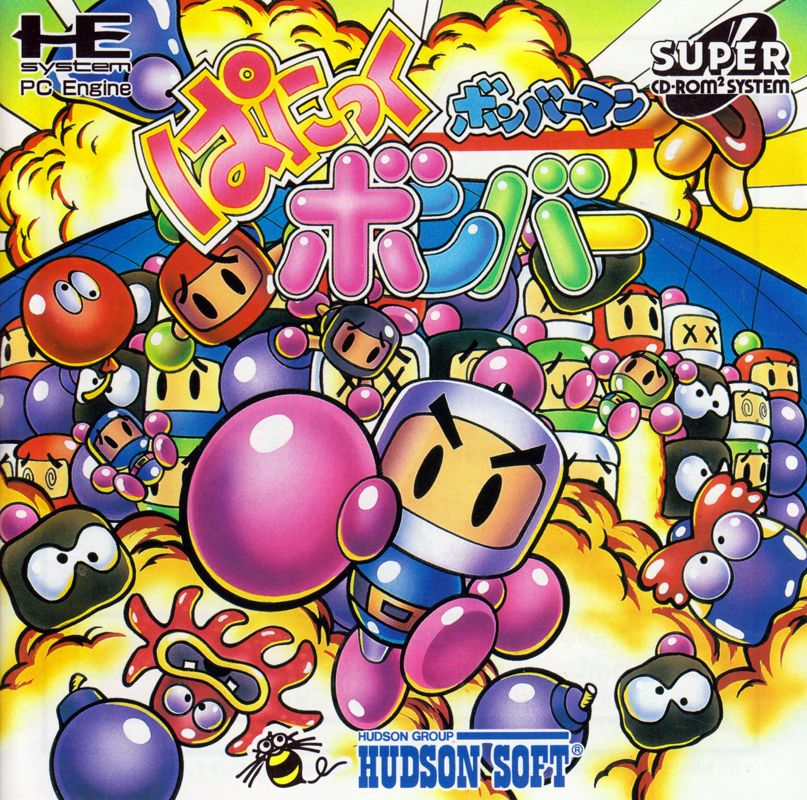

Retro Replay Review
Gameplay
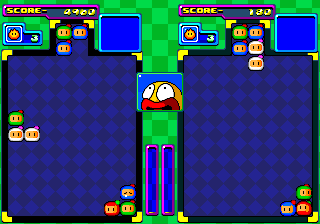
The first few rounds make Panic Bomber easy to read: rotate falling groups of colored heads, build horizontal or vertical runs of three, and try not to leave awkward colors stranded. It has the immediate clarity you want from a falling-block game. You understand the target quickly, yet every drop still asks a small, urgent question about where the next useful match will come from.
Its Bomberman dressing matters because the pieces are character heads rather than anonymous shapes, but the real hook is the stricter matching focus. You are not simply filling space; you are steering colors into short lines while protecting room for the next piece. Frustration can set in when a poor placement leaves a color isolated and the board begins to dictate your choices. That pressure is exactly what gives successful recoveries their bite.
Story mode feeds that tension through a linear run of opponents on a world map, with Bomberman advancing automatically after victories. It is a clean structure for learning the game against escalating resistance without asking you to navigate a complicated campaign. Once you know you want more than that route, timed challenge tasks offer a sharper, more immediate test, and versus mode turns the same basic matching into the game’s best social argument.
Graphics
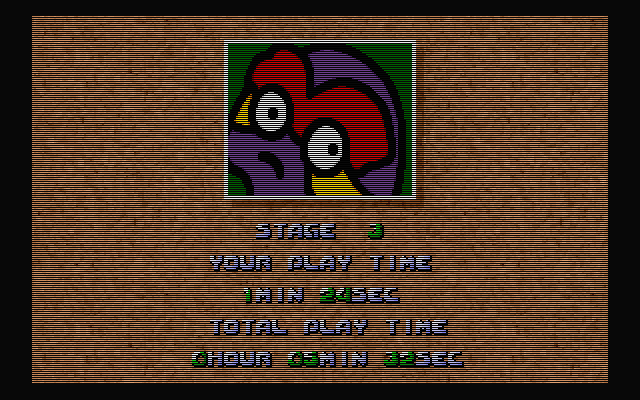
The board is built around little colored Bomberman heads, a much friendlier sight than plain abstract blocks. That character-based choice gives each match a bit of series flavor while keeping the colors central to the puzzle.
The story route’s world map also gives the opponent ladder a visible sense of forward movement between contests. It is simple framing, but it suits a puzzle game that wants to move you briskly toward the next match.
Story
Do not come in expecting a dense Bomberman adventure. The story mode is chiefly a progression framework: Bomberman moves along a world map and settles encounters through falling-block contests. That is enough to give solo play direction, but the matches are the point.
There is still value in that simplicity. A linear sequence removes the usual puzzle-game paralysis of choosing modes and lets you focus on improving from one opponent to the next. You get a reason to continue without the game pretending its competitive puzzles need elaborate narrative weight.
That restraint makes the campaign most useful as a guided introduction and a reliable single-player run. If you need story scenes or character drama to keep you invested, it will feel thin. If a clear path of increasingly demanding puzzle contests is enough, the format does its job neatly.
Overall Experience
Bomberman: Panic Bomber is a solid twist on the falling-block formula, built around quick color matching rather than elaborate rules. The first hour is inviting because the objective is so plain; the longer pull comes from learning how quickly a harmless-looking placement can become a problem. It rewards alert, practical play more than grand strategy.
The multiplayer option is the standout extra. Supporting up to five players gives versus mode an unusually lively party-game angle, especially if your group already enjoys puzzle games that become tense the moment everyone starts making decisions under pressure. Timed challenges are a good alternative when you want short, specific goals instead of a full opponent run.
At 7.7, this is easy to recommend to Bomberman fans curious about the series in puzzle form and to anyone who likes compact match-three falling-block games. Its campaign is deliberately straightforward, but the core is sturdy, and the mix of solo opponents, timed tasks, and crowded versus play gives you worthwhile reasons to return.


Reviews
There are no reviews yet.