 Retro Replay Retro Gaming History, Reviews & Emulation


Retro Replay Review
Gameplay
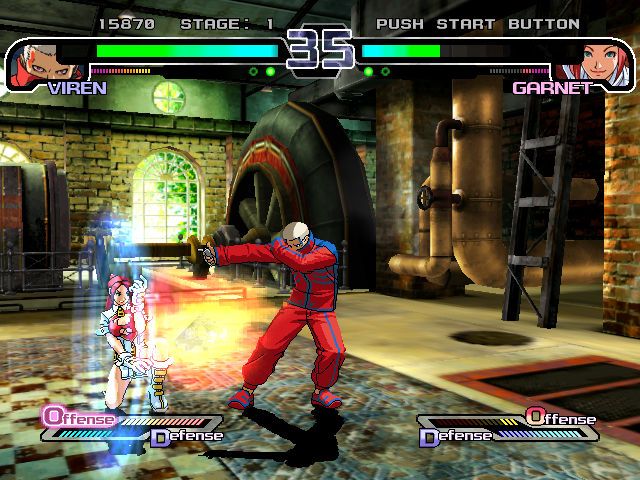
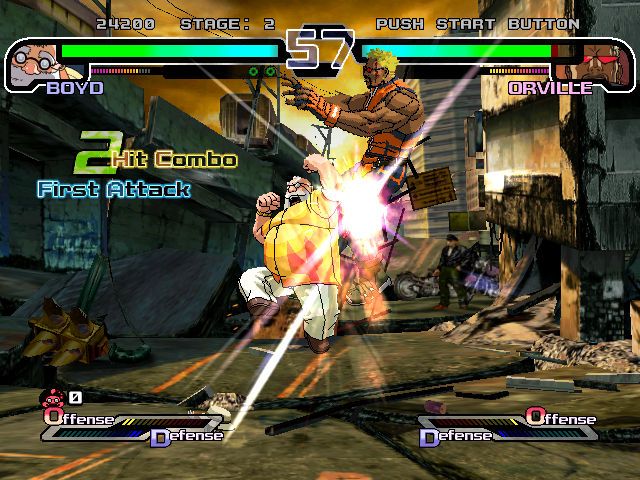
The Rumble Fish feels most inviting when you stop treating its gauges as background decoration. Separate meters for offensive and defensive techniques put a useful question in front of you throughout a match: do you spend resources trying to force the issue, or hold onto them to survive the other fighter’s push? That small layer of decision-making gives the one-on-one fights a more deliberate rhythm than a game where every bit of meter serves the same purpose.
There are 12 playable characters in the PlayStation 2 release, including Sheryl and Hazama, and the game asks you to learn a fighter rather than lean on a giant cast. Training is the sensible place to start, especially if the gauge split initially makes the controls feel more demanding than expected. Once you understand when your chosen character wants to attack and when they need defensive breathing room, matches become less about throwing out moves and more about making the other person commit first.
The armor damage system gives exchanges an extra bit of visible and tactical tension: fighters’ armor can be damaged and eventually destroyed. It is a distinctive wrinkle, though it will not carry the game for you by itself. The real hook is the resource tug-of-war. Go in hoping for a focused fighter with room to practice, not a sprawling all-purpose package, and the arcade-style modes—Versus, Arcade, Story, and Survival—give that core plenty of chances to prove itself.

Graphics
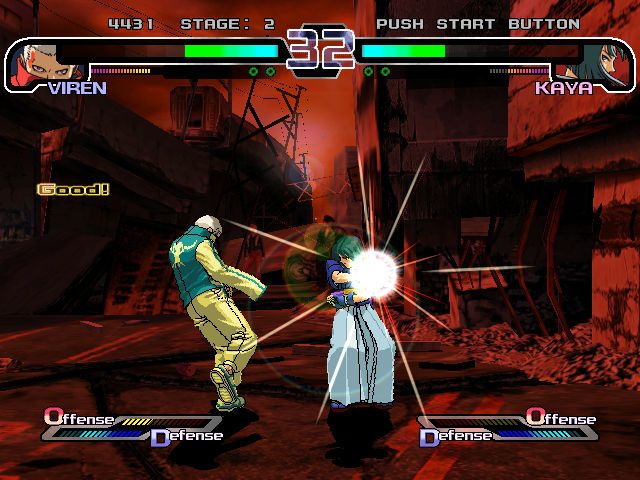
This is a 2D, side-view fighter built around character-on-character confrontations, and the damaged-armor idea gives the combatants a changing detail to watch during a fight. The anime/manga styling suits the tournament roster and keeps the screen centered on the two opponents rather than cluttering the bout with distractions.
Story
The setup has the right fighting-game bluntness: a disaster-ravaged region becomes the stage for PROBE-NEXUS Corporation’s annual Fight for Survival tournament. Power, fame, money, and revenge bring fighters from around the world into the same bracket. You are not here for a labyrinthine narrative; you are here because everyone has a reason to throw down.
That broad premise works because it gives the roster immediate stakes without slowing the game’s momentum. A tournament is familiar ground, but the ruined-region backdrop and the corporate sponsor add a harder edge than a purely sporting competition. Story mode is where the personal motivations have the most room to matter.
If you want more background on its history and releases, the The Rumble Fish overview is useful context. In the game itself, the story is chiefly a reason to move from rival to rival, and that is an appropriate fit for a fighter whose strongest language is the match.
Overall Experience
The Rumble Fish is worth your time if you like 2D fighters that make defense an active concern instead of an afterthought. Its separate gauges make early bouts feel slightly less immediate than simply hammering out attacks, but that friction is also why the game has more to offer once you settle in. A well-timed defensive choice can matter as much as landing your preferred offense.
The frustration comes when you expect instant familiarity. This is comparable in broad form to King of Fighters, but its gauge system asks for its own habits, and a small roster means you will feel repetition sooner if you never connect with a character. Give Training a proper session before judging it; the game is more rewarding after its central decisions stop feeling like extra bookkeeping.
For a solo player, the arcade, story, survival, and unlockable gallery give the package a solid framework. For competitive sessions, Versus is where the tension in those offense-versus-defense choices can really shine. It is not the easiest fighter to recommend blindly, but for you if you enjoy finding depth in a lean, focused duel, The Rumble Fish earns a place as a memorable curiosity from its era.


Reviews
There are no reviews yet.