 Retro Replay Retro Gaming History, Reviews & Emulation
Retro Replay Review
Gameplay
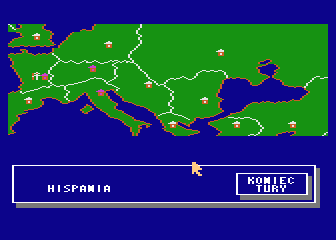
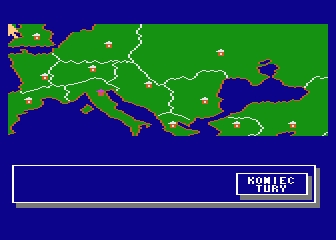
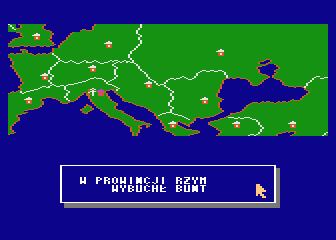
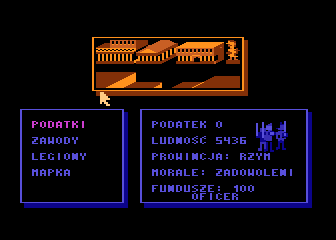
The first hour of Centurion has a clean, hungry momentum. Starting with a single province and legion gives every decision weight: tax too aggressively and satisfaction suffers; spend on entertainment and you buy some breathing room; leave a thin garrison behind and a rebellion can spoil your expansion plans. It is a simple loop, but the push to turn a tiny foothold into control of the whole map is easy to understand and hard to dismiss.
What starts to click is the tension between conquest and keeping what you have taken. Raising invasion legions lets you press outward, while defensive garrisons and entertainment competitions ask you to think about the provinces already under Roman control. Centurion is at its best when a tempting new target competes with the more immediate need to stabilize your existing territory. You are not merely painting the map; you are trying to avoid creating an empire that immediately starts cracking at the edges.
The battle system is the sharp dividing line. Infantry and cavalry are represented, but you cannot direct the fighting: troop totals decrease, and fleeing is your sole intervention. That can make a costly invasion feel like a verdict handed down rather than a contest you played. If you want turn-based strategy where battlefield positioning and clever combat decisions decide the day, this will feel frustratingly hands-off. If you are happy to treat war as a calculated risk managed before the fighting begins, the spare system has a certain harsh logic.
That limitation also makes preparation unusually important. The satisfaction of Centurion comes from setting up favorable circumstances through province management and force-building, then living with the result. It is a narrower kind of strategy than its Roman theme initially suggests, but it can still reward a patient player who enjoys weighing security against ambition.

Graphics
Centurion uses top-down and side-view perspectives for its strategy and warfare, with battles reduced to an immediate count of dwindling troops. That plain visual approach fits the game’s no-nonsense focus: you are watching the cost of a campaign in soldiers, not lingering over battlefield drama.
Story
Centurion frames its campaign around Ancient Rome and a straightforward imperial objective: begin with one province and conquer every province on the map. It is an effective setup because the goal is never muddy. Every tax decision, garrison assignment, and new legion points toward a larger Roman domain.
The strongest narrative moments are the ones you create through play. A province kept content through entertainment feels like a secure victory; a rebellious territory turns expansion into a problem with consequences. The game turns administration into the texture of its Roman conquest story, rather than treating captured land as a number that can be forgotten.
Its historical scope spans the Roman world across Europe, Africa, and the Middle East, giving the campaign a broad territorial ambition. The story remains rooted in that larger march of conquest: secure the province in front of you, raise the force you need, and keep moving until the map belongs to Rome.
Overall Experience
Centurion is a compact strategy game with a strong central tension and a very particular blind spot. Managing provinces, avoiding rebellion, and deciding when to commit a legion give the campaign genuine shape. You can feel the pressure of trying to expand without overextending, and that is enough to carry the game for anyone drawn to stripped-down empire management.
But combat is not something you command; it is something you watch happen. That is a major compromise in a game built around conquest, and it removes the comeback potential and tactical satisfaction that many strategy fans expect. Losing troops without a chance to influence the battle can turn a carefully built army into a source of irritation rather than drama.
Give Centurion a chance if you enjoy old-school, turn-based map conquest where planning happens in the provinces and battles are the consequence of those plans. Skip it if your ideal Roman strategy game lives or dies by maneuvering units in combat. For the right mood, its austere structure can be compelling; for everyone else, the lack of battlefield control will be too large a hole to ignore.


Reviews
There are no reviews yet.