 Retro Replay Retro Gaming History, Reviews & Emulation
Retro Replay Review
Gameplay
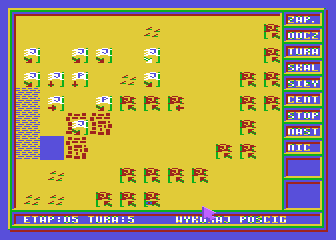
Grunwald 1410 begins with a welcome lack of ceremony: you and another player are placed in command of opposing armies at one famous medieval battle, and the contest gets down to positioning and timing. It has the turn-based, board-game-adjacent rhythm associated with Panzer General, though its structure is notably strict. Each of the 22 stages is split into five turns, moving from Polish-Lithuanian movement to crossbow fire and attacks, then over to Teutonic movement and attacks.
That fixed order is the heart of the game. You are not simply deciding where to send troops; you are working around when each side is permitted to act. A move that looks safe can become dangerous once you remember the other army still has its movement and attack phases ahead. Crossbow fire sitting between movement and attacks gives the battle a useful beat of anticipation, since it asks you to consider the state of the field before melee decisions are settled.
The payoff is in the slow, adversarial read of the battlefield. Grunwald 1410 is not chasing constant surprises or a broad menu of strategic distractions. It wants you to study a tactical situation, commit to an advance, and live with the reply. If you enjoy two-player games where a few disciplined choices can reshape the next several turns, that focus can be absorbing. If you need flexibility in turn order or a constantly changing set of objectives, the prescribed phase sequence may feel more like a constraint than a challenge.
Graphics
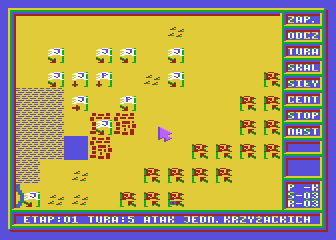
The game uses a top-down viewpoint suited to a battle map. That angle fits its tactical priorities: you are looking at the arrangement of Polish-Lithuanian and Teutonic forces and weighing where the next move belongs, rather than viewing the conflict from a dramatic ground-level perspective.
Story
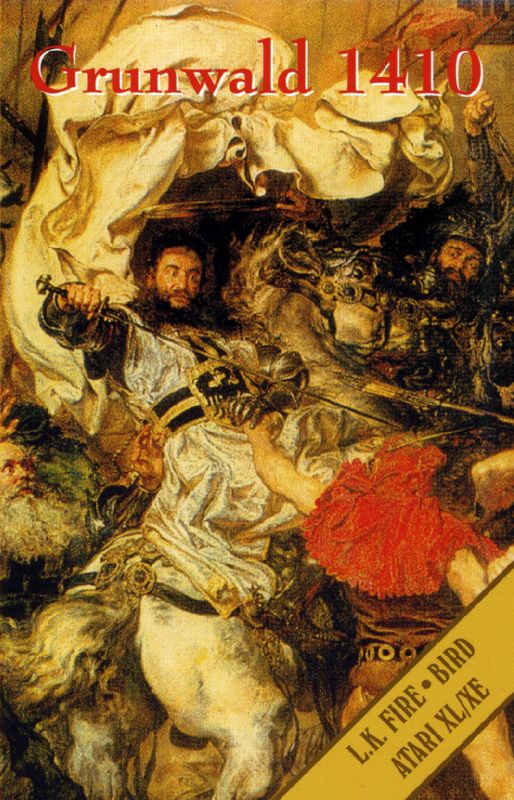
This is historical framing rather than a character-driven tale. Grunwald 1410 centers on the great Battle of Grunwald, fought on 15 July 1410, with Polish-Lithuanian forces facing the Teutonic Order. That immediately gives the match more weight than an abstract red-versus-blue skirmish.
The strongest narrative element is the simple act of choosing a side and trying to carry its army through the battle’s staged progression. Every advance and counterattack belongs to an established historical confrontation, which helps the tactical back-and-forth feel purposeful even without a sprawling campaign narrative.
Don’t come in expecting medieval intrigue, individual heroes, or dramatic plot turns. The story is the battle itself: two armies, a defined date, and the tension of command. For a game this concentrated, that is an appropriate frame, and history-minded strategy fans may find it more compelling than a fictional excuse for combat.
Overall Experience
Grunwald 1410 is a narrow but sincere tactical duel. Its 22-stage structure and five-part turn cycle create a methodical pace that rewards patience, attention to sequence, and a willingness to think a move ahead. The first hour is likely to be about adapting to that cadence; once it clicks, the restrictions become part of the puzzle.
Its greatest strength is also its likely dividing line. By committing so completely to one battle and a formal order of operations, it gives the game a clear identity as a historical strategy board game in computer form. You will either appreciate that clean concentration or wish the battle allowed more freedom.
Give it a chance if you have a second strategist at hand and enjoy head-to-head planning more than spectacle. The historical setting, top-down battle focus, and deliberate alternation make for a thoughtful Atari 8-bit curio. It is not broad, but it has a firm grasp of the specific kind of contest it wants to be.


Reviews
There are no reviews yet.