 Retro Replay Retro Gaming History, Reviews & Emulation
Retro Replay Review
Gameplay
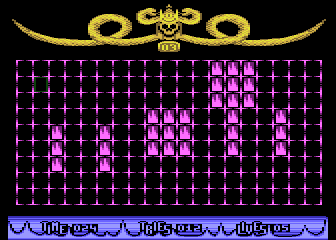
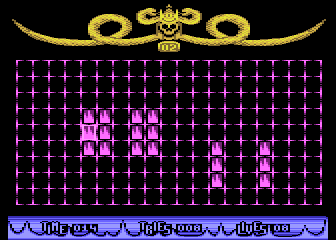
Neuroid gets interesting the moment you stop treating a disappearing cluster as a free win. Selecting a field removes that shape along with the fields around it, but the newly empty spaces produce fresh shapes. You are never simply clearing the board; you are rearranging the trouble. That cause-and-effect loop gives even a plain-looking move a little sting.
The first few decisions are easy to read. You spot a useful group, choose it, and enjoy the immediate reduction in clutter. Then time passes, your move total grows, and the board becomes less forgiving. The game asks you to think beyond the clear in front of you: will this removal make the next arrangement better, or leave awkward new pieces in exactly the wrong places?
That is also where frustration can set in. Neuroid is not built around long-term exploration or a changing set of activities; it puts you back in front of the same central problem and expects sharper judgment. If you like puzzle games that turn a compact rule into mounting pressure, that concentration is a strength. If you need lots of variety between challenges, its single-mindedness may wear thin.
Graphics
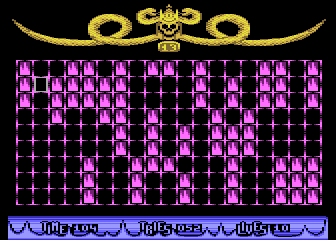
As a top-down, fixed-screen tile puzzle, Neuroid keeps the action on one board of shapes and selectable fields. The important visual task is following what disappears around your chosen field and noticing where new shapes have appeared, and the board-focused view keeps your attention on that shifting layout.
Story
Neuroid does not need a dramatic tale to create tension. Its story is the one you make from the board: an opening that looks manageable, a promising clear, then the slow realization that the pieces appearing in your empty spaces have changed the plan.
That stripped-back approach suits the game. There is no detour from the puzzle’s central question—how do you remove shapes without making the remaining board worse? Each attempt becomes a tiny problem-solving arc, with your earlier choices acting as the antagonist.
Because the challenge is expressed through moves and passing time, the game’s momentum comes from consequence rather than plot beats. You will either find that clean and absorbing, or wish there were more context around the board. For a traditional abstract puzzler, the lack of ornament keeps the focus where it belongs.
Overall Experience
Neuroid is a compact puzzle game with a mean little hook. Its rules are simple enough to grasp quickly, yet the interaction between cleared fields, newly appearing shapes, elapsed time, and move count keeps easy instincts from carrying you very far. You can see why a move looks right, make it, and immediately have to live with what it creates.
The payoff is gradual rather than explosive. Better play comes from resisting the most obvious clear and reading the board as a sequence of future positions. When that starts to click, the game becomes less about reacting to shapes and more about setting up the next few decisions.
Give Neuroid a chance if you enjoy old-school tile and board puzzles that demand patience and punish casual clearing. It will not win over anyone looking for a broad adventure, but as a focused test of planning under pressure, it has the right kind of bite.


Reviews
There are no reviews yet.