 Retro Replay Retro Gaming History, Reviews & Emulation

Retro Replay Review
Gameplay
The first few turns of Ballerburg have the wonderfully cautious rhythm of two players trying not to waste a single cannonball. Your castle sits on one side of a mountain, the enemy’s waits on the other, and the wind turns a straightforward aim-and-fire exchange into a guessing game with consequences. A shot that lands near a key room can matter far more than one that merely knocks into the castle, so you are constantly weighing a conservative adjustment against the temptation to gamble on a decisive hit.
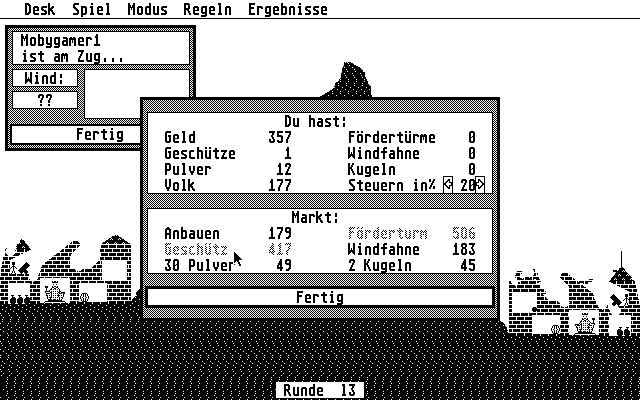
What makes the game more interesting than a bare artillery duel is the money pressure between shots. Powder, ammunition, and repairs all cost something, while prices change from turn to turn. That means you cannot simply fire endlessly and patch every hole afterward. Raising taxes can finance an aggressive plan, but pushing too hard reduces your population—and benefits the opponent by moving people to their castle. It is a sharp, mean little system: a short-term rescue can quietly strengthen the other side.
Castle choice also changes the shape of the match before the first shot. Different layouts place cannons, stores, and the king differently, so learning where your vulnerable rooms are becomes part of defending yourself. Hitting an ammunition or powder store wipes out that whole supply, creating sudden reversals that make careful targeting worthwhile. The winning condition remains deliciously direct: hit the opposing king. Everything else—economics, repairs, terrain, and stockpiles—exists to make that one successful shot difficult.
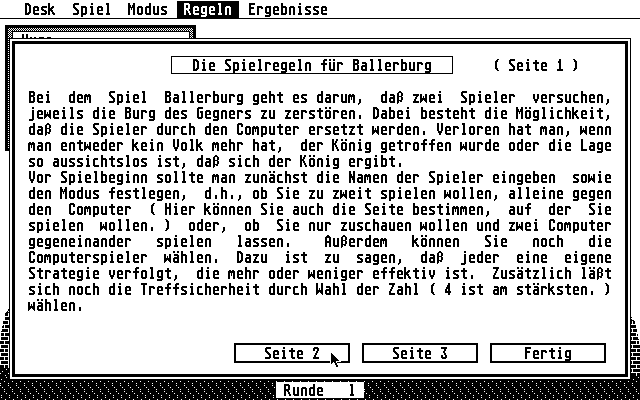
The limitation is accessibility. Ballerburg is entirely in German, and its economic decisions are exactly where unfamiliar text can make an otherwise clear duel feel more opaque. If you are willing to learn the important terms and accept a slower first session, the strategic loop starts to click. If you want an artillery game you can immediately understand without any language friction, this will test your patience.
Graphics
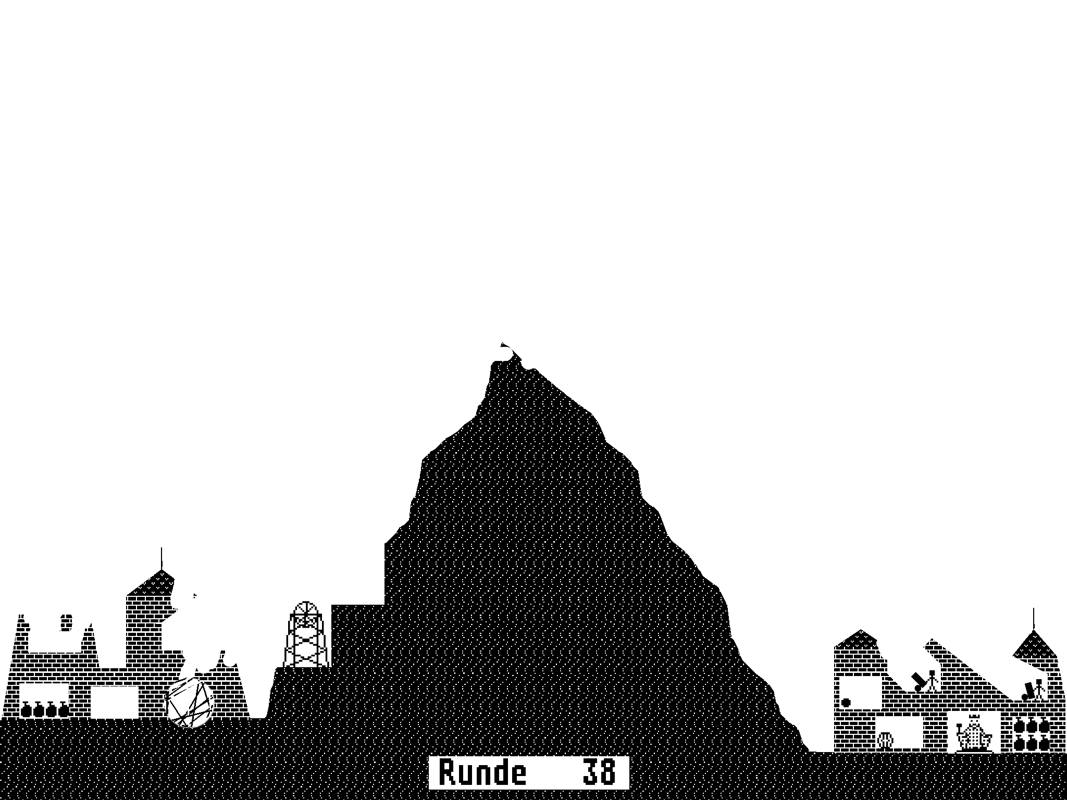
The view is a clean side-on battlefield: one castle on the left, one on the right, with a generated mountain separating them. That layout makes the central problem easy to read at a glance—your guns, your target, and the awkward stretch of terrain every shot must cross.
The castles themselves matter visually because their internal layout is part of the fight. Cannons, storage rooms, and the king’s position are not just decoration; they give you identifiable targets and make damage to a castle feel strategically important.
Story
There is no elaborate narrative pulling you through a campaign here. The story is the one each match creates: two rulers occupying opposing castles, trading increasingly costly shots while their resources and defenses come apart.
That stripped-down setup suits the game. A king is the target, a castle is the shelter, and every economic choice becomes another small piece of the siege. You do not need much more context to understand why losing the powder store is disastrous or why an exposed ruler demands immediate attention.
Because the battlefield and mountain are regenerated, the same basic conflict can play out differently from game to game. One match becomes a careful exchange of ranging shots; another can turn into a scramble to rebuild and restock after a damaging strike. It is modest in narrative terms, but it gives the competition enough stakes.
Overall Experience
Ballerburg earns its charm through restraint. It takes the familiar pleasure of adjusting artillery fire and adds just enough castle management to make every shell count. The random mountain and wind prevent rote firing solutions, while shifting prices and taxes stop the economic layer from becoming a background chore.
The payoff is strongest when you enjoy turn-based games that reward planning over speed. A good move is not always the shot closest to the king; sometimes it is preserving your supplies, repairing the right damage, or denying the opponent the resources needed for their next turn. That tension gives the game more staying power than its basic left-versus-right setup suggests.
Still, this is a specialized recommendation. The German-only text creates a barrier, and the deliberate pace will not suit anyone looking for a quick reflex-based artillery match. But for a patient player who likes old-school strategy with a nasty economic edge, Ballerburg is a smart duel where a misplaced tax rate can be almost as dangerous as a misplaced cannonball.


Reviews
There are no reviews yet.