 Retro Replay Retro Gaming History, Reviews & Emulation
Retro Replay Review
Gameplay
The first hour has a clear hook: make the time key, reach the centre of the universe, and do it before the sixty-minute limit runs out. That deadline ties together four otherwise separate tests and gives even the simplest arcade task a little urgency. You are not settling into a long-form adventure so much as trying to keep a run alive across several familiar styles of game.
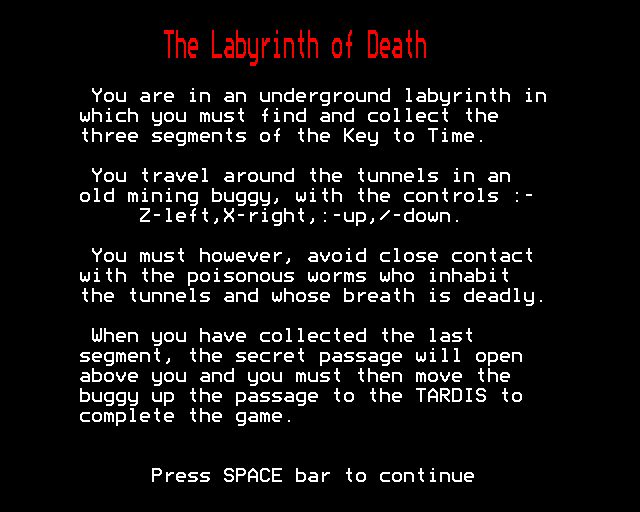
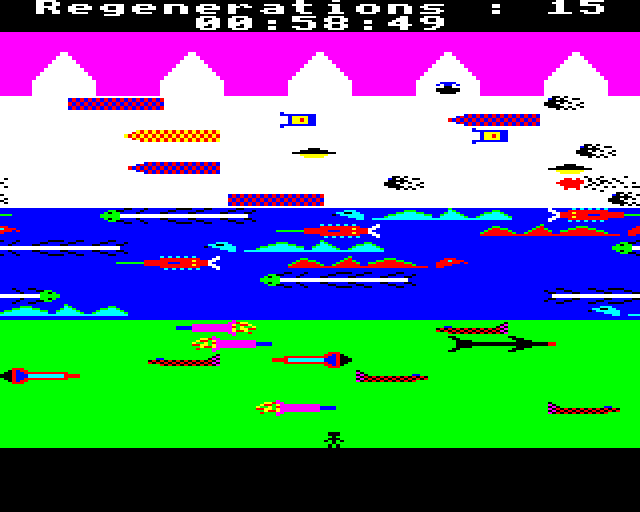
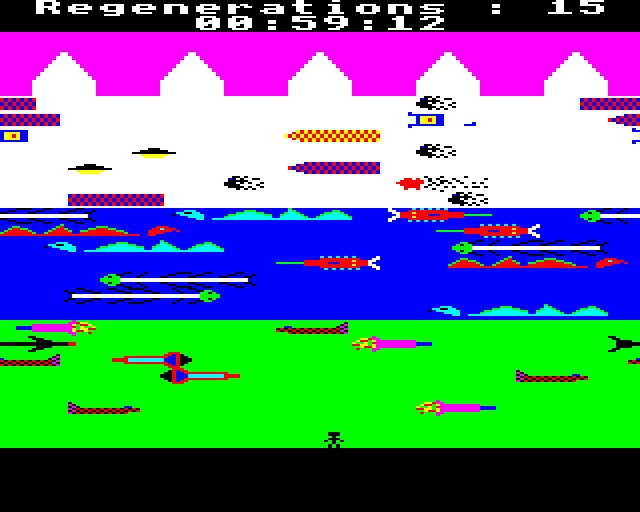
The Labyrinth of Death is the most immediately recognisable stop, asking you to gather three key pieces while evading the Weevils of Ourouborous VI. Its Pac-Man-like setup is instantly legible, which is useful when the larger mission already has a clock attached. The Prison shifts to a Frogger-style crossing: move from the bottom of the screen to the top, dodge enemies, and use objects to get across water. That change of pace is the game’s strongest idea, because it stops you from solving every section with the same reflexes.
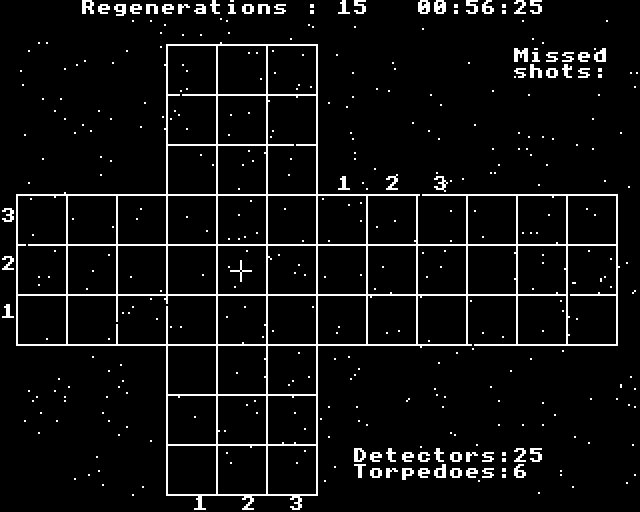
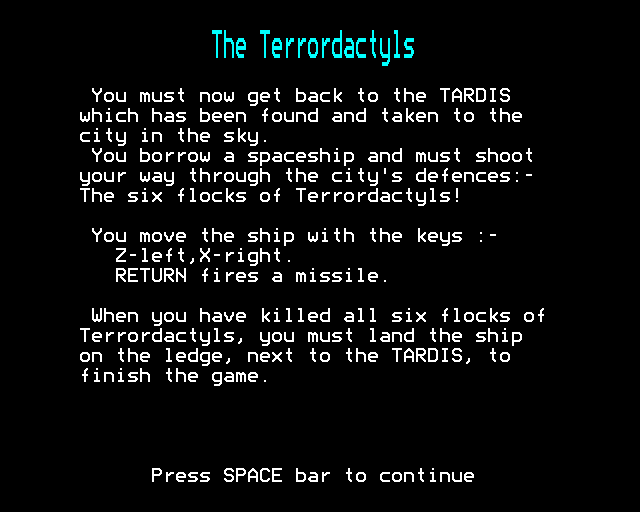
The remaining two stages lean into shooting and deduction. The Terrordactyls puts your ship at the bottom of the screen against winged enemies overhead; clearing a wave moves the ship higher, so your progress is more than a score chase. The Box of Tantalus then turns into a Battleship-like hunt for invisible monsters in space. Variety carries the package, but it also means your enjoyment rests heavily on whether you enjoy these old arcade templates rather than on a single evolving system.
Frustration is likely to come from the all-or-nothing feel implied by the hour-long objective. A weak genre fit in one section can sour the whole journey, especially if you came in hoping the Doctor Who licence would transform these games into something more connected. On the other hand, if you like bouncing from maze evasion to crossings, shooting, and grid-based guessing, the brisk sequence has a pleasingly scrappy rhythm.
Graphics
The game’s visuals change as radically as its genres. The Labyrinth of Death uses a top-down maze view, The Prison is built around a bottom-to-top crossing screen, The Terrordactyls frames the action with your ship below and flying foes above, and The Box of Tantalus uses a Battleship-style space grid. Each screen type matches its immediate task, so you can quickly understand where danger and progress sit.
Story
The Doctor Who connection is carried by a simple, appropriately enormous objective: create a time key and take it to the centre of the universe to begin the second age of time. It is a strong bit of science-fiction stakes for such a compact game. You know why the timer matters from the outset.
Peter Davison’s Fifth Doctor appears on the cover, and the premise draws on the Doctor as a traveller through space and time in the TARDIS. Inside the game, though, the narrative chiefly acts as a frame for the four challenges. The Weevils and the mysterious Box of Tantalus give two stages their own flavour, but the story is not where the game develops its depth.
That can still work if you treat it as a Saturday-afternoon Doctor Who diversion. The mission gives the arcade borrowing a shared destination, even when the individual stages feel like separate games. Anyone hoping for a plot-heavy serial will find the setup more memorable than the storytelling between challenges.
Overall Experience
Doctor Who: The First Adventure is a curious early licence because it does not try to turn the Doctor into a conventional action hero in one consistent game. Instead, it packages four popular arcade ideas under a time-traveling mission. That makes it approachable in seconds and uneven over the full hour.
The payoff depends on your tolerance for familiar foundations. The maze stage, river crossing, shooter, and hidden-enemy grid offer enough contrast that a favourite section may pull you through one you like less. But none of the formats gains much extra weight simply by being attached to Doctor Who, and the game’s central novelty is its assortment rather than a distinctive new take on any one style.
Give it a chance if you enjoy early-1980s arcade design and can appreciate a licence that wears its inspirations openly. The countdown and universe-saving objective add a nice thread of tension, while the four-stage structure makes it easy to see what each new section asks of you. It is a modest, genre-hopping curiosity rather than a definitive Doctor Who adventure, but its directness has its own period charm.


Reviews
There are no reviews yet.