 Retro Replay Retro Gaming History, Reviews & Emulation


Retro Replay Review
Gameplay
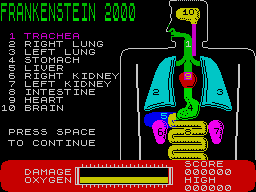
The first few minutes of Frankenstein 2000 have the kind of wonderfully weird premise that makes old home-computer games hard to forget. You are not fighting Frankenstein’s monster; you are steering a small machine through his insides. Each organ becomes a self-contained maze, so progress is about finding a route through obstacles and activating special devices rather than simply rushing for an exit.
That setup gives the action a useful sense of pressure. You have damage and oxygen bars to watch, and neither lets you get careless for long. It is easy to spend too much attention on avoiding the next obstruction, then realize your oxygen situation has become the bigger problem. The game asks you to move deliberately, learn the layout, and avoid turning every tight section into a panicked scramble.
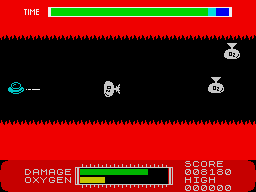
Travel between organs changes the rhythm with simple shoot-’em-up sequences, where you fire at objects in your path. These breaks prevent the maze sections from becoming too samey, though they are more about surviving the transition than delivering a deep shooter experience. Frankenstein 2000 is strongest when you accept its compact, arcade-like demands: make steady progress, preserve your resources, and treat each organ as a problem to be solved.
Frustration will set in if you want generous room for mistakes. The twin resource bars make hazards matter, and the fixed-screen structure means you are repeatedly dealing with immediate threats rather than building momentum through a broad world. Still, that severity suits the premise. You are piloting a tiny machine through dangerous biological corridors; a casual stroll would have felt wrong.
Graphics
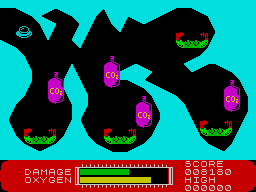
The view shifts between top-down and side-view action, with fixed or flip-screen areas breaking Frankenstein’s body into separate organ spaces. The small machine, maze-like organs, obstacles, and objects in the shooting passages give the game a distinctly mechanical take on a horror setting rather than a grand monster-movie look.
Story
Frankenstein 2000 keeps its narrative idea direct: a small machine travels inside Frankenstein’s body. That is enough to give its otherwise abstract action some character. A stomach or brain is not merely another level theme here; it is part of the central journey.
Do not come expecting a heavily developed tale or a parade of dramatic encounters. The story is mainly carried by the route through the body and the changing organ locations. In a game this focused on survival and navigation, that restraint is sensible.
The premise also earns the game a look at the related Frankenstein game if you are in the mood to compare how other retro releases have used the name. Frankenstein 2000’s own angle remains the more immediately unusual one: horror reduced to a tiny vehicle’s dangerous internal mission.
Overall Experience
Frankenstein 2000 is an eccentric action game with a better central image than many of its contemporaries: a little machine pushing through the organs of Frankenstein’s body while oxygen and damage steadily threaten to end the run. That is a memorable frame for maze navigation, and the shooter transitions add enough variation to keep the journey from feeling completely enclosed.
You should give it a chance if you like old-school games that are quick to understand but unforgiving in execution. Its pleasures come from concentration, route-finding, and scraping through a hostile section with both bars still under control—not from elaborate progression or narrative payoff.
The rough edges are part of the bargain. Its simple action can feel severe when you are repeatedly forced to respect obstacles and limited oxygen, and the shooting portions are brief diversions rather than the main attraction. But the focused design and bizarre setting give it more personality than a routine maze shooter. It is a modest recommendation for retro action fans, and a stronger one for anyone drawn to genuinely odd 1985 concepts.


Reviews
There are no reviews yet.