 Retro Replay Retro Gaming History, Reviews & Emulation
Retro Replay Review
Gameplay
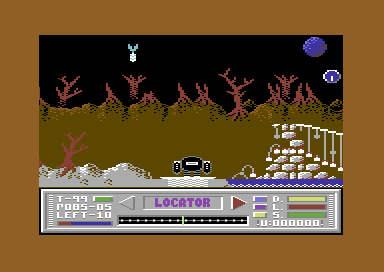
Knight Games 2: Space Trilogy wastes no time settling into one idea. Combat Robot puts you in control of Robby the Robot in a horizontally scrolling rescue mission: shoot hostile forces, collect friendly robots, then carry them back to base. That simple loop has a nice arcade clarity. You always understand the immediate job, and the tension comes from trying to bring a pickup home rather than merely survive another stretch of scrolling action.
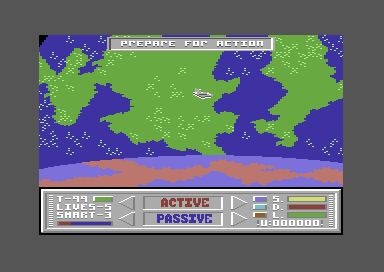
In Orbit changes the assignment without abandoning the shoot-first pressure. You fly around Earth, destroy enemy ships, and attempt to load supplies in orbit. The approach to the loading bay shifts into a 3D view behind your ship, giving this section a more deliberate finish than Combat Robot’s constant horizontal movement. It is a neat change of pace, though the game remains firmly focused on short-form action and score chasing rather than extended progression.
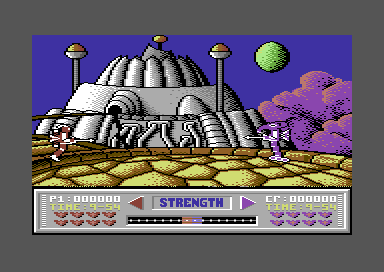
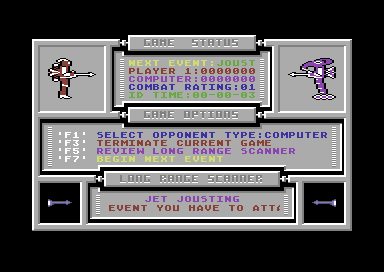
Final Tournament is where the collection’s competitive streak is most obvious. Jet Joust, Light Sabres, and Photon Chains are single-screen, side-view armed contests built around defeating an opponent and posting a high score. It also supports two players, which makes the mode the easiest one to return to with someone nearby. The three-event structure is modest, but it is more immediately social than the solo scrolling stages.
The catch is that this is a trilogy of concise arcade sketches, not three deep games. Variety carries it a long way, yet the underlying demand is repetition, sharper runs, and better scores. If you enjoy learning compact 1980s action games through repeated attempts, its quick switches between rescue work, space combat, and duelling are part of the fun. If you need a campaign that develops beyond its opening premise, the package may run out of surprises quickly.
Graphics
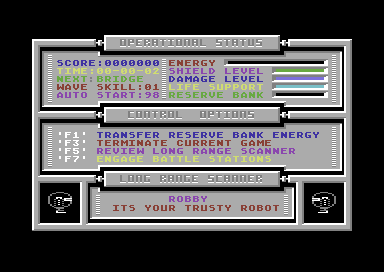
The game moves between two-way horizontal scrolling scenes and single-screen side-view contests, so each part is easy to distinguish at a glance. Combat Robot and In Orbit frame the action around a scrolling sci-fi battlefield, while Final Tournament keeps both combatants on one screen for direct face-offs.
In Orbit’s move to a 3D behind-the-ship view as you head for the loading bay is the clearest visual change in the trilogy. It gives the supply run a different perspective without turning the whole game away from its largely side-on arcade roots.
Story
There is only a light science-fiction wrapper here: the action takes place in the year 3002, and each segment supplies a different futuristic contest or mission. Robby rescues friendly robots, a ship operates in orbit over Earth, and the final segment stages armed tournament events.
That is enough to connect the modes, but the game does not lean on narrative momentum. You move from one activity to the next because the next score challenge is waiting, not because the plot is pulling you forward.
Series fans may appreciate the return to the competitive spirit of the original Knight Games, especially in Final Tournament. For everyone else, the space setting is a useful frame for three very different arcade exercises rather than a story worth dwelling on.
Overall Experience
Knight Games 2: Space Trilogy is at its best when you treat it as a quick-hit anthology. One moment you are ferrying robots through enemy fire; the next you are shooting through orbit or squaring off in a tournament. That restless format gives it more personality than a single-mode score attack, and it helps the game avoid feeling completely locked to one repetitive task.
Its limitations are just as clear. The modes are straightforward and relatively slight, so your enjoyment depends on whether you find their score-driven loops satisfying. Combat Robot’s rescue-and-return objective is the most distinctive hook, In Orbit earns points for its loading-bay perspective shift, and Final Tournament has the clearest replay value when a second person joins in.
Give it a chance if you want a brisk Commodore 64 action sampler and are happy to chase better runs rather than uncover a large adventure. It is uneven but energetic, with enough variation to justify its 6.1 score. The payoff is modest, yet the collection has a scrappy arcade charm when you meet it on its own short-session terms.


Reviews
There are no reviews yet.