 Retro Replay Retro Gaming History, Reviews & Emulation


Retro Replay Review
Gameplay
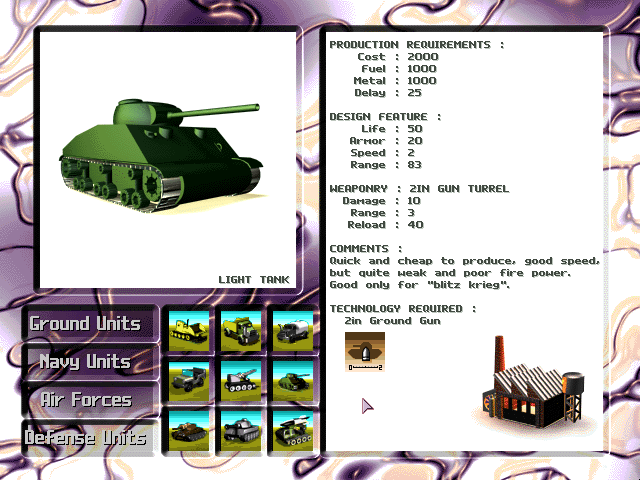
The first hour of A.R.S.E.N.A.L feels comfortably familiar: establish your base, gather resources, and begin building a force across land, sea, and air. Then the fuel system starts to matter. Vehicles consume gasoline, so a push is only as strong as the trucks supporting it. That one constraint gives the game a much more deliberate rhythm than many RTS games of its era. You are not merely choosing where to attack; you are deciding whether your supply line can keep an attack alive.
That logistical pressure works especially well with unit experience. A battle-tested vehicle is not disposable, and damaged units deserve repairs instead of a quick replacement. As a result, micromanagement has a purpose beyond simply optimizing every second. Pulling back a battered veteran or keeping fuel trucks safely positioned can be the difference between a controlled offensive and a stalled army stranded far from home.
The mandatory tutorial is a mixed blessing. Its ten missions steadily teach the basics, which makes sense for a game with this many moving parts, but it also locks the more open custom games and campaigns behind early progress. Finish three tutorial missions to reach custom games, while the campaigns require earning the Captain rank there. Stick with it if the opening feels restrictive: the two ten-mission campaigns are where the tougher strategic demands arrive, and custom matches on random maps offer a useful place to experiment with alliances and computer-controlled allies.
The five custom-game factions share a technology tree, with Normo as the exception to the special-weapon rule and the other four factions each carrying one unique special weapon. That means faction choice does not radically transform the whole game, but it can still add a wrinkle to a match. The bigger attraction remains the supply-and-survival problem at the center of every army.

Graphics
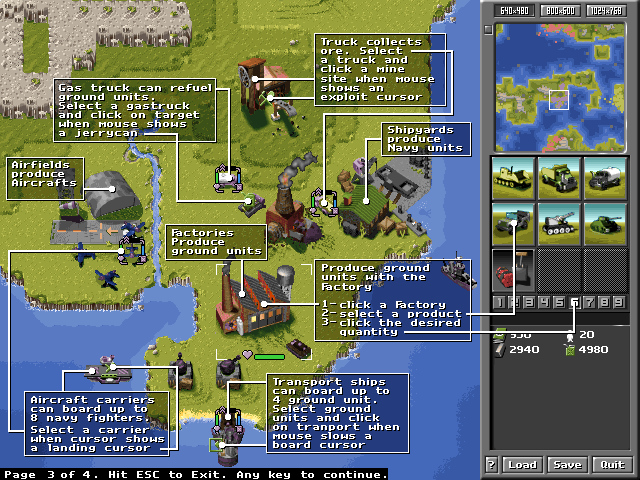
A.R.S.E.N.A.L uses a top-down battlefield view, keeping bases, vehicles, and the movement of ground, naval, and air forces in the same strategic frame. It supports several high-resolution modes that can be changed while playing, a welcome option when you want a broader look at a growing operation.
Story
The tutorial and campaigns take place in an alternate-history World War II, with a European alliance resisting a Communist invasion. It is a direct military premise, suited to missions built around taking ground and keeping an army functioning.
Do not come expecting the story to be the reason you continue. Its main value is giving the tutorial and campaign battles a shared conflict, while the real personality comes from the way fuel and experienced units shape your decisions.
The campaign structure does at least give the escalating difficulty some context. After learning the rules in the tutorial, you move into two longer, harsher campaigns where the game can demand more care from the same core systems.
Overall Experience
A.R.S.E.N.A.L is most rewarding when you stop treating it like a race to produce more units. A force that has fuel, experience, and a retreat route is worth more than a larger force sent blindly forward. That is a strong idea for a real-time strategy game, and it still gives this one a distinct tactical flavor.
The friction is real. Gaining access to everything through tutorial progress may irritate you, and the campaigns are considerably tougher once they unlock. There is also no multiplayer, so the long-term appeal rests on its campaigns and randomly generated custom games rather than competitive matches against friends.
For an RTS fan raised on Dune II or Command & Conquer, A.R.S.E.N.A.L is worth a look precisely because it refuses to let reinforcements solve every problem. Play patiently, protect your veterans, and treat gasoline trucks as essential military hardware rather than background clutter. The payoff is a thoughtful old-school strategy game whose best battles are won through preparation, not brute force.


Reviews
There are no reviews yet.